Frank’s a great puzzling character. He always had a surprise up his sleeve. Iconic and as tall (short man I know) as the 20th century, bags of curiosity and a habit of sidestepping the caricature when the need would arise. And so it happened in 1969; it was thought that Frank’s sales were slouching and he needed to take a fresh look at his work. It’s possible he absolutely did look around at the world of 1968/69 and think that the finger snapping post-Brat Pack Frank was out of step, or he might have stumbled over an amazing record written and produced by Bob Gaudio for his group, The Four Seasons. It was called ‘The Genuine Imitation Life Gazette’, and it was a record that told a story. Whatever he thought about his career, he wanted to follow this example and hired Bob and lyricist Jack Holmes to write a record which told a story, a concept record.
The story is that of chap who loses his marriage, his wife, for the city, leaving her husband and 2 sons.Watertown is small town America, commuter land and it’s good enough for the narrator but there is not enough there to hold his disillusioned wife. She may have had an affair, we’re not sure until later. But the narrator’s disbelief that this breakdown could happen and his attempt to come to terms with it, is the constant theme throughout. The format is a clever device, as most of the conversations and developments happen in letter writing.
This is heart rending, maybe not the most groundbreaking, but serves the mini epic so well. However, what is so significant is the idea that New York’s galavanting hero, Sinatra, would make a record about small town America. It just was not done back then. Now it’s everywhere. Small town America in 2016 must not be ignored, another cliche. Back then it had critics scratching their heads. Watertown was dismissed as Sinatra’s least selling record, his failure (??) Get back to it Frank!!!
So, the marriage break up happens over breakfast in an undramatic fashion. Everything happens slowly in Watertown. It rains, the dogs move slowly, the locals shuffle down town, and the healing happens slowly. That overriding weight of inertia is the overriding theme.
And so to the music. The most interesting part for me. This is a Bob Gaudio record for Frank. Frank gave a great performance because he knew that the project was right and groundbreaking. The critics did not know this. Even the idea of a concept record succeeds here where others fail, because the writing is so so strong. The arrangements shine, and the writing is sublime, Jimmy Webb moments, Nelson Riddle moments, sweeping and unexpected tunes but tunes, tunes, tunes.
For me its ‘Michael & Peter’ that illustrates this so well. This is American music at its best, the key changes keep coming, the strings climb, the vibes vibe in just at the right time, and the coda is so wonderful, it rolls and rolls and never resolves. It fades into a yearning desire for more, the lyric over and over ”You’ll never believe how much they ‘re growing’‘. This is all said in a letter between the separated couple. There is still love there and the children are still their children. But there is a slight reference to an affair: “least thats all the news I can say, I’ll find the words some day.” Small talk set to music as big as Bernstein or Sondheim.
The intro to ‘For A While’ is amazing – it could be the modern romanticism that the European composers brought to Hollywood in the 1930s. The song then falls into a lovely stroll. Our narrator is just getting on with things, but he’s not over her. As the record moves on the hope the narrator expresses is lamentable. He just does not get the fact that its over. He cannot move on.
‘Whats Now Is Now’ is pure Jimmy Webb. It moves along on an insistent bass, harps and flutes ever present, the harmonica sneaks in. The narrator begs that she should have spoken about the affair. ‘‘We could have got over it” he begs, ”let’s go back to what we had, I can forget”. The sadness is laid in beauty.
‘She Says’ is stark and voiced on a classical guitar. She indicates that she will return… but she does not, as ‘The Train’ leaves us in a quandary. ‘Lady Day’ is a reissue addition. Recorded for original release it was cut, but Frank revisited the song.
Rewinding to the top, the opener ‘Watertown’ kicks off with a slightly menacing bass but quickly opens into gleaming shuffle which is a bit of a Bob Gaudio signature on the record.
It’s a classy sounding record so it is surprising to learn that the orchestral backing tracks were recorded in a matter of days in August 1969. Frank added vocals in October later that year. The idea of achieving arranged perfection in such short a time is quite something.
Frank Sinatra reminds me of Miles Davis in so far as we know these artists as icons in their respective genres , but both risked their critical sanctity by reaching out to contemporary forces in pop in the hope of refreshing their art. After Watertown Frank made ‘Sinatra & Company’ with Jobim, who at the time would have been another odd choice of collaborator. Sinatra was a music fan, but those around him who even then were more interested in his iconic status and legacy than his ambitions, petitioned for him to either retire a King, or snap back to the Sinatra that the public wanted.
A recent BBC TV special on Sinatra dismissed Watertown as his great failure, the rock bottom that, now reached, could only mean a return to better days. It’s a stunning record which is at last being attributed the credit it always deserved, but it’s a slow mend, just like the record, just like the story, just like Watertown.
(Sean O’Hagan)
JAMMY SMEARS – IVOR CUTLER (1976)
The big bang, the sound of medieval voices, the fate of the dinosaurs – unfathomable mysteries all. No one came any closer to unravelling the late Ivor Cutler’s brilliant mind – I once had a shot myself but more of that later.
Whatever label might have been pinned to him – singer, writer, humourist – none was appropriate. He was all of these things, none of them, more than any of them. It would, for instance, do him a screaming, simplistic disservice to peg him solely as a comedian – the old saw around comedy records is that they don’t bear repeated listens but this, of course, depends entirely on the strength of the material; it was the laugh-out-loud (NO acronyms here) stuff which reeled me into Ivor Cutler’s world on the eve of my teens and it retains its potency every time.
But the layers and nuances later became more and more apparent. There was bewilderment, dread, folly, sordidity, resentment and rage – loads of rage. The father and son trapped in a pulverisingly repetitive diet in Gruts For Tea are in as mutually ruinous a relationship as Albert and Harold Steptoe; the unfortunate bearer of The Curse of smelling like the kitchen sink is shunned even by the Friendless Society, and the stern environment of Life In A Scotch Sitting Room is claustrophobic and, on occasion, simply terrifying.
The names of Beckett and Kafka are frequently evoked when this aspect of Mr Cutler (as he preferred to be called) is explored, with some justification, but he actually sits at a midpoint between them and PG Wodehouse; they rarely admitted any but the briefest shafts of light but Wodehouse was incapable of being sombre; one of his finest creations was Roderick Spode, a thinly-veiled Oswald Moseley spoof in whom fascism was summarily and thoroughly satirised by the simple expedient of being made utterly ridiculous.
His genuinely unique vision went a long way towards his equally unique status of being embraced by the more leftfield tendency of the pop world while, as a proud and long-standing member of the Noise Abatement Society, having little in common with it. His late ’50s/early 60s broadcasts on the BBC Home Service – the forerunner of Radio 4 – made youthful Beatle ears prick up in much the same way as the Goons, leading to his biggest exposure in Magical Mystery Tour, appearing as Buster Bloodvessel in the film in which the world’s most beloved pop stars bemused their audience like never before. The circle was completed the same year when his Ludo album was produced by George Martin, whose Goons work had attracted the Beatles to sharing a studio with him.
In the ’70s, Ivor stood incongruously yet fittingly alongside Gong, Henry Cow and Hatfield and the North, in the ’80s with the Smiths, the Fall and the Woodentops at Rough Trade – and Robert Wyatt at both, appearing on Wyatt’s masterpiece Rock Bottom and having (Go And Sit Upon The) Grass covered by him. All of which prompted John Walters to ask in 1983: “Are you surprised to find yourself – once again – groovy?” The characteristically deadpan reply: “I suppose I must always have been groovy,” the inverted commas so pronounced they needed no spelling out, certainly not with synchronised middle and index fingers.
The genius – I don’t use the word lightly – of Ivor Cutler was to locate acute humour even in the most desperate situations – the existential despair of a saucer realising it’s a saucer, the vengeance of a waiter whose feet have been sacrified for a diner’s platter. Not for nothing did a manic cackle become one of the Cutler trademarks.
That cackle isn’t to be heard on Jammy Smears but pretty much every other signifier of the Cutler genius is there. Lest I’ve made it all sound too bleak, there’s plenty that may not be out-and-out wacky but is out-and-out funny and also has a great deal of warmth. When introducing people to Ivor Cutler – a selfless act of real generosity – I recommend you start with Big Jim. A desperate plea from a drowning man goes unheeded because his beguiling voice is too much of a distraction. Then move on to Lemon Flower, a devastating account of lemon juice’s destructive acidic powers which was my party piece for more years than was sensible. Choose either of the episodes from Life In A Scotch Sitting Room, an irritation-free soap opera where a walk in the country fails to deliver the slightest enlightenment on nature and the brain-nurturing power of a diet of herring is tested by a highly singular curriculum.
Ivor had himself previously been a teacher but chafed against a system which required – and would continue to do so until the early 1980s – the brutal administration of corporal punishment; even teaching at Summerhill, the ‘free’ school renowned for giving adults and children equal status, constrained him. What educational system could accommodate a febrile imagination capable of producing both the terse, stern fable of The Turn and the splendidly silly A Wooden Tree?
Beyond his familiar, if unlikely, place as a Peel and Kershaw fixture, I loved seeing Ivor Cutler appear in unexpected places – reciting Gruts For Tea on The Innes Book Of Records on early evening BBC Two (itself an improbable slot for former Bonzo Neil Innes), on flyers for ‘Teatime Special’ readings which I saw being delivered door to door by someone scarcely any older than my 12 years (he dropped one and I grabbed it for myself), in an anthology of nonsense, where How To Make A Friend and The False God nuzzled alongside entries by Spike Milligan and Edward Lear – and in Who’s Who, where he rubbed shoulders with nobility, captains of industry, High Court judges and senior politicians. A contact address was listed – and, in January 1983 , I boldly took the chance to send him a card for his 60th birthday.
A reply came, written on a shopping list and generously accompanied by a pack of stickers which, if swapped with Eno’s Oblique Strategies, could produce intriguing results, festooned as they were with sustaining messages such as “oh you lovely postman!” and “funny smell.” Another sticker on the envelope proclaimed optimistically: “Esperanto is catching on.” It still hasn’t quite stuck but could we give it a shot and see if it works? A postcard had him perched on his basket-bearing pushbike and a speech bubble in that childlike scrawl so familiar from his record sleeves informed me he was off to join Hell’s Angels, whose chains would wilt when faced with the might of the Glasgow Dreamer. All a warm and generous gesture he was under no obligation to make, even overlooking my adolescent impudence in addressing him by his first name and signing off with the description I had offered of him – “a sort of hero.” Not wishing to be a burden to a brilliant mind , I didn’t send another card – to my lasting regret.
In my card, I had lamented that, along with one of my TNPC colleagues, I was a solitary Cutlerite but was assured I wasn’t alone – we could meet many kindred spirits at a CND rally. Sure enough, I’d come across like-minded souls as the years passed and, following Ivor’s death in 2006, at the age of 83, two motions of tribute were tabled at the Scottish Parliament, garnering between them the signatures of more than 40 MSPs from all parties, some of wouldn’t be seen within a very long range of an anti-nuclear demo.
There have been assorted covers – by Jim O’Rourke, Roddy Frame (who loosely adapted Everybody Got, a disquieting meditation on taboos from the album under discussion) and, most recently, Yorkston/Thorne/Khan. All sincere, affectionate and serviceable homages – but none in that inimitable, bottomlessly lugubrious voice. And uniquely so far among our TNPC choices, it genuinely is all about the words. There’s a range of styles on offer – boogie-woogie on Bicarbonate Of Chicken, Eastern European folk on Rubber Toy (a nod to Ivor’s Hungarian roots – his family is said to have arrived in Britain with the name Kussner) and, on the Scotch Sitting Room episodes, the skirl of bagpipes imitated on the harmonium, an instrument he did as much to proselytise as Nico – but these are very much supporting, the canvas on which pictures of wit and acuity are painted. For more illustrations, see the smudged and freckled works in Ivor’s books by sometime Private Eye cartoonist Martin Honeysett – all the rage, fear, warmth and, yes, absurdity of the works is there.
Speaking of supporting, a quick mention of guest artist Phyllis April King, who strews Jammy Smears with wondering sketches of nature, alongside Dust, which delivers a sinister punchline to its reflection on everyone’s least favourite houseguest, and The Wasted Call, where an argument over answering the phone ends up probing far deeper questions.
In his NME review of Ivor’s 1983 album Privilege, David Quantick offered no quotes “because I do not wish to spoil it for you.” I’ve endeavoured to do the same here with Jammy Smears and the entire Cutler oeuvre- and anyway, its brilliance still leaves me tongue-tied. Hear the lot for yourself – privilege is the word all right (PG).
Herman Poole Blount didn’t have it easy. For African-Americans from Birmingham Alabama, that was almost inevitable, but he was ‘orphaned’ (or abandoned) by First Grade, living from that time with his Great Aunt, was imprisoned as a CO during World War II, being ostracised by his family as a consequence, and considered himself friendless. Believing with good reason the world to be a brutal violent place full of grasping spiteful men, he – the gentlest of souls – imagined at first – and then possibly convinced himself – he was from another planet, Saturn. He claimed to have met God personally – in New York, on 125th Street to be precise. For him, myths were facts, facts myths, and only one thing mattered: music. He sought refuge in it, learning to play piano by ear at eleven, and never looked back. His career blossomed and album and song titles suggested a supra-cosmological intelligence at work, although occasionally the music was at variance with that. But even the most grounded or earthbound of his compositions contain elements of his uniquely unorthodox method. As John Szwed notes: “Flatted fifths and augmented ninths had been used to enhance an ending or get to an interlude where people would look up and say ‘What’s happening now?’ But he used them all the way through.” He brought idiosyncratic sounds together as an arranger by encouraging each musician to play in a manner true to himself/herself – only they could make those sounds which revealed their true selves.
For many years I couldn’t even listen to Sun Ra. Occasionally I would notice a slightly warped copy of The Heliocentric Worlds of Sun Ra Vol.2 peeking out forlornly from the back of my record collection – seemingly rejected, misunderstood. When I felt like playing some jazz I unwaveringly passed it by. Reflecting upon this now, I can see what went wrong. The Heliocentric Worlds Of Sun Ra Vol.2 was not an ideal gateway to his music. Be as well giving a copy of Metal Machine Music to a youngster eager to check out what all the fuss was about with Lou Reed. It was the first and last Sun Ra album I would buy after watching a documentary on television entitled A Joyful Noise around 30 years ago (the film was was made in 1980).
I had been captivated by the unearthly sounds I heard as well as those strikingly flamboyant Arkestra costumes. I read what I could about him (there was strangely, little to read in those pre-Internet days) and music critics seemed to disagree as to which were his best LPs. Indeed, Sun Ra rarely makes an appearance in Greatest Albums polls, presumably because he recorded well in excess of 100 studio albums, many of which were only ever briefly available. There is such an exotic mystique about the man that many listeners want immediately to get their hands on something definitive. What they will find is that there is such an incredible musical variety in his output, that it is easy to become frustrated or bewildered and abandon the search completely, for even amongst the titles which occasionally resurface in articles and books as recommended recordings, there is no single unmistakable classic to fix on. The truth is that one could listen to a dozen or so Ra albums without gaining any insight into the intimidatingly latitudinous range of his brush strokes. Like many others I had given up on him after one album.
I always had the intention of revisiting his music at some point, but tracking down Sun Ra albums can be a bit of a challenge: a small number of people have climbed Everest; less have a full house of Sun Ra albums. And getting a handle on which to give ear to is equally perplexing. His music ranges from big band, swing, straight bop, cacophonous free jazz, bizarre moog experimentation, polyrhythmic chanting, Afro-futurism and moody solo piano works, to gently funky space blues by candlelight. There’s even some disco out there. But if five or six albums are chosen very carefully, one may gain some measure of his music.
So in a way I’m going to cheat a little here by identifying more than a few, and in truth the selection of Discipline 27-II if not quite arbitrary, is certainly not definitive. It is simply one of several superior outings which could have made the cut. If you’re looking for a way in, you may wish to try Space Is The Place and it’s sprawlingly funky title track, a futuristic interplanetary African spiritual. For a very accessible mid to late period introduction, Lanquidity and Sleeping Beauty (the latter is available on Spotify, you may have to search harder for the former) are superb. Check out the mellifluous ‘Springtime Is Here’ (from SB) – two chords, restrained solos; it’s a peach. You could track down something like ‘Omniscience’ from Aurora Borealis (1980) or become enchanted by the lopsided prettiness of ‘Where There Is No Sun’ from the 1978 double set New Steps. His earlier recordings Supersonic Jazz or JazzIn Silhouette are comparatively more conventional and may be more palatable to some; others may prefer to psych into those strange dissonant flutes and queasy strings that characterise his bonkers free jazz from the mid-60s (check out The Magic City or the two Heliocentric volumes).
Instead, I’ve plumped for Discipline 27-II, recorded at the same session as 1972’s Space Is The Place, but long since unavailable. It might seem a less obvious choice than its sister, particularly as it does not even feature the best version of its title track – that honour goes to the ultra rare LiveIn Egypt ‘71 – but it’s an album which contains a sufficient blend of styles to make it a good starting point and it goes without saying that it contains some great music too.
‘Pan Afro’ typifies this approach, Ra’s improvisational piano knocking out all kinds of strange rhythms which are buried under a smooth funky sax riff from John Gilmore. There’s a beautiful trumpet solo too – not sure if it’s by Akh Tal Ebah or Kwame Hadi who both played on the session.’Discipline 8′ is at the other extreme – a barrage of horns attack one chord from different angles, the tension building until the whole thing unravels in a blaze of squawking sax and then disintegrates completely, the skittering listless drums knocked unconscious, like wounded soldiers on a battlefield. ‘Neptune’ is cut from the same cloth as ‘Space Is The Place’ – one of those elongated space chants (led by June Tyson: “Have you heard the latest news about Neptune Neptune Neptune…”) which somehow contrives to sound both utterly lackadaisical and yet super funky at the same time before everyone lets loose in a free orgiastic finale. Finally, the lengthy title track, despite criticism that it is over long – is one of The Arkestra’s most fully realised creations – this time it’s almost like an interstellar conversation (“For you I gave up everything I never had/For all I never had is the life I abandoned…you’re down here, all isolated from the rest of the planets/don’t you feel lonely?”) – the horns are brilliantly measured – the whole thing is joyful, tuneful and soulful in equal measure. Here the Arkestra sound like they have unlocked the secrets of the universe and in some ways they probably had.
In the original Perfect Collection the authors conceded that “every collection ought to have at least one album by a genius like Captain Beefheart.” Actually, I’d say you need six Beefheart albums but that’s besides the point. In order to get to grips with Sun Ra you probably need about the same.There’s space, a place out there in your record collection for the man they called Sun Ra. That most eccentric of introverts left this planet 23 years ago – his extraordinary life had come to its natural end, but The Arkestra, under the tutelage of Marshall Allan are still painting the cosmos with luminous colours in 2016. (JJ)
The bold cover that looks like an enemy in Tomb Raider 3. Albums would come into the house one at a time, monthly roughly, and be listened to relentlessly. We were in the country so no record shops that nearby: this album did the business. A funky punk sound, quite danceable, in a modern context still valid. Tribal and sticking to the beat. The tinny guitar licks are of the time but with a really full sound underneath. Listening to it now, I can hear something similar in the bands of today, the vocals and drums. Even moments of say Savages the band, are predicted here.
‘Leave me in the Autumn’, ‘Fear of the Dark’ – all cool chords. Dark and interesting on ‘Aquarama’ and always fat bass throughout. Sounded fab on our Sony music system. My brother and I had many a freaking out to music – bop on this one. All the time, that cover image suggesting some bizarre Papua New Guinea or Aztec mystery .
The Roland chorus effect was on everything at the time of this album, it’s definitely infecting all the guitar, but as skilfully blended as Public Image or Killing Joke. The Police for example, really over used the effect in my opinion.
Tempos really vary all the way through. They go fast and they go slow and atmospheric. They do nursery rhyme simple as much as complex arrangement and unexpected changes. It’s well arranged and produced. The vocals full of passion drawing you in to story climax. ‘Je t’aime C’est la Mort’ is a good example of this. The surprise talking voice of ‘Your Attention Please’ was a shocker on first listening. A warning message building and becoming neurosis-inducing shouting like a Robert Calvert science fiction moment in Hawkwind’s Space Ritual. Into the echo it goes. Great!
‘All About You’ is almost Brian Eno, almost Killing Joke, perhaps Roxy Music. Somebody should cover it. A great way to finish. On and up! Fab name, great album of its time, I loved it, still sounds good. 1980/1981. I bet your average music teen would think it was made recently.
I chose the album after thinking for some time through many that could have fit the bill. I do remember being amazed that ‘Author! Author!’ wasn’t a massive hit. To me and my brother, it was huge. So it’s back to that time period I thought I’d go. Cheers, Rolo. (Rolo McGinty)
If I said The Bees were masters of space and time, you may imagine them to sound something like Hawkwind. They don’t – but I suspect they have heard a fair amount of Hawkwind. In fact, they’ve probably listened to more records than just about any other band around – absorbing such an extensive array of influences from the popular music of the last 50 years that, listening to their albums, one finds oneself constantly attempting (usually unsuccessfully) to join the sonic dots. The Bees’ genius lies in their ability to sew beautiful new garments out of tired old rags. Some touchstones are immediately obvious – take for example the momentary snippet on ‘Change Can Happen’ where the phrasing and even lyrics are suddenly lifted from ‘That’s The Story Of My Life’ (Velvets’ 3rd) or consider how the fadeout of ‘Silver Line’ recalls the gassy euphoria of The Monkees’ ‘Teardrop City’. The Bees are masters of time because the spectrum of influences from which they have drawn – early Pink Floyd, Incredible String Band, Ravi Shankar, CSNY, Shack, roots reggae, Tropicalia et al – is not flaunted unashamedly, but is rather woven so inconspicuously into the band’s sound as to make it unmistakably their own. And against all the odds, their music sounds peculiarly modern.
‘Every Step’s A Yes’, their fourth LP, bears all the time honoured hallmarks of the ‘classic album’ – clocking in at 42 minutes (unusually short for the digital age), it’s ten beautifully crafted songs make for a brilliantly eclectic amalgam of sounds: slow ones and fast ones, toe tappers and ballads – characteristics of those indisputably great LPs of the past. It’s the kind of album which many of us middle-aged folk might find reassuringly familiar. In that sense it may be expedient to be a more mature listener (in years) to garner a true appreciation of it. And yet I am always struck by just how fresh and immediate it sounds. Sure, you’ll find nothing revolutionary here. When the album was released in October 2010, empires did not collapse, nor buildings fall. In fact, it’s probably fair to say, barely anyone noticed at all.
The Bees hail from the Isle of Wight. Perhaps that distance from the mainland has accentuated a sense of ‘otherness’. Because of that, their music betrays not the slightest hint of affectation. I imagine they are less tainted than more connected urban artists by the desire to be fashionable, to be part of a scene, whatever that means these days. They have utilised that space, that separate-ness to its full advantage. They use space in more creative ways too. For instance they recorded their debut album (the Mercury Music Prize-nominated) ‘Sunshine Hit Me’ in a small garden shed. The results – a kaleidescopic potpourri – virtually defied science. As if to emphasise their versatility, they recorded the next album at Abbey Road. The Bees demonstrate masterful control of the way sounds are arranged – the way the instruments move away from one another, at times creating beautifully eerie gaps (the keyboard on ‘Island Love Letter’, the strings on ‘Skill Of The Man’ for example).
‘Every Step’s A Yes’ has a relaxed energy (a ‘more mature’ sound, singer and multi-instrumentalist Paul Butler stated) while triumphantly showcasing their extraordinary palette. The buoyant opener ‘I Really Need Love’ has all the ravishing freshness of a sun-bursting early spring morning – he’s in love and the whole world’s going to know about it (“I wish that love will come/for each and every one/and I know I’m gonna get me some/in the shadow of the sun”) – with a simple breezy acoustic strum for accompaniment the whole thing then takes off in a swirling crescendo of sitars and soaring strings.
Alongside a brush of harp and crisp stinging guitar lines, ‘Winter Rose’ succumbs to a prime slice of horn-locking Lovers’ rock. In sharp contrast the stark folk-rock of ‘Silver Line’ could have slipped off the run out groove of Moby Grape’s debut album, while the controlled reverb in the panoramic production of ‘No More Excuses’ is astounding – one moment the guitars are like little ripples of water gently brushing the boats on the shore, the next they are twisting psych fizzballs worthy of The Chocolate Watchband or The Strawberry Alarm Clock. The arrangements here are exquisite (fiddle, harp, sitar, clavinette, harmonica, trumpet all chip in with a cameo appearance) but the production is never for a second over-bearing – somewhere between Syd’s Pink Floyd and Lennon twixt Revolver and Sgt. Pepper, it’s sublime harmonies soar effortlessly past steeples and peaks to scale the heavens.
‘Tired Of Loving’ is a pretty if sorrowful plaint with ear melting West Coast harmonies. Then comes a spellbinding triple salvo: ‘Island Love Letter’ recalls the gorgeous ghostly lullabies of mid-period Incredible String Band or even Vashti Bunyan’s naively delicate charm. ‘Skill Of The Man’ has the sort of languid somnolence which Mick Head strove to perfect on the longer tracks from his superb Magical World Of The Strands LP, except that it is in every way superior. And warmer. And that’s a big compliment. Narcotic oblivion beckons with ‘Pressure Makes Me Lazy’, a blissed out potion of drifting guitars horns and strings. Glorious stuff. The album’s closer ‘Gaia’ (the nearest we have to a hit here), recorded with neo-folk wizard Devendra Banhart, is a rallying climax which abruptly brings to halt the ultra-soporific haze by means of a mariachi flavoured Spanish fiesta, calling to mind the band’s earlier flirtation with Latin sound, their cover of Os Mutantes’ ‘A Minha Menina’.
This is not some sub-Weller ‘worthy dad rock’ studiously indebted to rock tradition and empty posturing. The Bees are music lovers, first and foremost: there are no big egos involved, no lascivious tales of rock’n’roll excess. Instead, ‘Every Step’s A Yes’ is the sort of record you might imagine Syd Barrett, David Crosby or Skip Spence having made if they’d just held it together for a little while longer. Unlike those three however – it’s not a fragile album on the verge of disintegration, but rather an assured and confident work. It might well sound like the best album of 1968, or perhaps 1974. It was comfortably one of the finest in 2010, and if it sounded a little out of step to some at the time, that is only because perfectly balanced modern pop albums are a rare commodity these days. I urge you to get your hands on it – it is truly one to treasure. (JJ)
Amongst the faded denim and the tired looking mohicans, a new breed of pale-faced malcontent was transfiguring the clientele of the early-80’s UK student union. Their necks were craned, but they seemed taller, their hair stacked up in a wild black pile. The uniformity of their appearance was sealed by the mandatory Bauhaus t-shirt. These children of the night were early ‘goths’. Their newest darlings, The Birthday Party, had just arrived from the other side of the globe and with their pulverising sound were aiming to shake the earth off its very axis.
Australia did not have a particularly well-established rock scene before 1977, but in Sydney the touch paper had been lit by Radio Birdman, while Brisbane boasted a burgeoning punk scene led by The Saints. On the Southern coast, the family trees of Melbourne’s Young Charlatans and The Boys Next Door (who should have been sued under the terms of the Trades Description Act for their deceptively innocuous moniker) would soon become intertwined through the defection of guitarist Rowland S Howard from the former to the latter. Providence would reveal the polar aspects of her nature to the two bands. The Young Charlatans’ 15 minutes of fame had fizzled out, their brief brush with immortality over. By contrast, for the Boys Next Door, their time had most surely arrived.
Howard was a highly original guitarist (equal parts Will Sergeant, John Waddington and Zoot Horn Rollo) with a penchant for dark, deathly blues music and a singular ear for howling feedback (he strove to make his guitar “sound like bee stings”). His influence was integral in reshaping the direction the band would take. The song he brought with him, ‘Shivers’, gave new impetus to this group of disaffected former public schoolboys (consisting of singer/lyricist Nick Cave, bassist Tracey Pew, guitarist/keyboard player Mick Harvey and drummer Phil Calvert), whose punishing gig schedule harnessed for them a reputation for notoriety in their homeland. They released an album (‘Door Door’) which they later disowned, but the lure of finding a wider audience for their music proved irresistible and the band soon packed their bags and moved to London in 1980. They renamed themselves The Birthday Party and, perhaps brutalised (or at least alienated) by their experience of living in virtual squalor in London, were possessed of a seemingly insatiable urge to inject a nightmarish violence and sense of the macabre into their live repertoire, their chaotic performances always on the verge of imploding.
Having resolved never again to use a record producer following ‘Door Door’, the band began work themselves on‘Prayers On Fire’. Once again however, they would be less than happy with the results, and it is an album which is consistently overlooked in favour of its follow up ‘Junkyard’, which, while certainly more representative of the classic Birthday Party sound, lacks I fear, it’s predecessor’s unfettered explosion of ideas. Here, on ‘Prayers On Fire’ is a band seeking an authentic voice of their own. Sometimes the journey, the adventure undertaken in getting to the destination is far more thrilling than the destination itself.
We can hear the evolution of their sound unfolding on the album. Virtually the entire second side side prefigures the creeping cobwebbed claustrophobia of Junkyard – with the exception of ‘Dull Day’, which rather bizarrely, reminds me of Madness (?) – there is a sepulchral bone-crushing intensity with little variety in tempo. The first side by contrast displays the full range of their armoury.
It’s opening track, ‘Zoo Music Girl’, sounds as if the starting gun to the village idiots’ 100 metres dash has gone off prematurely – to the participants, the lanes on the track are there not to maintain order, but to hurdle, vault or if at all possible, ignore completely. Pew pulses his bass into paroxysms, while each demented line Cave expels (“My body is a monster driven insane/My heart is a fish toasted by flames…”), collapses on top of the preceding one. Perhaps a little embarrassed by some of the lyrical extremities (“Oh God! Please let me die beneath her fists”), Cave later disowned this as well, but with its mariachi trumpet blaring as if the carnival has arrived in the middle of a riot, it is a fitting calling card to the album.
Listeners can sometimes confuse the person impersonating a character in a song for the person singing it. With Nick Cave this could be a dangerous business. Consider for instance the charmingly entitled ‘Nick The Stripper’ (“Nick The Stripper/A-hideous to the eye/Well he’s a fat little insect/A fat little insect…he’s in his birthday suit…”) His fascination with the grotesque and with creeping invertebrates is further explored on ‘King Ink’ (“King Ink feels like a bug/Swimming in a soup-bowl”) which is a musical prelude to ‘Junkyard’ and (apparently) the song from the album with which Cave was most pleased.
‘Cry’ is like the Bunnymen on bad acid, while listening to ‘Capers’ has me visualising a hallucinogenic-fuelled Frankenstein swaying from side to side down the wide staircase of a haunted mansion, the chandeliers chiming together above, echoing their sound through its labyrinthian chambers. Howard takes over vocal lead on ‘Ho Ho’ which consequently sounds uncharacteristically restrained. It’s a subtly atmospheric piece and one can imagine why he sought more creative influence within the band. If it provides momentary respite, then the unholy carnage returns on ‘Figure Of Fun’ where frenetic guitars fizz, yelp and squeal producing as much panic as might result from a rattlesnake being dropped onto of a cartload of chimpanzees. Howard sounds like he’s deriving a sadistic delight in contriving a unique method of torture for each guitar string. There is brilliant bleak humour here of course, amidst the epileptic rhythms. (“I am a figure of fun/Obsessive, dead-pan and moribund/And I’m impressed by everyone/But I impress no-one/It’s irritating/I am a figure of fun”)
The final track ‘Just You & Me’ encapsulates the surreal dementia of Cave’s writing – as a youthful devotee it created much mirth in our household as we struggled to imagine what the subject of the song could be (“First: I tried to kill it with a hammer/Thought that I could lose the head/Sure! We’ve eaten off the silver/When even food was against us...”) We detected the darkest humour, though we may not have properly understood it.
Those other goths always seemed such a humourless bunch. Along with The Banshees they may have unwittingly spawned the whole God-forsaken subculture, but The Birthday Party had drawn their inspiration as much from the classical rock’n’roll lineage of The Stooges, The New York Dolls and Captain Beefheart as from the horror movies and gothic literature over which their ravenous disciples obsessed. Of their contemporaries, there were some genuine kindred spirits: the scratchy energy of The Pop Group, the trash aesthetic of The Gun Club and The Cramps and The Fall’s grimy rockabilly. But not Bauhaus. By contrast to The Birthday Party, Bauhaus are as significant as a bubble on the surface of the ocean.
Following ‘Prayers On Fire’, Cave poked fun at the admiring Munster hordes, recording the sardonic ‘Release The Bats’. Paradoxically, it became the goth anthem and the band’s most celebrated moment. But The Birthday Party’s days were numbered. Pew was in prison following a string of drunk driving offences. Howard and Cave had become estranged creatively – pulling the band in different directions. The classic clash of egos played out, and within the year, after a brief resurgence in Berlin, they would call it a day. The birth of The Bad Seeds would follow quickly. Cave would emerge stronger than ever from the wreckage. With The Birthday Party he had pushed himself to the edge of insanity. In their wilful recklessness, they created an unholy pandemonium laced with the blackest humour, but were never afraid to poke fun at themselves as well as others. There were few if any like them and we could certainly do with a bit of their snarl and bite today. (JJ)
To begin at the beginning…Gideon Gaye is a record which creates a self-contained world, a place unto itself with its own cohesion, internal logic and quite possibly laws as well. It’s the kind of record which redeems the tainted notion of the concept album and shows that they don’t have to recount the stereotypical adventures of the intrepid warrior as he sets out to retrieve the golden artichoke from the five-headed basilisk. They don’t even need to tell a story at all, just have a thematic integrity and unity and, amid its recurring musical motifs, there’s a sense on Gideon Gaye of shifting scenes around a community (possibly the one on the cover, where a Gilliam-like collage depicts cottage, cathedral and skyscraper improbably nuzzling up to each other under glowering De Chirico skies), of delving into lives for a snapshot and all this makes Gideon Gaye nothing as fatuous as a rock opera ( something which began and ended with Tommy) but as close as popular music has ever come to its own Under Milk Wood.
Highest Llama Sean O’Hagan has told TNPC, though, that it wasn’t conceived as a fully-formed suite or song cycle but that “it was obvious a musical theme was emerging” as the record took shape. Following the regrettable but perhaps inevitable demise of Microdisney (for further detail, see review 37 – Against Nature by Fatima Mansions, led by O’Hagan’s Microdisney partner Cathal Coughlan), O’Hagan delivered two engrossing if slightly tentative albums which embellished on the Microdisney template of finely etched, compulsively melodic songs, something he tells us culminated in “stifling professionalism-” always an occupational hazard when a major record company is clamouring for a hit.
A far smaller outlet, Brighton-based Target, would have had no such high-do demands and, under far broader influence than he was often given credit for (Albert Ayler, Fred Neil, Cluster) he declares he was ready for a change and “done with the Byrds and guitars.” Many observers, though, didn’t see beyond the layers of harmonies and the tidal melodies, and the obvious – in fact, somewhat lazy – Beach Boys comparisons must have left O’Hagan feeling like a comedian repeatedly entreated to reprise his catchphrase. Speaking of guitars, this was like the common experience of, say, Big Star or Orange Juice receiving the verdict “sounds like U2/Oasis/Coldplay” for no better reason than their preponderance of guitars.
Some were content to infer that the title of The Dutchman was a nod to the Holland album by all those Wilsons but how often did they have such swooning, swooping strings? Would they ever have sung about “streets that were laid with distress”? In fact, I detect several traces of the Bee Gees in the ’60s, when most everything they did was drenched in overwhelming, almost deranged melancholy, though High Llamas, while not averse to poignancy, never once tip into sentimentality. There’s also a wryness to the closing sound effect of a car hurriedly speeding off – what’s your hurry, Dutchman?
And so to the Escher staircase melody of Giddy and Gay, which has more layers than the Earth’s crust. A forthright organ is the song’s motor, yet more harmonies wonder at the “perfect sunset” and strings offer a wordless, five-note refrain which could get heads swaying at Traitors’ Gate. They have sinister siblings lower in the mix which climb so high that they almost require the invention of a new scale – and even get to kick the whole album off with their own opening track, Giddy Strings – while an almost imperceptible guitar tremolos tremulously and shows Duane Eddy a world he could only have dreamed of.
Checking In, Checking Out gathered respectable – if that’s the word I want and it probably isn’t – as a single, not only in its natural habitat of Mark Radcliffe and Marc ‘Lard’ Riley’s nightime Radio 1 show (my constant companion on hundreds of solitary East Lothian nights in the mid-90s) but also earlier in the day on a station busily establishing its laudable, albeit dogmatic, New Music First policy but still retaining traces of its recent, considerably less radical, past. With its spindly piano and acoustic guitar interplay and its sunburst bridge, it was easily comely enough to draw in listeners yearning for a return to the days of “pure quality” but the breaking-point tension O’Hagan produces on his climactic solo and the curious art installation of “dodgy sculptured licence plates” leave little doubt that the landscape of Gideon Gaye is no place for satin bomber jackets.
Landscaping of a different kind figures on The Goat Looks On, a title we should all give thanks for and a song easily worthy of it. A horrified account of disastrous planning decisions (“A supermarket on the hill/The way things happen makes you feel ill”) and the roughshod approach of those who take such decisions (“I’ll take your money, make it good/Take it to another neighbourhood”) set to the richest sound on the album, utterly belying is low-key origins. It does everything you hope a song like this would – it floats, chimes, gasps, swoops, then climaxes with the rhythm, as tethered as the goat itself, galloping for freedom, though the escape seems doomed.
Probably the most controversial song on Gideon Gaye is Track Goes By, not so much for its 14-minute length as for the manner of its going, a coda lasting well over half the song’s length which consists of sustained repetition of a six-note figure, garnished by flourishes of flute evoking Slim Slow Slider from Astral Weeks. On first listen, the title seems too apt – by the third or fourth, while this may linger, and the song may be more suited to the eight or so minutes it’s been known to be given live, it’s accompanied by a sense that the length is essential to make complete our visit to this place of dreamers, loners, artists, bureaucrats and assorted enigmatic animals.
It was, and remains, a triumph for Sean O’Hagan and his associates. It was probably too refined to have made much headway against Definitely Maybe or Parklife but, along with Portishead’s Dummy, it was the real herald of a belated start in earnest to a decade which had begun disastrously with a surfeit of Stone Roses, Nirvana and Wonder Stuff photocopies being taken seriously as contenders, rather than told to sit back down and eat their greens. It can offer a fresh perspective on this oddest of decades and help you to see its best side – not its worst (PG).
(A) HAWAII (1996)
One of the more curious entries listed in the original ‘Perfect Collection’ was ‘Discover America’ by Van Dyke Parks. Parks is of course the musical genius who worked with Brian Wilson on The Beach Boys’ ‘Smile’ project, his legacy immortalised by the salvaged fruit of that aborted collaboration, songs such as ‘Heroes & Villains’ and ‘Surfs Up’ now universally recognised as amongst the band’s greatest ever achievements. ‘Discover America’, although not the first VDP solo outing, is a very strange album indeed. Originally released in 1972, it was recorded with members of Little Feat and a Trinidadian Steel Band, largely in a bizarre calypso style. I imagine Sean O’Hagan the founder, composer and leader of The High Llamas to be very fond of it. The Llamas’ second full length album ‘Hawaii’ was released 20 years ago this week, and while the two records cannot really be equated stylistically, nevertheless the way they were conceived is not dissimilar, both being highly idiosyncratic panoptic musical odysseys.
Clocking in at over 76 minutes and featuring 29 tracks (although around ten or so serve as seams between the songs) ‘Hawaii’ was a hugely ambitious project, a sun-drenched compendium of chamber pop, bossa nova, sweeping Fordian (John, not Henry) Americana, pacific bluegrass, old-style waltzes, and Morricone inspired exotica, all glued together by bleary string passages and fragments of space-age electronica, reminiscent of O’Hagan’s synchronous work with Stereolab. The album is best listened to in its entirety; and does not lend itself particularly well to an iPod shuffle. Someone once remarked that if the tracks were rearranged on The Band’s second (eponymously titled) LP, it would be like jumbling up the chapters of a great novel. Well, the rupture to continuity would be similar with ‘Hawaii’, which – while on the subject of The Band – even features a nod to the pine forest wooziness of John Simon’s production, on the marvellously evocative ‘Pilgrims’.
If ‘Sparkle Up’ reminds me – in the best possible way – of the music from both the ITV soap Crossroads and Monty Norman’s Bond theme, then the swooning grace of ‘Literature Is Fluff’ calls to mind the soundtracks to Fellini’s ‘Juliet Of The Spirits’ and ‘La Dolce Vita’, with psych guitar buried beneath a swathe of baroque harpsichord and strings. Both ‘Peppy’ and the single ‘Nomads’ are pushed along by jaunty banjo and brass, while the wistful flute of ‘Cuckoo’s Out’ owes a nod to the dusky late summer languor of Joe Boyd’s production on ‘Bryter Layter’.
‘Doo Wop Property’ and ‘Island People’ once again showcase those strings which seem to yearn for a romantic return to a lost (gentler) golden age of America with as much nostalgia as Welles did in ‘The Magnificent Ambersons’. ‘The Hokey Curator’ is short but unbearably beautiful, containing a melting chord sequence ravishing enough to give Burt Bacharach sleepless nights.
The closest thing to a centre-piece on the album is perhaps ‘Ill-fitting Suits’, a truly sublime piano piece with slumberous meandering vibraphone, big kisses of brass punctuated with pizzicato, and washes of brooding cello – it makes a welcome reappearance as an instrumental reprise to the album. ‘Dressing Up The Old Dakota’ twists on the last flat note of the verses, giving new impetus to the beginning of each of the following ones, until from the mid-way point the string section and the old ivories get locked in a gloriously discordant tug-of-war. Meanwhile ‘Theatreland’ sounds more contemporary and conventional, the closest O’Hagan gets here to here to revisiting the sound of Microdisney, and ‘Campers In Control’ is R&B a la Llamas with its rising doo-wop rhythm given a shimmering makeover with harmonies befitting the late 60s sunshine pop of The Turtles or The Association. The musicianship throughout is superb, the arrangements beautifully measured, and for that much of the credit should be shared with multi-instrumentalist Marcus Holdaway, whom O’Hagan has credited as “the best musician I have ever encountered [who] has totally visualised the way I work.”
It has been a continual source of frustration for O’Hagan that his music is reduced to something akin to a facsimile of that which The Beach Boys produced between 1966-73. It is unquestionably much more than that. ‘Hawaii’ effortlessly transcends the perennial accusation that it is little more than an omnibus edition of ‘Friends’ or ‘Holland’, being sufficiently capacious to incorporate a veritable potpourri of influences. Speaking to TNPC, O’Hagan recalls: “The critics at the time simply could not keep up. They had no idea where we were going with these influences. There were plenty of British cinema references, a bit too of Gene Clark’s odd floundering LA Sessions, Nina Rota, Bernard Herman, Mingus. No critic heard any of this, even though the clues were jumping up and waving red flags!”
Nevertheless, ‘Hawaii’ is an album which brought O’Hagan close to a commission to co-create with Brian Wilson a Beach Boys reunion album in the late 1990s. Sean’s brief encounter with the band might read as pure comedy gold (http://uncanny1.blogspot.co.uk/2005/05/brian-wilsonandy-paleysean-ohagan.html?m=1) but one imagines for O’Hagan himself, the humblest of souls, it must have been a most disquieting experience, cathartic even – and certainly, post-Hawaii, the influence of Wilson & co. seemed to be with each subsequent release, ever less discernible.
The High Llamas never make Top 100 Albums lists, but to those that love their music, O’Hagan is quite simply a musical genius. He is sometimes unfairly criticised for a penchant for slipping all too comfortably into easy listening territory and also for his lyrical obtuseness. As regards the former point, well some people are simply too much the children of 1977 to make allowance for that. As for the lyrics, some have suggested he has cloistered his soul away – taciturn by nature, he seems unwilling to make his music a forum for wrestling with the complexities of existence; some that his rather abstract observations are designed so as not to detract from the sumptuousness of the music, a strategy followed by others such as The Cocteau Twins (few complained of their lyrical ‘deficiencies’). Not so. It is important to remember that O’Hagan’s first songwriting partner was Cathal Coughlan, highly literate, fiercely intelligent, “a writer of such originality and strength, my teacher”. O’Hagan has consciously steered away from writing anything which could be considered emotionally trite in his lyrics, most pop songs being for him “a string of cliche”, and while he acknowledges his own limitations, he has sought refuge and inspiration in the rich poetic strain of wordsmiths such as Parks, Dylan and Will Oldham.
And so there is a playfulness to the writing which, rather than invite a personal emotional response from the listener, invites us rather to conjure in our minds specific scenes in the imaginary lives of the songs’ protagonists: (“Take care to avoid the heavy stuff/I give up, this literature is fluff/Trawled through sketches of notes the night before/Chased the baffled employess floor to floor/Hung a ‘do not disturb’ on glass swing doors.”) This is a writer who clearly loves words as much as music, but words of love he shall not write. In their place, he documents the mini dramas of an amateur theatre company unfolding on a creaking old stage or observes a military operation undertaken to cordon off hotel grounds – we listen intently, sufficiently detached from the humdrum of their activities to enable us to create our own little mental retreat, a supine sanctum of uncommonly blissful sound. If ever there was a disc made for a desert island then this is it. (JJ)
He had to show the others he was the greatest. The wisest. The master. He would confound them. Outfox them. They might have had the better equipment at their disposal: their spanking new 16 track mixing consoles. Top of the range. But they didn’t have the secret. That was God-given. They just wanted to get their records out there, and watch the money roll in. They didn’t have the soul for it. Or the knowledge. The sleight of hand. Those ghostly fingerprints. The supple imagination. The fearlessness. They would fail. He would surely triumph. Jah would make it be. Lee Perry. The Upsetter. Scratch. He gave the world Bob Marley and they pinched his protégé from under his nose. “Money talks”, he said. He invented dub, but the credit went to Tubby and the others. Rainford Hugh Perry had a few scores to settle. He wasn’t going to lose ground to Tubby, ‘Striker’, The Mighty Two, Coxsone, not anyone. Not anymore. And he wasn’t going to let Chris Blackwell’s opportunism finish him off. He was going to make music that would bewitch and mystify the world, create sounds beyond their reach. And so he did.
It is the work Perry produced in his legendary home-made studio in Kingston, The Black Ark, which contains the greatest treasures of his prodigious output. Selecting a Black Ark Perry production for TNPC is not a simple task. Be as well doing it blindfolded with a yad. There’s that much good stuff to choose from. In between producing monumental reggae masterpieces such as Junior Murvin’s ‘Police & Thieves’, Max Romeo’s ‘War Ina Babylon’ and the staggering ‘Heart Of The Congos’ (to these ears the greatest reggae album ever made), not to mention engineering Dr. Alimantado’s classic ‘Best Dressed Chicken’ and taking time out to oversee The Clash’s ‘Complete Control’, Lee was doing his utmost to strip James Brown of his title of ‘hardest working man in show-business’, by simultaneously taking centre stage for a series of dazzling albums of his own.
Of these, ordinarily it is ‘Super Ape’ from 1976 which gets top billing. ‘Return Of The Super Ape’, the last album Perry cut at The Black Ark before he burnt the studio to the ground, isn’t held in quite the same high regard. But in some ways it outshines its more illustrious older sibling, although any analysis of their relative merits might depend upon what it is you like most about Lee Perry’s music. Compare the lean, scrawny rabid-looking creature on the sleeve of ‘Return Of The Super Ape’ to the fearsome powerhouse with the more formidable BMI of the original. The sleeve paintings certainly provide us with a clue. ‘Super Ape’ is a robust, reverb-drenched masterpiece, the production sure and confident. It’s a heady mix, bearing a more homogenous and cohesive sound than ‘The Return’ which, by contrast, is one of those Perry albums that sounds thrown together almost as an afterthought, a sonic accident of raw impenetrable dubs, flippant singalongs and spectral passages shrouded in mystery. It could easily be mistaken for a collection of cast-offs from ‘Super Ape’ but it is so much more than that. The production is more varied, even if the mastering appears lopsided at times, like the sound of warped vinyl under a worn stylus. In other words, it is exactly the kind of Lee Perry album I love.
Just how did he conjure those sounds? And from a primitive 4 track recorder. Well, magicians never reveal their secrets, but others have documented some extremely bizarre techniques and rituals at The Black Ark. Scratch would often carry out invocations, summoning the spirit of Jah by blowing ganja smoke over the tapes, spattering them with blood and urine, even burying them in corners of the studio gardens to protect them. He ran chicken wire around his drum booth and buried microphones under a palm tree, which he thumped to obtain that echoed bass drum effect. For good measure he added bells, screams, wails and cows mooing (apparently Watty Burnett’s baritone through a foil covered cardboard tube). There’s simply no-one else who went to such lengths to create their own unique sound. And here on ‘The Return Of The Super Ape’, we get the full range.
Take for example the title track, a patchwork quilt of unearthliness which for the most part doesn’t really travel anywhere, but with Merlin at the mixing desk we are treated to a banquet of special effects – what sounds like a few magazines of machine gun rounds being rapidly discharged, bottles breaking, rubbery jungle reverb, moody sax buried low in the mix with Lee’s echoey (largely indecipherable) utterances, which stand in stark contrast to the crisp polished drum sound. The bass stays low, the bells jangle and the whole thing uncoils for a bumper dubby finale. Majestic. Elsewhere we have ‘Dyon Anaswa’ – a playful bass driven skank with curly guitar licks courtesy Earl ‘Chinna’ Smith, and the mischievous ‘Tell Me Something Good’, one of Lee’s iriest little rollers. Horns are almost choked out on the imbecilic but irresistibly funky ‘Huzza a Hana’ and ‘Psyche & Trim’ is a prowling slice of righteous serpentine soul.
The greatest magic is to be found on ‘Bird In Hand’ – if the introduction was nicked from a 1950s Bollywood movie, yet it still somehow sounds like a mystical conference with Jah, a genuinely holy sound. ‘Crab Yars’ which follows, remains one of Scratch’s most perfectly realised instrumentals – a joyous, sweltering intoxicating reverb drenched groove which you don’t want to end. The music and production are here completely harmonious – to borrow a title from Augustus Pablo, it’s infectious exuberance sounds like genuinely ‘upfull living’. The finale ‘High Ranking Sammy’, is one of those Perry tracks which sounds like he was completely stewed doing the mastering – it has drop outs, slows down, speeds up – or is that just my pressing? Here, there’s a nod to another Perry masterclass – Junior Murvin’s epic ‘Crossover’. It is mindbendingly brilliant.
Coxsone Dodd, King Tubby, Joe Gibbs and all the rest – they would have their day, but between the years 1973 and 1979 Perry outshone them all with a catalogue of releases unrivalled in reggae’s history. Can we speak of Lee Perry as producer in the same breath as Joe Meek, Phil Spector, George Martin, Brian Eno, Quincy Jones etc? Most certainly. He delivered a body of work which puts him in the same league as those household names, the greatest record producers in popular music. Indeed, the case could be made that Lee Perry was more original, more sonically adventurous than any of them. And ‘Return Of The Super Ape’, the last album he recorded at The Black Ark, is a fitting epilogue, the consummation of his most fertile period of inventiveness. Haunted by paranoia and convinced that the studio had been cursed by the presence of evil spirits, he torched it. As if he himself understood the spell had been broken, he came back in 1980 as ‘Pipecock Jackxon’ and while he continued to make some wonderful music, there was nothing that quite matched the glories of the music he created at The Black Ark. (JJ)
Like history as a whole, the chronology of music is not a neat, compact narrative. However much some might try to corral it all into tidy, reductive processions of cause and effect, it’s far too multi-layered, unscripted, complex and, in truth, messy, to be so easily, glibly packaged into received wisdom. Did Buddy Holly’s death and Elvis’ draft really lead directly to the neutering and ocean-level dilution of rock ‘n’ roll? Was the Beatles’ vertiginous take-off in America truly the result of a bereft and bewildered nation looking to assuage its grief over its slain leader? And can anyone really definitively call New Rose the first British punk single, as if genre can be as precisely prescribed as geography?
Near the head of this parade of assertions, which marches along the main thoroughfares, bypassing the blind alleys, cul-de-sacs and branch roads which lead to equally captivating destinations, is the notion that the Pistols’ gig at Manchester’s Lesser Free Trade Hall in June, 1976 directly unleashed the ferment that would pour forth from the city for the best part of two decades. Without question, it was a catalyst, but in the literal, chemical definition of accelerating something happening independently. The proof is that the event – an alternative to an evening’s viewing which included Des O’Connor Entertains and Winner Takes All with Jimmy Tarbuck – was organised by two Mancunian minds which had been fizzing with original but hard to fulfil ideas for some time – Howard Devoto and Pete Shelley of the slowly but resolutely burgeoning Buzzcocks.
Shelley had already been exploring electronics for a number of years – his composition Sky Yen, recorded in 1974, resembled a loop of the ZX Spectrum programme he would later include on his solo album XL1 – while ultra-literate humanities student and Dylan fan Devoto (ne Trafford, a name too Mancunially loaded to keep in that city for long) would soon be honing one of the sharpest and most original lyrical styles in music.
After Buzzcocks recorded the groundbreaking and still astounding Spiral Scratch right at the end of ’76, Devoto was out before British punk had even got its Docs on. He already found it had become “aesthetically ugly;” while it wouldn’t be truly straitjacketed until the lamentable arrival of oi!, he was right to be plotting a way out before expectations became too rigid and the horizons of some barely spanned from thumb to forefinger.
His response was Magazine, who announced themselves with Shot By Both Sides, not so much a single as a manifesto, broiling with as much energy as any of its peers but voicing cold war anxiety in a manner which reminded you that these weren’t just pat, flip cliches – if somebody flips a switch, that’s it, for all of us. This, you feel, is what Devoto is getting at when he declaims: “I was shocked to find what was allowed;” no one had ever sounded as sardonic as this – not Dylan, not Reed, not even the Rotten rapidly turning back into Lydon – and you can hear his mouth crumple into a virulent grin at the end of every line. But the shock is not the synthetic outrage of a middle-market tabloid reader. It’s that of someone with a conscience, a moral centre, unable to take in what they see, when “They all sound the same when they scream,” like the creatures at the end of Animal Farm looking from pig to man and man to pig, by now indistiguishable.
Magazine and Buzzcocks actually took closer paths than is often acknowledged – behind the beguiling melodies and ambiguous love songs, the latter were continually messing with texture, rhythm, noise, the Can influence always just a micron below the surface, and Shot By Both Sides was the gene Devoto left behind. With Shelley’s lyrics, it became Lipstick for Buzzcocks, ushering in a small but significant post-punk strand of joint custody songs (also Read It In Books by the Bunnymen/Teardrop Explodes, Adventures Close To Home by the Raincoats/Slits, Sister Midnight by Iggy/Red Money by Bowie and Our Lips Are Sealed by the Go-Gos/Fun Boy Three.
The keyboards are barely audible on Shot By Both Sides but, beneath the fingers of Dave Formula, they would be what most immediately set Magazine apart from most of their contemporaries – apart from Ultravox!, hardly any others dared to commit such a technoflash transgression. Compared with the concert-piano level synths by then being deployed by Bowie and Kraftwerk, Formula’s are harpsichords and spinets but like those instruments, they radiate extraordinary beauty, like the Heath Robinson glories of Eno’s non-musician adventures in Roxy Music or the HG Wells future visions of the BBC Radiophonic Workshop.
Simple Minds’ Jim Kerr – a Magazine fan from the start who would later have the effrontery to purloin the title of Real Life for his own band’s worst album – once declared that, Devoto excepted, they were “wallies…dullheads, completely unaware of the greatness they were part of.” Well, he met them, I didn’t, but it seems an extraordinarily harsh judgement on Formula, a former R & B musician whose youthful imagination had been fired by Yuri Gagarin’s trade union-brokered 1961 visit to Manchester; on bassist Barry Adamson, who would go on to be the heartbeat of darkness on the Bad Seeds’ most unforgiving adventures and to legitimise almost single-handedly the whole dubious enterprise of imaginary film soundtracks (his reward being to get to soundtrack actual films by Carl Colpaert and David Lynch), and on the late John McGeoch, born in Greenock – not 20 miles from where I’m writing – who approached the guitar in the way a brutalist architect might approach bricks, not setting out to make something beautiful and making few concessions to accepted notions of beauty but frequently achieving it anyway.
Take Definitive Gaze, one of the most assured and self-possessed openers in history. Adamson pursues the melody, a vigorous funk figure trapped in proto-video game Pong, while drummer Martin Jackson displays as much flair for tension and release as any chops-wielding session pro, pocketing the odd rimshot when nobody’s looking, and Formula combines freeform discordant piano flourishes with suitably spooky synth (I once put this song on a tape for an obsessive Cure fan who, disappointingly, found no trace of the influence on his heroes, instead hearing only the theme from Scooby Doo). McGeoch plays only what he needs to play – not a note more or less – and Devoto describes an all-seeing eye which appears to be more curse than gift (“Clarity has reared its ugly head again…Now I’m lost in shock/ Your face fits perfectly”).
He takes a similarly skewed view of affairs of the heart on Burst and Parade, the songs which once closed each side. On the former, McGeogh takes Hendrix’s The Burning Of The Midnight Lamp as a tuning fork but heads off in a very different direction, creating a claustrophobic and clenched setting for one of Devoto’s finest anti-love songs (“Once you had this promise/On the tip of your tongue/Needless to say/It went on too long). Despite the title (as in “burst into flames”) it’s compressed, a big crunch waiting to happen as Devoto repeats “You will forget yourself in my happiness,” like the incantation of a contract hypnotist – all as taut and coiled as Television’s Torn Curtain.
Parade is mellower, more refined, with elegant piano by Formula, frissons of wah-wah by McGeoch and a striding rhythm box underpinning Jackson’s tympani-like thunderclaps. But it’s still Howard Devoto out front and he sounds no more comfortable than before, still refusing to bow to sentimentality (“Sometimes I forget that we’re supposed to be in love/Sometimes I forget my position) offering yet more claustrophobia, this time shackled to paranoia (“It’s so hot in here/What are they trying to hatch?”) and proposing desperate courage as a solution (“We must not be frail – we must watch). It’s the fate of all slow and stylish songs to be labelled ballads but it would be an outright misnomer for songs as fraught and gripping as these – if you can think of a better word, let me know.
The fleet and the florid combine in Motorcade, where early languour yields to a pace almost beyond human capacity and McGeoch triumphs again, building on a well-worn siren sound by twisting it into unidentifiable shapes. It seems to allude to the Kennedy assassination but it may be too obvious – and where does the bathos of “The man at the centre of the motorcade/Has learned to tie his boots” fit in? Still, no one ever got right to the root of Oswald’s motive, so enigmatic images of “a snake in the closet” and the choice between coffee and tea are yet more layers on an unfathomable puzzle.
Magazine were never more brilliantly brash than on The Light Pours Out Of Me – come to think of it, not many others have been. Its rhythm could keep a city’s lights on if played on a loop and McGeoch takes a familiar glam riff out of its platform heel into a glass slipper. Formula’s synths are again sparingly used but the space left by their absence creates a canyon for Devoto to descend “like an insect/Up and down the walls.” He’s still accepting no commissions from Hallmark – “It jerks out of me like blood/In this still life/Heart beats up love-” and we’re back to full Buzzcocks circle, with the last line escaping from its earlier appearance on the sleeve of Spiral Scratch. There are more thrilling, elemental, force-of-nature songs than The Light Pours Out Of Me – but not many.
Unfortunately, many of those in awe of Magazine missed the opportunity to make their own magic from their influence. Magazine inspired Simple Minds at their best but were powerless to prevent them sinking to their worst. Mick Hucknall is said to have been a regular at their early gigs. Marti Pellow once averred that, early on, Wet Wet Wet wanted to be Magazine – Magazine, a band of potency and dexterity, utterly devoid of clumsiness, smarm or schmaltz – what happened? I guess it’s just real life but you can always turn to Real Life instead (PG).
THE CORRECT USE OF SOAP (1980) “I am angry, I am ill and I’m as ugly as sin / My irritability keeps me alive and kicking.” (A Song From Under The Floorboards.’)
One might surmise from his recordings that life for Howard Devoto was a cruel joke. Love meanwhile was a pointless charade, a game played by fools. There’s a 1980 Australian TV interview with him (sporting a Nietzsche baseball cap) larking around in a laundrette – where he discusses ‘superior hygiene’ and ‘ulterior cleanliness’ as well as his imaginary Ni-etz-sche Removal & Trucking business venture. Devoto cultivated the image of irascible bugger, someone to rival Mark E Smith or John Lydon for ultra-contrariness, Scott Walker or Eno for inscrutable mystique. What is more interesting about the interview is Devoto’s response to being questioned about his decision to leave The Buzzcocks in order to form Magazine. He attributes that to his ‘revolutionary idea that one could play slow songs‘. If Magazine harnessed some of the fizz and fury of punk, they also recognised in its mediocre uniformity, something stultifying rather than liberating. Without question, Howard would rather have been Bowie than Strummer, and Magazine likewise Can, Roxy or Ubu instead of The Pistols.
“You could do me a favour/Do whatever you want to/I will let you hurt me/Because I know it hurts you/It hurts you.” Devoto snarls with trademark acridity on the wonderfully odd ‘I’m A Party’, which while featuring a slightly extraneous jazz break, unfurls to reveal Dave Formula’s filmic synth and John McGeoch’s nervy guitar lines. McGeoch was one of the great under-rated lead guitarists; he often sounded like he was working in his own little bubble, nowhere more than here, surreptitiously stitching out taut geometric patterns redolent of a column of ants scratching out a new colony. Or listen to him virtually ignite his fretboard on the magnificent speed-fuelled ‘Philadelphia’. Here is Magazine in all its glory – Barry Adamson’s throbbing bass bubbling like a pregnant geyser, Formula’s shrieking keyboard wizardry and Devoto’s rueful witticisms: ‘Everything’d be just fine/If I had the right pastime/I’d’ve been Raskolnikov/But mother nature ripped me off…‘ Glorious stuff.
In some ways the flamboyance and range of the music is utterly at odds with the bleak cynicism of the lyrics. And Devoto makes true on his promise to play some slow ones, these offering a sharp contrast to their more convulsive companions. The stately piano and soulful backing vocals on ‘You Never Knew Me’ sound warmer, but Devoto’s lyrics remain implacably acerbic (‘Thank God that I don’t love you/All of that’s behind me now/Still seems to be above you’), rivalling Dylan at his sardonic ’65 peak; while elsewhere he confesses to his own (masochistic?) weakness and compulsion: ‘But I still turn to love, I want to burn again.’
That dark sense of humour is accompanied by both political observation (‘Model Worker’ envisages the moral quandary of the Soviet proletarian who dares to dream of a better future: ‘I’m sick of working on the land/I wanna work with machines and look handsome.’) and an incisive eye for detail: ‘We drank from cups on standard issue/Sofas under scaffolding/Informed sources said we were seen/By observers it’s a meeting.’ (from ‘Sweetheart Contract’ – a genuinely classic single).
One can as easily imagine Devoto firing the band and taking himself off in a huff to record the whole thing on an acoustic guitar. Then he might have delivered a rival to ‘Sister Lovers’ or ‘Blood On The Tracks’. But as he says himself: “I know beauty and I know a good thing when I see it” so thankfully Magazine’s audience was gifted with songs like ‘Stuck’, a squelching stinging funk conundrum which comes across as something like a post-punk Weather Report and is quite magnificent.
If their brilliant debut ‘Real Life’ had a bold, metallic and expansive sound, Magazine’s follow up, ‘Secondhand Daylight’ was dense, feverish and – on the colour spectrum – undoubtedly grey. With Martin Hannett – having recently applied the finishing touches to ‘Closer’ by Manchester’s more celebrated musical sons – at the mixing desk, ‘The Correct Use Of Soap’ successfully managed to add a layer of polish to proceedings, but the album’s claustrophobic sound and misanthropic soul gave new meaning to the old cliche ‘all that glitters is not gold’. It sounds as thrillingly vibrant today as ever and stands unparalleled as a gallery of lavish but caustic portraits, a repository of glistening miserabilism. (JJ)
PS. ‘I’ve got a good face for memories’:
The first critics poll of greatest albums I remember (and still my favourite list of this kind by miles), was the MME’s (100) Greatest Records Ever Made, published in November 1985. It was the first time I had ever bought an issue of the NME, and I in my innocence immediately took the contents of its poll as gospel, seeing in it the definitive selection of the essential albums every serious music fan should own. It was a marvellously flawed collection, by turns intriguing (only one Stones, no Sgt. Pepper), eclectic (plenty of jazz, blues, reggae and soul alongside a plethora of post-punk) and bewildering (no Can, Byrds or Fall, while ‘Mad Not Mad’ at no. 55 today looks simply bizarre). To the best of my knowledge, it is the only such list ever to feature The Correct Use Of Soap, a mere five years young at the time.* I built my record collection around that list, beginning with the low/mid-price albums which had the coolest sleeves and graduating on to the more expensive ones afterwards. It was an education of sorts. I eventually got round to buying The Correct Use Of Soap, fittingly from Virgin Records, in January 1987, proudly clutching to my chest its glitzy post-modernist sleeve alongside another purchase I made that day, Sly & The Family Stone’s star-spangled ‘There’s A Riot Goin’ On’. My abiding memory of that evening is hearing two very different but equally blistering versions of Sly’s ‘Thank You Falettinme Be Mice Elf Again’ which to my complete surprise, appeared on both albums.
*[Sounds magazine retorted with their own Top 100 and that one featured Real Life, but as it had four Alice Cooper albums in there, I figured the NME probably had it right. No harm to Alice Cooper, but four!?]
The world’s most enduring game of strategy can evoke contradictory reactions. For some, playing chess is so mind numbingly dull, be as well painting a wall with water. Strange then that others – like the Saudi mufti who recently declared it ‘haram‘ – recognise in it something potentially more harmful. Perhaps his was an extreme reaction, one expressed by an individual who would have us return to a medieval world of theocratic absolutism. As much as he might disagree, there are always two ways of looking at things, not least a chessboard, particularly if you are sitting, clocks set, opposite your opponent, planning the first few moves. The first move, in algebraic chess notation, is usually e2-e4. It is only after that inconsequential beginning, that the mind games begin in earnest.
If by mind games one means consciousness expanding ‘head music’, then Manuel Göttsching has always enjoyed mind games. It also seems fitting that the sleeve of his inspirational ‘E2-E4’ album, features a chessboard. His musical career has featured some of the strangest moves in the history of popular music, it’s unique trajectory surprising many. Who, least of all Göttsching himself, would have anticipated that the journey which began with the kosmische explorations of Ash Ra Tempel, included sonic interludes with acid guru Timothy Leary and continued with his own experiments on electric guitar, would somehow eventually find its way on to Larry Levan’s turntable at the legendary NYC discotheque, Paradise Garage? From there the influence of ‘E2-E4’ would ripple outwards into new and alien territory – a dance culture with which Manuel was quite unfamiliar, and at times palpably uncomfortable.
For many, the discovery of ‘E2-E4’ is a revelation. If you like me frequented the dance clubs of the early 1990s, often the pinnacle of those evenings – perhaps three quarters of the way through the DJ’s set – was a lengthy building hypnotic groove of house or techno. This could have been a slice of Strictly Rhythm style ‘Wild Pitch’ or possibly the sumptuous minimalism of ‘Acid Eiffel’ by Laurent Garnier. Best of all though had to be Derrick May’s remix of an Italian house track ‘Sueno Latino’: eleven goosebump-arasing minutes of aural bliss. It was the tune – the one where there was a coalescent transcendent moment of sheer joy and uninhibited love of the music. I soon discovered that this ‘balearic’ classic had been reworked from an original composition by a Krautrock stalwart, the former guitarist of Ash Ra Tempel, and this rather deliciously, made it sound even more remarkable.
By the late 1970s, Göttsching had moved well beyond the undisciplined Grateful Dead-inspired psychedelic space rock of Ash Ra Tempel. He had discovered within the classical minimalism of Steve Reich and Philip Glass, a new way to distil new concepts of his own which he felt he could apply using his electric guitar. Along the way he had also become acquainted with synthesisers, experimented with a range of sounds and instruments and recognised the advantages of programming music using sequencers. Shortly before he hopped aboard a flight from Berlin to Hamburg in December 1981, he dropped by at Studio Roma, ostensibly to record some rough ideas floating around in his head, so that he could listen to them on his Walkman during the flight. He tuned his guitar from E2 to E4 (lending the album it’s title in the process), settled down for an hour and recorded one of the most influential albums of all time. Influential. That term gets bandied about all too often, but in this case it is truly deserved. As influential albums go this is close to being untouchable.
Göttsching recalls making several recordings around this time but with ‘E2-E4’ he experienced “a moment where everything was perfect, the technique was perfect, everything was floating…” He didn’t release it until 1984, but it still sounds like a beautiful unrepeatable accident. The patient deliberation of each movement, the concentration on method, wonderfully mirrors the wide angle perspective of a chess grandmaster who contemplates his game plan slowly unfolding to fruition. The music comprises one lengthy fluid hypnotic repetitive rhythm. Each part or movement is given a title, by turns descriptive (‘Moderate Start’) or chess wordplay (‘Queen A Pawn; ‘HRH Retreats’) but in truth these are meaningless – it is really one continuous suite, incorporating a series of inconspicuous little shifts in instrumentation – minor surges and ebbs, nothing dramatic but something constantly evolving, moving forward.
Some will feel more comfortable with the first half which is more synthesiser-led. This part in particular is the prototype for much of the electronic music produced during the following 20 years; while the second half is more guitar-led: a nod to Robert Fripp here, Mark Knopfler there, perhaps even Wes Montgomery. A bit jazz muso for some but of a piece with the rest of the music. And it is best listened to as a whole, having the capacity to induce in the listener a virtual trance like state – no doubt the reason Larry Levan would play the album in its entirety at the end of the night.
‘E2-E4′ was a real game changer, it’s legacy far reaching – everything from Basic Channel to LCD Soundsystems (check out ’45:33’) contains in its DNA, Göttsching’s handiwork. It’s one of those albums which has cultivated a kind of gnostic mystique and so often misses out on lists of Greatest Albums. In reality, while there is some complexity in the method, part of its enduring allure is that it sounds so simple. And isn’t that the mark of genius – making something complex sound very simple? Having said that, it is music that does require some patience and concentration from the listener too. Five minutes in and you’re either hooked or have given up. For me – and many others – I was sold instantly – checkmate in two moves. (JJ)
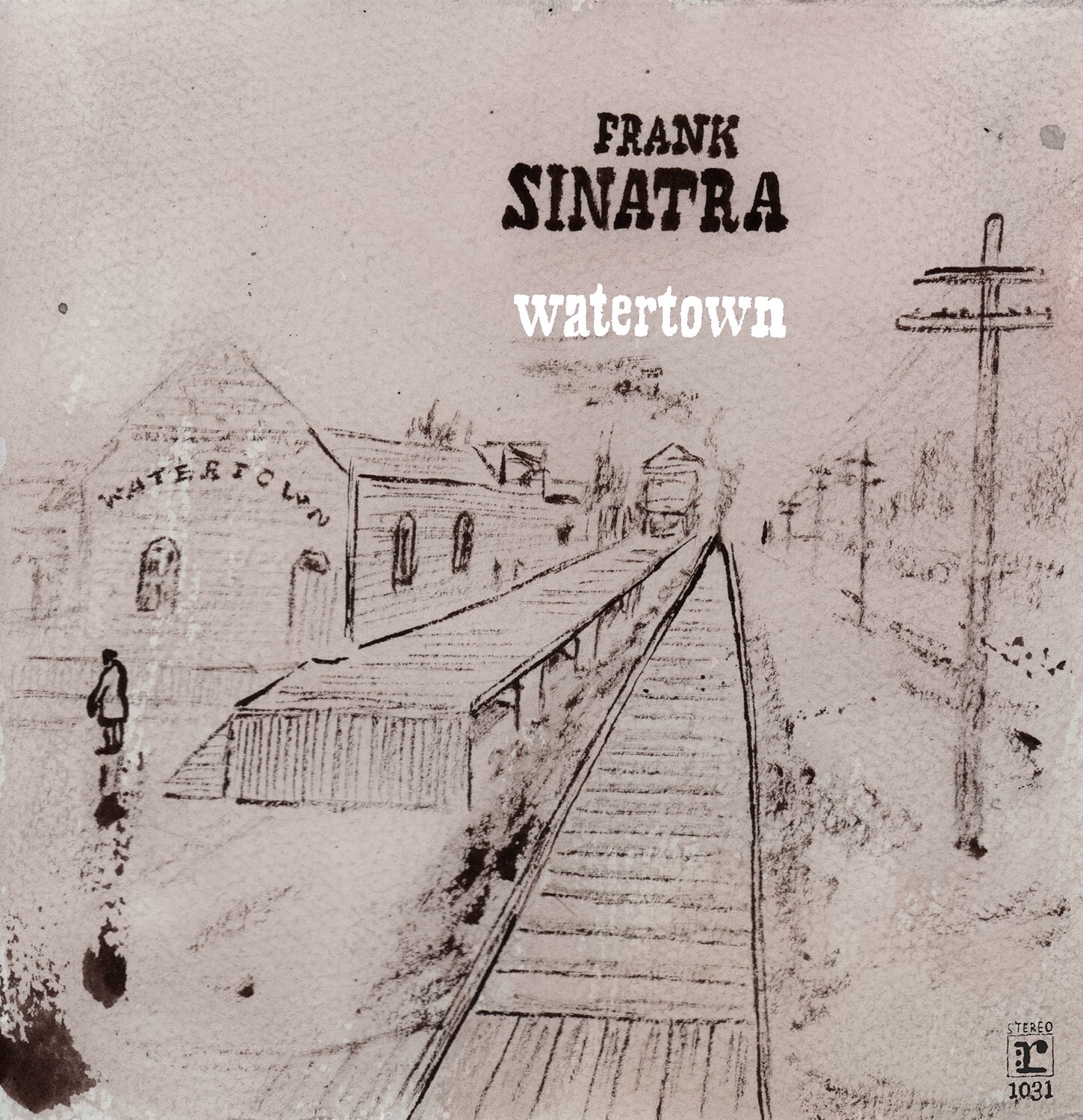
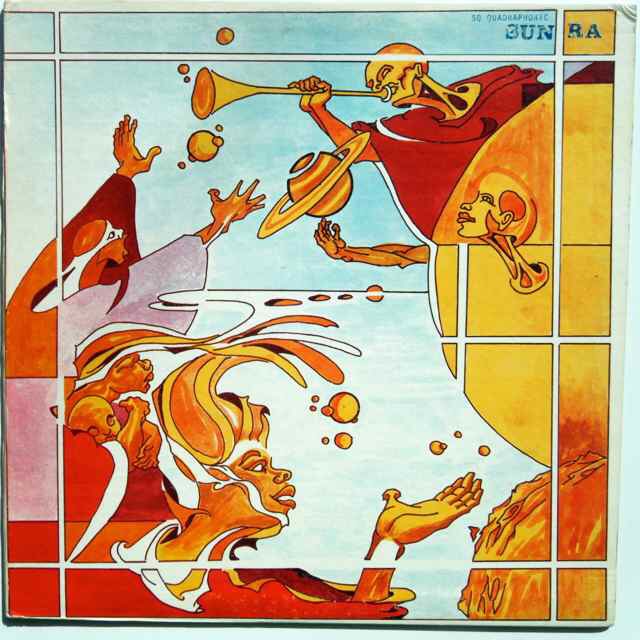
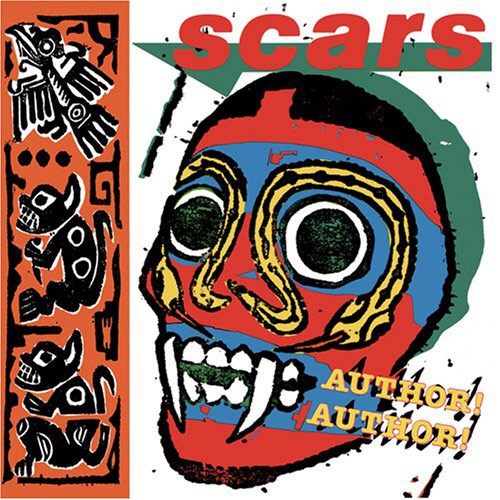
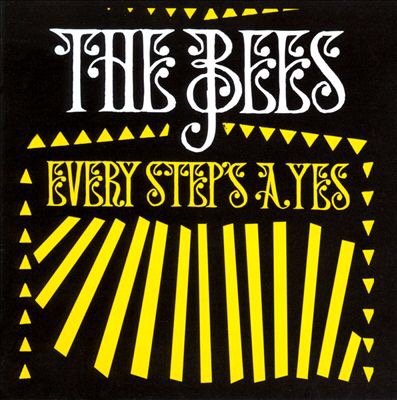
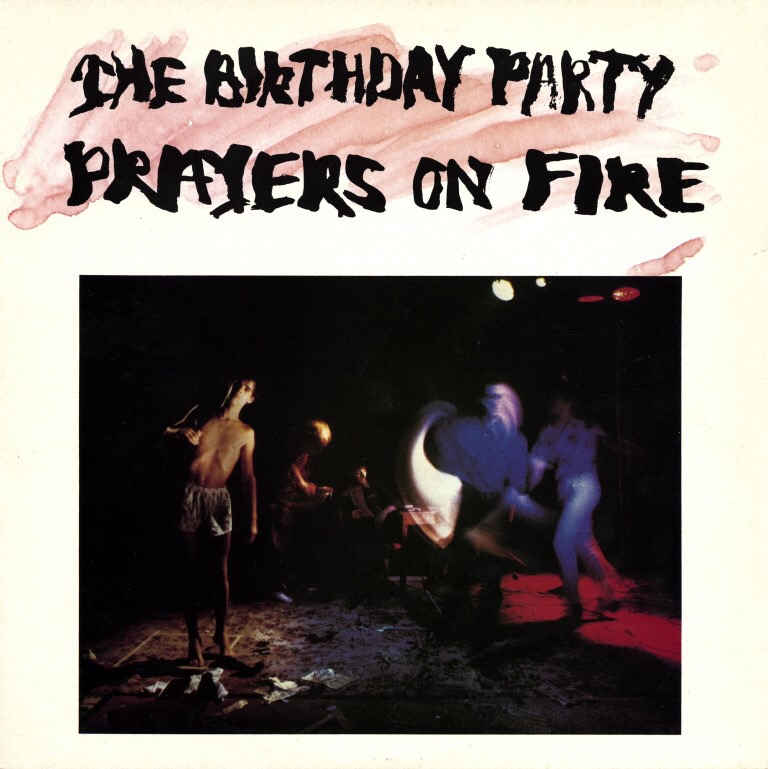

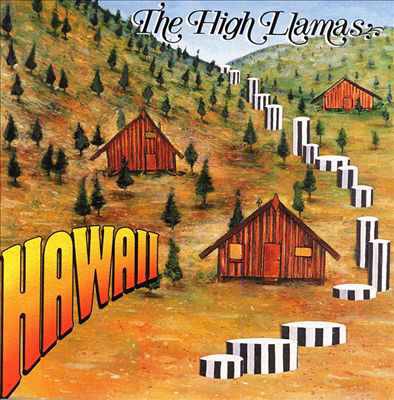


 The New Perfect Collection