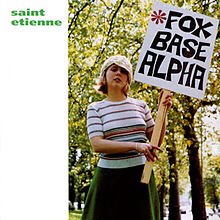
108. FOXBASE ALPHA – SAINT ETIENNE (1991)

FOXBASE ALPHA – SAINT ETIENNE (1991)
‘Record collection rock’ was a phrase tossed around with vigour and no little relish in the early ’90s. It epitomised a mood of intense self-consciousness and an eagerness to have and eat cake – to demand that music be dumb, artless, rock ‘n’ roll (adjective more than noun) yet still be dissected within an inch of its life.
It was a loaded phrase, at best mildly cynical, at worst plainly pejorative, telling as it did of a genre perceived to have nowhere left to go but to recondition its past and reassemble prepackaged ingredients. But hadn’t this already been going on for decades? Wasn’t half the Beatles’ early repertoire drawn from the rock ‘n’ roll, r & b and soul records they eagerly acquired after they passed from the US Navy into eager young Merseyside hands? Wasn’t the mythical meeting of Jagger and Richards at Dartford railway station occasioned by the clutch of blues albums the former was holding, just some of the many the Stones would go on to plunder for material? And while it’s debatable how many records he may have been able to afford to buy, was Elvis not a human jukebox, absorbing everything he heard – and covering much of it, often radically- on the radio and at the diner?
The truth is, record collection rock is as old as rock itself and even Simon Reynolds, one of the writers most exercised by the concept, was compelled to concede around the end of 1991 that three of the albums which had given him most pleasure that year were prime examples of the art: Primal Scream’s Screamadelica; Teenage Fanclub’s Bandwagonesque – and Saint Etienne’s Foxbase Alpha.
Maker writer Bob Stanley found himself embroiled in this debate, not only through what he wrote but also by being written about by his colleagues as he pursued extracurricular adventures in the Saint Etienne ranks. In his tastes, he was an entire mischief of magpies on his own, devouring acid house, French yeye and bubblegum with equal relish, while also finding a place for the perceived higher art of canonical acts. He was rightly withering of many of his contemporaries, bewildered by “people who got into music two years ago who think Jesus Jones are better than the Beatles” and saw no cause for celebration in the supposedly alternative mediocrities invading the charts in a charge of the featherweight brigade. Certainly, it was a grim time in a highly peculiar decade, in which many of the most prominent players gained their status from origins which were unlikely (Nirvana, Oasis, Primal Scream) unpromising (Radiohead, Blur, the Prodigy, Beck) or both (Manic Street Preachers).
All this, though, led to his needlessly absolutist claim that that pop music “shouldn’t be intelligent; it should be completely unintelligent.” I previously covered what I make of this view in my review of Blue Aeroplanes’ Swagger  (no 35) but suffice to say I don’t agree; neither did one of Stanley’s colleagues, Andrew Mueller, who said it best when he chided his fellow Maker man with the unarguable caution: “Without intelligence, there is no imagination…the alternative doesn’t bear contemplating” and added that the quality of Saint Etienne’s music was “no mandate to talk such cobblers.”
The evidence of that quality runs through Foxbase Alpha like the Thames through London, the only city on Earth where it could have been made, one they paintly as richly as, if less literally than, the Kinks, Ian Dury and Madness. Despite this unmistakably metropolitan hue, though, Saint Etienne presented their hometown as much as a global crossroads as a mighty collision of villages, particularly much later in Tales From Turnpike House. The tour of their cosmopolis begins with a reminder of their Francophone roots, a snatch of radio dialogue introducing commentary on the football team who gave them their name and whose lurid green shirts were the last word in calcio chic in the mid ’70s.
Then it’s off to Laurel Canyon via Pimlico and Toronto for the song they announced themselves with – a cover of Neil Young’s Only Love Can Break Your Heart. About time we had some more heresy here at TNPC so here goes – I actually prefer their version to the original, which is, of course, a beautiful and poignant piece of work but it plays into the hands of Young’s detractors by sounding the way many of them think he always does. With the slightest tweak of the melody and the empathic tones of one-off guest Moira Lambert, Saint Etienne lift the song out of the maudlin and into the sweetly sorrowful by way of the dancefloor.
That’s one of their natural habitats and they stay there, in varying guises and modes, for much of Foxbase Alpha. Stoned To Say The Least kicks off with a wry sample from Countdown, the first programme broadcast on Channel 4 in 1982 and a staple there to this day. It’s fairly fitting, as it’s a close relative of the majestic The Sun Rising by the Beloved, whose singer, Jon Marsh, was a contestant on that very programme when his band owed more to the New Order of Ceremony than of Subculture. The subdued bass and swooping backwards guitar, congas and interjections of cowbell and Italian house piano all make for a compendium of the ideal early ’90s dance tune – but it still finds room to wrongfoot you with an extended feedback fade. Record collection dance music in action – and ignore anyone who tells you that sounds no fun at all.

The rapidly cliched perception of Saint Etienne was of Stanley, Pete Wiggs and Sarah Cracknell as a parallel universe Blue Peter team or red Routemaster bus travellers tagging along with Rita Tushingham and Adrienne Posta. They were always a good deal more nuanced and savvy than that but on London Belongs To Me, they provide the soundtrack all those films could have had if they’d just had a word with Delia Derbyshire. It strolls, cascades, shimmers like the sun that makes you realise you’ve forgotten your shades – on the summer day you have to remind yourself to savour every minute of. It shares only a title with the 1948 drama starring a young Richard Attenborough, already specialising in misfits, tearaways and purveyors of cold evil at outrageous odds with his latterday ‘Dickie’ persona.
Like The Swallow is as odd, ambitious and outright headswimming as anything a chart act – for that’s what Saint Etienne were – has ever come up with. The washes of sound it opens with resemble Mercury Rev’s Holes, Talk Talk’s The Rainbow, even parts of the very un-pop It’ll End In Tears by This Mortal Coil, and it proceeds, as steadfast and unhurried as a symphony’s first movement for three-and-a-half minutes before vocals are even considered and even then, it’s a Cracknell cameo – she’s gone in less than a minute, buoyed by percussion which in other  places would sound martial but here prove that it is entirely possible – in fact, desirable – to march for joy. Speaking of drums, listen out for the snare thunderclaps that pursue a sampled Levi Stubbs through She’s The One – the sound of the Four Tops was once magnificently likened to the roar of a wounded lion and that holds true here as well, except this one has see Androcles run by with no time to pull out the thorn.
And do not dismiss Dilworth’s Theme purely because it’s the last song and is less than a minute long. In the spirit of the Time Bandits scene where Ian Holm as Napoleon rants about similarly petit conquerors (“Alexander the Great – five feet exactly…Tamburlaine the Great – four foot nine and three quarters) I give you a similar roll call of chronologically challenged but magnificent songs: Cockney Rebel’s Chameleon – 47 seconds; the Incredible String Band’s Son of Noah’s Brother – 16 seconds. Dilworth’s Theme – a dumpy little 38 seconds but
a beautiful, rainy day drawing room reverie, like Bowie’s Eight Line Poem with the comedy cowboy locked out of the house. The very fact that it’ll take you less time to listen to it than to read what I’ve written here about it says plenty about its condensed glories.
There’s  more, much more, to say about this record but I’d need as many words to do it justice as there are in Peter Ackroyd’s London:The Biography – in a very odd way, a companion piece – or Bob Stanley’s own, staggering Yeah! Yeah! Yeah, which takes on the fearsome labour of charting the history of post-war popular music and triumphs, omitting nothing and vividly illuminating everything. Not unlike Foxbase Alpha, really (PG).

107. HÜSKER DÜ – CANDY APPLE GREY (1986)

By the time they had signed a lucrative contract with Warner Bros in early 1986, Hüsker Dü’s implosion was well underway. Tracked by the label for the previous twelve months, the band had opted to remain with indie label SST until the completion of their fourth album Flip Your Wig. Hüsker Dü had outgrown SST, but the move to Warners didn’t go down well, and as a consequence, any objective critical analysis of their first album for them, Candy Apple Grey, has been rare. In an otherwise formidable canon, it is almost universally regarded as the runt in the litter, falling way short of masterworks such as Zen Arcade. It is time for a reappraisal.

Let’s begin by acknowledging that the major label debut album of the beloved independent band almost invariably elicits a hostile response from the hardcore fan. After all, he was there when it all began. He can vividly recall his idols heaving their own gear into some piss-stinking dungeon of a venue where they performed before an audience whose animosity could not have been greater had you announced you’d had intimate liaisons with their mothers the night before. But he was instantly hooked. He bought their first record on the day of its release at the little backstreet indie store, the only one with guts enough to stock it, and he has followed them ever since. Until now that is. Because now they are working for the man. Look at those Johnny-come-latelys wearing those t-shirts emblazoned with the new album sleeve. Where were they three years ago?! You can’t call them real music fans. They are living proof that the incorruptibles have become corrupted. If the only thing Warners are interested in is product and shifting units, it follows logically that the band have the same aspirations. To hell with those corporate whores, and their fawning new legions of gullible lemmings.

It is a peculiar relationship the one between pop star and fan. Many of us at sometime or another, may have borne this conceit. It is a well-worn cliche that rock stars, simply by virtue of their status, have realised their dreams and fantasies. But it is equally true to say that pop fans often inhabit a fantasy world of their own making. It is all inside their heads. Songs and albums may well seem very personal to the listener, a unique meeting of souls. But they are not. They are simply recognisable expressions of one particular aspect of the human condition. A coalescence of timing and circumstance might propel them deep into our subconscious. What might mean nothing to one person, could be the only thing preventing another person from putting an end to it all. Because of that, music can assume a gravitas beyond its rather humble ingredients. But to believe a rock band is one’s own private possession is both extraordinarily deluded and somewhat infantile.

It was to precisely this type of indignant response I first declared my fondness for Hüsker Dü. Occupying one half of an old C90 cassette was a recording of their penultimate album Candy Apple Grey. It was summer 1987, a few months after the release of their heroic double swansong Warehouse: Songs & Stories. The tape had been handed to me by a fellow student – being students we had little money to buy the records themselves – but the scorn he reserved for the album was merciless. In fact he’d only given it to me so I could hear Side Two (if I recall correctly the Homestead compilation, Wailing Ultimate!) “Ignore the other side” he warned. I could not.

The album was created in the most challenging of circumstances. A home movie style video for the Grant Hart penned 45 ‘Don’t Want To Know If You Are Lonely’ may have reflected the searing intensity of the band’s live performances, but it was captured at a time when relationships between the trio had broken down irreparably. Personal differences had been growing; Hart’s drug abuse accelerating. At the time Mould was quoted as saying that none of the three wanted to continue, but ironically, the band had reached their commercial zenith. That sense of confusion and disintegration permeates an album often labelled a sell out. But any doubts of musical compromise should have been dispelled for good on the album’s opening track, the finger-shreddingly ferocious ‘Crystal’, where Mould, hoarse with fury, rages at the chaos surrounding him (“When civilization falls in its grave/Technology throws on the dirt/You realize the finest things in life/Are the ones that can never be hurt”). Meanwhile, the guitars in time honoured tradition explode like a coalition of cheetahs leaping through an avenue’s worth of shop windows.

The communication breakdown, which Hart accepts ultimately led to the suicide of the band’s manager David Savoy a year later, allowed greater room for the expression of each individual’s musical and emotional idiosyncrasies, and Candy Apple Grey undoubtedly displays the greatest musical variety of any Hüsker Dü album. In Mould’s case at least, the ensuing turmoil led to the more introverted songwriting style he would follow into his solo career. It is undeniably true that on Candy Apple Grey he frequently sounds in despair, bereft. His energies were at an all time low, but this was misconstrued by fans as a mellowing out. His solo acoustic venture ‘Too Far Down’ (“I’m too far down/I couldn’t begin to smile/Because I can’t even laugh or cry/Because I just can’t do it”) is hardly the product of a singer seeking a wider audience. If Hüsker Dü had always struck a fine balance between melody and discord – it was the tempo which was unrelenting – they also possessed a more sensitive melancholic dimension to their sound. Consider ‘Perfect Example’ and ‘Celebrated Summer’ from New Day Rising, or even ‘Diane’ way back on the Metal Circus EP. No, these slower songs are the sound of people having to get to grips with the very real challenges of life, the turgid reality of having to work alongside people you once loved but can no longer look in the eye, and even, no matter how banal it sounds, with the life-work balance. The band’s output had been prolific, they had become exhausted by an unforgiving touring schedule. And their personal lives were unravelling. On ‘Hardly Getting Over It’, a song he continues to perform today, Mould reflected upon his awareness of the impact of loss and bereavement in his own life. “My parents didn’t even mention my grandfather’s passing to me for months, for whatever reason. Presumably it would upset me.” It was a heartfelt confessional, but all people heard was the volume reduction. The sound may indeed have been quieter, but the message sang loud and clear .

The band’s bastardisation of The Byrds’ folk-rock is most obvious on Hart’s ‘Dead Set On Destruction’, while his ‘Sorry Somehow’, the album’s second 45 is much more immediate, belying its author’s fragile psychological state. While the bitterness in the sentiment is acute (“There’s no need to talk to you, well to know what’s on your mind/There’s no need to see you either, no, I’m just being kind/You want me to beg forgiveness, tender an apology/It’s not my fault and you’re not getting one from me”), it’s infectious and muscular Hammond-driven riff seems perfectly tailored for alt-college radio. It is interesting to note that college rock darlings, fellow Minneapolitans The Replacements, had signed to a major label (Sire – also distributed by Warners) shortly before Hüsker Dü, yet there has never been any charge of ‘sell out’ levelled at The ‘Mats’ first major offering, Tim.

On ‘No Promise Have I Made’ Hart was accused of sailing perilously close to the bombastic coastline -over a skin of shivering cymbals and an automotive synth sounding like a multi-tracked vocal, its epic piano motif builds to an ecstatic climax powered by Greg Norton’s Herculean bass riff while at the finale Hart thrillingly hammers home the point orally as well as physically with emphatic angst.

Out of chaos occasionally emerges something beautiful, honest and true. If songs like ‘Crystal’, ‘Eiffel Tower High’ and ‘All This I’ve Done For You’ would have fit comfortably onto New Day Rising, Candy Apple Grey delivers a broader palette, reflecting a depth of emotional involvement unmatched elsewhere on any other HD album. As individuals they were suffering but growing up too, perhaps against their will. The case for the album being a sell out simply doesn’t hold water. It is a wounded bewildered beast, certainly without thematic unity, but made entirely without compromise. It is the album Hüsker Dü would have delivered no matter which label was pressing the vinyl. Time has been kind to its shortcomings. So should you. (JJ)

106. VERGOGNA SCHIFOSI – ORIGINAL SOUNDTRACK by ENNIO MORRICONE (1969)

For Peter

Vergogna Schifosi (Dirty Angels) is an obscure 1969 Italian thriller directed by Mauro Severino, purportedly a thinly veiled attack on bourgeois hypocrisy (I don’t know for I have never watched it),  given impetus by political events across Europe in ’68. It is probably fair to say that commercially it didn’t amount to much, and the film also has a poor critical standing. The few clips available on YouTube might arouse your interest – they did mine – but that’s likely to be because of the music you hear in the background.    

The soundtrack to Vergogna Schifosi is 23 minutes long. The LP could set you back £25 or so, if you can find it (Light In The Attic reissued it a few years back). In fact, ten minutes worth is really a variation on the title theme, which makes three appearances including as a reprise. Hardly value for money you might think. Well, think again. Entitled ‘Matto, Caldo, Soldi, Morto & Girotondo’, it is very possibly the most beautifully bewitching suite of music I have ever heard in my life. A simplistic nursery rhyme melody with some faintly erotic girly cooing at the beginning – or perhaps that’s just the seductive Italian accents –  gathers inexorable momentum as a swirling spiral of strings, celeste and harpsichord oscillate alongside some choral accompaniment by the I Cantori Moderni di Alessandroni ensuring it’s ecstatic ascent continues via a spectacularly beautiful OTT performance from renowned Italian singer Edda dell’Orso (a veteran of several Morricone film projects including Once Upon A Time In The West) taking us all the way up to Dante’s angelic ninth sphere of Paradiso. Upon its arrival there we have the soundtrack’s second theme ‘Un Altro Mare’, which plays out like a blissfully harmonious marriage between Krzysztof Komeda and Burt Bacharach. These two pieces are so ravishing, so utterly beguiling, I feel guilty for listening to them – as if I have uncovered some unspoken secret fron the world to come. Each time I give ear to it, I am convinced my life expectancy will diminish a fraction further, as if some cruel variation on the law of Karma is invisibly balancing out my euphoria. Perhaps I have heard too much, seen the unseen, tasted forbidden fruit?  But I continue go back, slavishly, for more. In fact the music here – with the exception of a badly dated (and best overlooked) three minute sub-Beatles pastiche near the beginning –  is virtually impossible to dislodge from one’s head. I wonder how I have managed to live without it for so long. 

I am no authority on Il Maestro – I have the odd compilation lying around, but that’s about it. I know very little about him, but have often been tempted by those garish late ’60s soundtrack sleeves. Nevertheless, I have baulked at the thought of purchasing them before now, imagining the films to be of highly dubious quality and the music too expensive a gamble. But if you, like us at TNPC, are a fan of Stereolab and High Llamas, you will recognise instantly an essential ingredient of their sound. I should have taken Sean O’Hagan’s advice years ago when he spoke so enthusiastically of its magic. Morricone’s output during this period was prolific so I expect my late conversion to cost me a small fortune. But this one without doubt is a must have. (JJ)

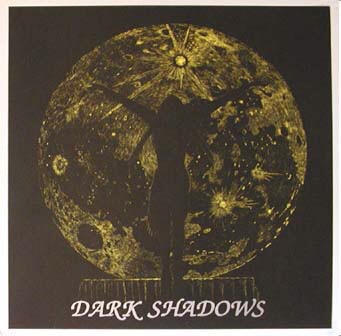
105. COLD SUN – DARK SHADOWS (1970*)

My record collecting began in earnest in 1985. By that time, rock & roll was around 30 years old. I was still in my teens. I wasn’t around when Elvis started shaking his hips, and in my efforts to map out the history of popular music, my reference points were fairly limited. In some ways, this made the discovery of Tim Buckley, The 13th Floor Elevators, Love, Sly & The Family Stone, Nick Drake and Captain Beefheart even more thrilling, for I couldn’t imagine anyone else sounded quite like them. Of course over time perspective becomes clearer: recognising how The Velvet Underground or Can fit with the past and present lends their legacy even greater import. Then an LP like Cold Sun’s Dark Shadows comes along and I’m thrown into confusion.

So when Julian Cope suggested that Cold Sun invented post-punk, he must have been equally bewildered by what he heard. Nothing remarkable about that comment except that Dark Shadows was recorded around 1970. And just to clear up any confusion, the punk to which Cope was referring was not the ’60s garage variety. 

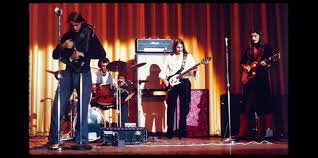
Cold Sun were formed in Austin, Texas. Bandleader and electric autoharp wizard Bill Miller, was obsessed by fellow Texan psych freaks The 13th Floor Elevators. He modelled his vocal style on Roky Erickson’s and like Tommy Hall, chose a unique instrument with which to make music. In many ways, Cold Sun are the Elevators’ spiritual heirs. The band made little impact during their short lifespan, and disbanded in 1973. Miller would go on to join Erickson as a member of The Aliens in the late ’70s.


    Mystery surrounds the recording of Dark Shadows; the band had signed to local independent label Sonobeat, but the label faced bankruptcy before any of their music could be sculpted onto wax. Even after the album was eventually granted a release on Rockadelic in 1989, not everyone hailed it a great lost psychedelic masterpiece. Indeed there is a Texan Psychedelia website out there where the contributors make little effort to be diplomatic. They make no bones about it: they hate Cold Sun. The threads are filled with denigrating remarks about how they ‘suck ass’ and so on. Unless the website is run by some longtime adversary of Miller, then it’s a genuinely puzzling reaction, for Dark Shadows has stood the test of time remarkably well. Indeed it is every inch the travelling time capsule that Cope suggests.

   ‘Ra-Ma’, a one-stop potted history of psychedelia starts out like some weird discordant tonal experiment in math rock from the mid-’90s, Miller’s autoharp sounding like switchblades being sharpened, before morphing into some Roky-inspired demented stream-of-consciousness rant about Egyptian mythology over the fried desert psych sound of Bull Of The Woods. There’s some genius guitar playing from Tom Mcgarrigle as he trawls through the debris of late ’60s Velvets’ via a prophetic detour to the ’80s, where The Chills’ feverishly tumbling ‘Pink Frost’ is, unbeknownst to itself, gifted some fresh ancestry. It sounds like nine separate ideas thrown on top of one another, and is insanely beautiful. ‘Ra-Ma’ would appear as the opening track on the original Rockadelic issue of Dark Shadows from 1989, but the track sequence on the first issue was not that which the band had intended, with ‘Ra-Ma’ originally envisaged as the last track. Curiously, the track earmarked by Miller as the album’s opener was ‘South Texas’ whose beginning is virtually identical to ‘Ra- Ma’. “Inspired by a weekend in Texas with two girls from Corpus Christi and a big bowl of peyote salsa at a drive-in Mexican restaurant”, ‘South Texas’ is a place where lips whisper of strange visions, cracks in the wall procure geckos whose stares bore into the soul and guitars weep and bleed in equal measure.

     The Velvet Underground – that most un-psychedelic of bands – played some shows at The Vulcan Gas Company in Austin in October 1969. One can only suppose Miller was in the front row. Ostensibly a Roky tribute, ‘See What You Cause’ is a primitive little VU rocker, like a two chord rhythm being bashed out on tin cans.

      It’s not all brilliant. For some ungodly reason, ‘For Ever’ reminds me of the Steve Miller Band’s ‘Jungle Love’. What concerns me even more is that I actually know that song! There’s a bizarre little glam break, after which the rhythm decelerates before speeding up into a frenzied SST-style thrash.

     There are so many touchstones here, most of which are from albums made after Dark Shadows, for instance the bawled phrasing over these lines from the seven minute rave-up ‘Fall’ (“Bullets, cannons roaring past, yet he does not hear a sound”) anticipates Patti Smith’s primal scream on ‘Land (of 1000 Dances)’. It contains a berserk cameo for the harmonica – there is another one on ‘Ra-Ma’. The first few bars of ‘Twisted Flower’ meanwhile are borrowed from The Zombies’ ‘She’s Not There’, although ultimately the song bears more than a passing resemblance to the obscure sub-Doors psych nugget ‘Suicidal Flowers’ by The Crystal Chandelier.

     One can forgive ‘Here In The Year’ it’s occasional meandering intrusions into groovy Strawberry Alarm Clock territory and even its momentary collapse in the middle, for it is bookended by two of the most sublime passages of music on the album. The first has the sort of pretty little butterfly picking that might have floated off the grooves of a Felt record from 1986; the second refracts the same melody through the most gorgeously transcendent use of feedback I have ever heard – think Galaxie 500 stretching out the beautiful tension of ‘Heroin’. It sounds twenty years ahead of its time.

    Dark Shadows is the fearless creation of a unique foursome of peyote-fuelled Texan heads, so obsessed with making music that they believed they could change everything. In that sense, it is a tragic, even desperate failure, but I’d recommend you give it a moment: it will seek out your soul and suck you in with its deranged beauty. (JJ)
Sent from my iPhone

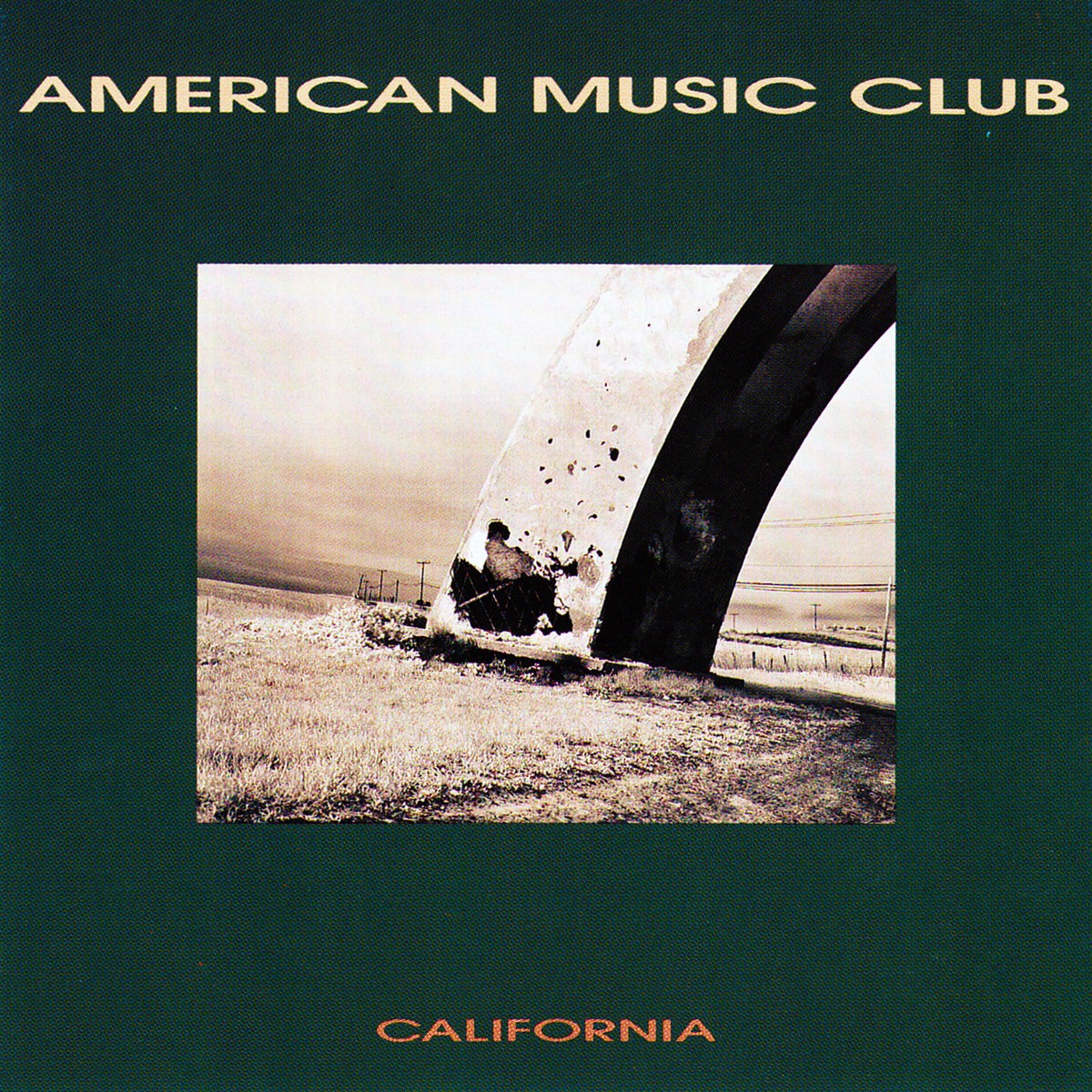
104. CALIFORNIA – AMERICAN MUSIC CLUB (1988)

CALIFORNIA – AMERICAN MUSIC CLUB  (1988)

To paraphrase  Malvolio: some songs are born ubiquitous, some achieve ubiquity and some have ubiquity thrust upon them. Then again, some seem to wriggle free of the ubiquity that could be just one film, TV programme, advert or cover version away – such was the route Hallelujah had to take to earn its hard-won ubiquity and Dream Baby Dream seems set to follow a similar path.

Many, if not all, of us have this type of Classic In Our Own Heads and we’ve proffered a range of them so far on TNPC – the Chills’ Submarine Bells, the Distractions’ Looking  For  A Ghost,  Cockney Rebel’s Ritz. We can guarantee more will follow and the latest stop on the line is American Music Club’s Western Sky.

It’s a song of such simplicity and understatement yet also such a perfectly realised portrait of unfulfilled dreams, time passing and parting of the ways that it may not quite register at first. A muted arrangement, far from disguising the melody’s beauty, casts it into greater relief as Mark Eitzel recounts emotions everyone must have felt at some point (“I don’t belong in this place…you may feel the parade has passed you by”) and makes a bold promise which seems impossible to keep (“I’ll take you in my two weak hands/And I’ll throw you so high”) before the bridge brings almost complete silence and a self-deprecation at such depth that puts even the few remaining hopes at risk (“I won’t see you no more/Who am I to rate that high?”). Ultimately, all that remains is consolation but not of a hollow kind – “You can still see it shining.” The title inevitably prompts comparisons with Nick Drake’s Northern Sky (which also had a considerable influence on their later song Heaven of Your Hands) but, 270 degrees around, it occupies its own compass point and stands shoulder to melancholy shoulder with it as a deep expression of that nebulous and spurious concept, emotional intelligence.


For all its taciturn majesty, though, Western Sky is first among equals on California, a microcosm of an album with an emotional heft capable of pulling a liner across the Pacific and back again for decades. Don’t be deceived by the apparent slightness of opener Firefly – surely no one could get away anymore with a chorus, straight-faced or ironic, of “You’re so pretty, baby/You’re the prettiest thing I know” but it sounds here like the outpouring of a long-term shelf-dweller whose time has finally come, getting further even than Limey cousin Morrissey after his strange fear gripped him. More web-weaving subtlety, too from Mark ‘Vudi’ Pankler, AMC’s secret weapon and Eitzel’s amanuensis in reverse, whose textures and flourishes give beyond-words articulation to the songwriter’s lead-weighted heart – here, he does so with steel guitar that’s beyond the sucrose saturation of country’s worst excesses but tapping into the tenderness and open-heartedness it displays at its best; less incendiary, perhaps, than the Misunderstood’s Glenn Ross Campbell but with a surer route to Cosmic American Music than even Gram Parsons had (he may have coined the term but he didn’t make a great deal of it himself –  bar three or four songs across his solo albums, his music, wondrous as it was, was largely terrestrial, right-in-the -soil country).

The name American Music Club is at once balmily bland, brazenly hubristic and a justifiably bold statement of intent, in keeping with their penchant for geographically blunt album titles (California, United Kingdom, San Francisco) which easily resonated  enough with their postmarks to live up to the names. I would expect a song titled America to cover, at the very least, the drafting of the constitution, the Gettysburg Address, the New Deal and Watergate –  but none of this is really explored in “What a drag it is, the shape I’m in/Well, I go out somewhere and I come home again.” AMC, though,  really were purveyors of that elusive Cosmic American Music – if not all, then many strands of the knot woven in the last century or so are there, if only in the form of undertows – inevitably, the fathoms-deep sorrow of the blues and the rueful  resignation of country but also soul’s unbreakable grip on the heart (find that on Why Won’t You Stay from 1991’s Everclear) and folk’s resilient compassion. But since America is a vast, unfathomable collage of traditions and cultures, and remains so – doesn’t it?? Even now, doesn’t it?? – AMC still import new members from other lands – as well as the aforementioned and unequivocally English Nick Drake, they drink in healthy measures of chansonniers and there’s even room for the odd dash of klezmer, or something resembling it.

Back to California – another oft-made comparison was to Tim Buckley, much more the valiant serenader of Once I Was and Sing A Song For You than the intrepid astronaut (literally, star-sailor) of Jungle Fire and  The Healing Festival – but riding into battle on a steed is as bold an act as spacewalking and Eitzel is prepared to risk all in the pursuit of a heart. He sure loses it all often enough, if many of California’s songs are anything to go by.

Laughing Stock predates  by three years Talk Talk’s namesake masterpiece – it’s unlikely to have been an influence but Eitzel subsequently claimed that albumas one for himself – and it simmers and fizzes with the humiliation the title implies without making it explicit. The crypic, whispered “The world is made of rock/That some grow happily on/But that’s hard for some” is followed by the gently swaggering refrain “You ask me why/That’s your alibi” which single-handedly rescues a word that recurred in some of the eponymous state’s most self-regarding music, not in its true legal sense but because it rhymes with “surprise” and “apologise” and “excuses” doesn’t (let’s exempt Like A Rolling Stone – it was first, could be interpreted as using the word properly and was recorded in New York – yep, Bob’s alibi checks out) . Then comes one of the most discreet false endings you’ll ever hear – no crescendo, no sudden burst, it simply stops for just slightly too long to qualify as a pause then resumes, like a brief drift into sleep or a surreptitious departure from the room to see if anyone’s noticed.

Blue and Grey Shirt is such an overwhelming dissection of a mind in turmoil that I should be calling it a bravura performance but it’s far too dejected, too despondent to be any such thing. If anything, it’s an anti-bravura performance – when Eitzel sings “Where’s the compassion to make your tired heart sing?/ I’m tired of being a spokesman for every tired thing,” he sounds every bit as weary as he says he is, carrying a weight of expectation that would only get more onerous – as it would for the emerging Kurt Cobain, the fuzz-pedalled Charlie Brown with the aching stomach who couldn’t be reached inside his cartoon frame and who could very well have been inclining an ear to AMC up the coast. “Now I just sing my songs for people that have gone” Eitzel sighs – really sighs – at the end of one of many songs which prompted speculation on his own life; all I’ll say is if it’s not autobiography, it’s certainly empathy and either way, its Marianas-deep.

So, too, is Highway 5, which, despite being superficially about California’s vast open landscapes, achieves a choking claustrophobia by using them as an unsubtle but still potent metaphor for empty hearts and spirits – “To the left, a beautiful California landscape/Dead ends in the sky/And to the right, beautiful mountains rise high and dry/Another futile expression of bitterness/Another overwhelming expression of uselessness.” As in so many songs before, from Whispering Grass and Raining In My Heart to Who Loves The Sun and (Pulp’s) Trees, nature offers no solace or escape but is instead a mocking, scoffing witness – all making the second heaviest and most abrasive song on California.

After Bad Liquor, easily the most contentious song on the album and one which I made my peace with only comparatively recently. Not that I dislike it in itself, it’s simply the sheer incongruity of a hardcore ode to/lament for the bottle in the midst of such intensive soul scrutiny, like a roundelay arriving in the middle of a Black Flag album. But it’s a handy snapshot of Eitzel’s past in punk bands and it’s that very positioning – track one side two in old money – that gives it the feel of a bracing shot consumed at the bar during the interval. Furthermore, liquor does, for better and worse, have a habit of showing up around the time feelings are running high. And it’s kind of funny – as with the Smiths, AMC’s wit was often overlooked and the perception of them as hangdog emoters stuck to them unjustly like a toffee wrapper on the floor of your local indie club. For more of their humour, I also refer you to second track Somewhere, particularly the encounter on the bus described in the second verse, which is like an Ivor Cutler vignette transposed from Paisley Road West to Lincoln Way.

The terrain explored by American Music Club is now as despoiled as Machu Picchu or the beaches of Goa, swarmed to,  unthinkingly trampled upon, denied the care it needs and deserves. Through uninspired songwriting (as often as not with the fabled Four Chords), platitudinous lyrics and a failure to invest any imagination or even real thought into taking it in any unexpected directions, it’s experiencing a drought from which it may never recover. But a careful listen to AMC at their finest – ardently articulate, frighteningly self-aware yet never needlessly lachrymose – could show how this desert could be replenished. Who’ll start the rain? (PG).

103. AL GREEN – AL GREEN… IS LOVE (1975)

Four and a half minutes into ‘I Didn’t Know’ and by now Al Green has completely lost it. We hear him laugh, but it is a nervous laugh. Then, as if experiencing a moment of crushing realisation, the performance begins to disintegrate, his voice boomeranging off the studio walls, fading away entirely before it suddenly returns to vomit its torment into the microphone. A relentlessly static rhythm casts its shadow over this emotional meltdown, a cruel companion to his existential purgatory. It seems to exist merely to mock his plight and drain every last ounce of life out of him. The strings, elsewhere luxurious and euphoric, sound defeated, strung out and grieving. The walls have closed in. It could be the rawest aural breakdown ever committed to vinyl. Make no mistake, I feel like I’m losing my little mind when I listen to it. So one can only imagine how it must have felt for poor Al…

     ‘I Didn’t Know’ comes from the 1975 album Al Green Is Love, to my mind the soul legend’s finest hour (or forty minutes to be more precise). Recording sessions began at the end of 1974, and Al Green’s life was about to change forever. Imagine if you will, being the ex-girlfriend of a bona fide global soul superstar, a man with the world at his feet. You were once the sole object of his desire. You induced in him feverish passion and yielded from his heart some of his greatest love songs. They were for you. It is over now. But how do you obliterate the memory, how do you get those words out of your head? Those songs? It all proved too much for Mary Woodson White who, on October 18th 1974 entered Green’s apartment, poured scalding-hot grits on his back as he bathed, before grabbing hold of his gun and shooting herself through the head.


     It was a turning point. Within eighteen months, Green had been ordained a Christian minister, turning his back on his lothario lifestyle. Until then, L-O-V-E really equated to S-E-X, but before the physical began to transform itself into the metaphysical, Green made this album. It’s a schizophrenic collection. If by the time of the albums release, Al was already hard at work polishing off his first homilies for expectant congregations, he was simultaneously shaking his thang in the only way he knew best. 

    So we have on the one hand the ecstatic disco-funk of ‘Love Ritual’, those jabbing upper cuts of Teenie Hodges’ guitar punctuating a hissing aural uncoiling of the libido, the whole thing drenched in orgiastic sighs and perspiration, and the next moment we hear him theologising Eros over the taut rhythms of ‘Love Sermon’ (“Love is the dimension between time and feeling/The distance from heaven to earth/At least that’s my understanding”), the tension ebbing and flowing, Green’s voice oscillating between a whisper and a scream. Here is some seriously archetypal good angel bad angel interplay.

    Elsewhere, there are more conventional love songs. ‘I Wish You Were Here’ and ‘Could I Be The One’, if not quite the equal of ‘Call Me, ‘I’m Still In Love With You’ or ‘Let’s Stay Together’, nevertheless contain the sort of aching thirst and tugging uncertainty characteristic of those, his most enduring and popular tracks. And then there’s ‘L-O-V-E’, the first song from this album I fell in love with – it featured on the Hi! Greatest Hits compilation (originally released in 1976) which was the first of his albums to seduce my ears. Of course like many other 80s teenagers, I had first heard Edwyn sing ‘L-O-V-E’ (from Orange Juice’s debut album You Can’t Hide Your Love Forever). Who would have thought that such a deep slice of southern soul could put on a floppy fringe and jangle away so discretely as to make it synonymous with the post-punk sound of young Scotland?

    But the musicianship here is definitively rooted in Memphis. Teenie Hodges’ guitar possesses all the economy and gravity (in every sense of the word) of Steve Cropper. To borrow a line from Bawb, you could say it always “kinda hits you from below.” Meantime, his brother Charles’ aireated soda stream organ sounds like a babbling brook flowing into a bubbling geyser. Those Hodges Brothers (with Leroy on bass) could play some.

     What’s in an album title? Al Green Is Love. Think about that for a moment… Al Green IS love. He IS it’s very essence. We might even use his name as a synonym for love itself. “I Al Green you.” “What the world needs now is Al Green, sweet Al Green.” Etcetera, etcetera. I could go on of course, but suffice to say, even more to the point would be to flip that title on its head and say rather: Al Green Is Broken, Al Green Is Exalted, Al Green Is Hurting, Al Green Is Delirious, Al Green Is Repentant, Al Green Is Redeemed, Al Green Gets Carnal. Al Green Gets Sanctified. Al Green Is Yours. Al Green Is Mine. But while all of these things may be true, let us content ourselves with Al Green Is Love. Perfect title. Perfect album. (JJ)

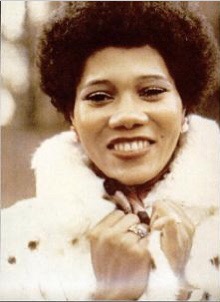
99. KAREN DALTON – IT’S SO HARD TO TELL WHO’S GOING TO LOVE YOU THE BEST (1969)

Imagine waking from a blissful dream where everything was perfect, to drops of freezing cold water falling through a crack in the ceiling onto your face. Gradually, you remember a bitter argument you had the night before. Your head is aching, your eyes swollen and you don’t know why. What you do know is that you can hear your children crying. One of the poor little beggars is shuffling around looking for something to eat. There’s not a morsel to be had and not a dime to spend. Then you see a note nailed to the door. It’s from your partner and they’re not coming back. 
 

It’s the story of the blues. If this particular version of the story wasn’t entirely familiar to her, she sure sounds like it was, because few if anyone, sang the blues with as much conviction as Karen Dalton. Each note she chokes from her gut possesses an aura of total wretchedness, like words scrawled on a suicide note. 

Dalton was born in poverty in Enid Oklahoma, but experienced an itinerant roving lifestyle, eventually settling in an old disused goldmining cabin without central heating or running water, in rural Colorado. She lived a troubled life, one ravaged by substance misuse and poor health. Her peers (Dylan for example) regarded her as the greatest singer of her era, but she somehow contrived to evade commercial recognition. Dylan’s patronage was scant consolation for someone whose natural gift was so remarkable that it should have made her a household name and a lorryload of bucks along the way, but it wasn’t to be. Ultimately she wasn’t prepared to play the game and although she possessed great self-belief, her prodigious talent was matched only by a crippling shyness that would make her trans-Atlantic contemporary Nick Drake seem like David Bowie by comparison. Indeed Dalton had to be coaxed, even tricked, into recording her first album, entering the studio on the pretext that she would cut a song as a favour for her friend Fred Neil. Somehow she was persuaded by producer Nik Venet to sing a few more and did enough for him to assemble a half hour’s worth of material which eventually became It’s So Hard To Tell Who’s Going To Love You The Best.

 The Cherokee Billie Holiday couldn’t write her own songs but it didn’t matter, because she rewrote others’ as she sang them, and what’s more she played the guitar “like Jimmy Reed” (as Dylan quipped) and the long-neck banjo for good measure (she was even the cover girl for Ode Banjos). She released only two albums in her lifetime. The second, In My Own Time, is a fairly mixed bag. Some of the selections seem incongruous with Dalton’s folk blues heritage, and at times the arrangements are an encumbrance, cloyingly at odds with the authentic spirit of the songs. Nevertheless, those bruised tonsils are in splendid form on the opening track, ‘Something’s On Your Mind’, perhaps her most famous interpretation of all, raw, peppered with wrong notes, cracks, unironed blemishes, and all the better for it. If she was around today, they would autotune the life and soul out of it. The album might have been worth including for ‘Katie Cruel’ alone. Dalton had been singing this traditional folk tune since she first held a guitar in her hands. Based on an old Scots rhyme – and prophetically biographical – it is here given a just treatment, far weightier than on 1966 or Cotton Eye Joe, two posthumous releases, both nevertheless deserving of an ear themselves. Besides Dalton’s mesmerising vocal performance, it benefits greatly from Bobby Notkoff’s electric violin, lending it the peculiarly eerie quality he likewise achieved on Neil Young’s ‘Running Dry (Requiem For The Rockets’ on Everybody Knows This Is Nowhere. It is a haunted masterpiece.

 But overall, the raw minimalism of her first outing is more sympathetic to her gruelling performances, steering clear of glaring misjudgements like ‘How Sweet It Is To Be Loved By You’ and the perfunctory professionalism of the session musicians’ performances. Thematically too, the first album, despite its broad range of material (Jelly Roll Morton, Leadbelly, Tim Hardin) has an organic flow, culminating in two of the most crushingly beautiful songs you will ever hear. Hardin’s ‘How Did The Feeling Feel To You’ is stunning – Hardin often sounded as if he was struggling to get to the end of each line without recourse to a nebuliser; Dalton sings it as if her heart is about to give up at any moment. Here over the most fragile of melodies her voice bends and breaks over the prettiest of guitar lines which seems to sing along with her as if offering gentle reassurance to keep her going. If that is good then ‘Right, Wrong Or Ready’ is simply sublime, a genuine tearjerker. Penned by Major Wiley, I am never sure whether the tears it procures come from empathy for the singer or the miraculous beauty of the gently ascending chord sequence. It reminds you that music can take you places you may not have wished to go. But once there, you know you’ll have to come back for more. Don’t just take my word for it – go find out yourself and listen to them in the album’s proper context for a true appreciation. 

Elsewhere the influence of Fred Neil is most obvious, although it’s entirely possible Neil had been first rapt with Dalton’s pained voice and mimicked her style. Perhaps Tim Buckley is to Fred Neil as Neil is to Karen Dalton? Her take on Neil’s ‘Little Bit Of Rain’, a most delicate reworking is excellent, and the deftness to her playing on ‘Ribbon Bow’ a genuine treat. The Billie Holiday comparison is at its most apparent on ‘I Love You More Than Words Can Say’, which haemorrhages misery. When she groans those lines (“living without you is so painful, I was tempted to call it a day”) we don’t need any convincing that she means it. 

After her second album, Dalton retreated even further from the music scene, but even by the time she had cut those two albums, she was a little late for the party. By ‘69, the Greenwich Village folk blues boom was passé, but freed from their socio-cultural context, we can now appreciate how genuinely timeless her renditions of these songs sound today. When she died of AIDS in 1993 at the age of 55, it had been 22 years since she had last set foot in a recording studio. Her legacy lives on in artists as diverse as Beth Gibbons and Madeleine Peroux, although by comparison, Peroux is a mere stylist where Dalton was the real deal. This debut album, released to little fanfare at the time, should serve as her definitive musical statement. (JJ)


102. THE BLUE ORCHIDS – THE GREATEST HIT (MONEY MOUNTAIN) (1982)

From its taut rectangular opening riff, a delirious organ suddenly escapes like a rabbit from a trap, and we’re immersed in a swirling hypnodelic soup. The sound is fresh and yet strangely familiar, the melody whimsical, capricious, pulling in a multitude of directions. When my needle first dropped on ‘Sun Connection’, the opening track of The Blue Orchids’ debut album, The Greatest Hit (Money Mountain), I instantly succumbed to its spell.

Martin Bramah had waited patiently for this moment. As founding members of The Fall, he and Una Baines had watched as MES tightened an iron grip he would never relinquish. Una had been first to depart. When Martin joined her in early ’79, it felt like something of an artistic liberation.
Bramah would briefly reunite with Smith & co. in 1989, leaving after the rather splendid Extricate album. But after his first exit a decade earlier, the overwhelming feeling was one of relief: he now had the freedom to indulge his creative capacities in something which would manifest itself in the purest form of self-expression – music made by its makers, for its makers, “for the love and glory of it” as Bramah attests. His new project had originally been baptised The Blessed Orchids by Manc’s favourite punk-poet John Cooper Clarke. The band released two 45s on Rough Trade before producing one of post-punk’s greatest – and unfairly overlooked – albums.

It was a chaotic period, but one Bramah remembers with great fondness. Into the intoxicating mix were slung liberal portions of the Krautrock rhythms of Can and Neu! and illusive hints of The Velvets, Syd Barrett and The Doors, but if truth be told, it was difficult to neatly pin down the broad spectrum of influences at work.

The guitars on ‘A Year With No Head’ are brilliant, at first possessing the wiry rhythmic algebra of Talking Heads, before they tiptoe gingerly across constellations of stars recalling the somnolent intricacies of Tom Verlaine’s quieter moments. ‘Hanging Man’ takes the TH similarity a step further, pillaging the riff and the über neurosis from ‘Psycho Killer’ along its topsyturvy trajectory.
On the seething speed-fuelled pulse of ‘Dumb Magician’, it sounds like Michael Karoli’s guitar is lassoing the rings of Saturn, while ‘Tighten My Belt’ is a curious slice of dub-inflected No Wave funk which sounds like it’s migrated here from the Ottoman Empire. Musically this was a far more radical era. There was much more risk-taking and adventurousness, and space where this kind of bizarre melange sounded de rigeur.
As for influence, well how much UK indie music from the mid to late 80s was lifted from ‘Bad Education’ and ‘No Looking Back’? The latter is superb – like several other tracks here it sounds about 20 years ahead of its time, outflanking Interpol and The Strokes in as much the same way as the guitar at the finale briefly threatens to outpace its own feedback. The album closes with ‘Mad As The Mist And Snow’ which conjures a similarly portentous olde folke aura as ‘Space Odyssey’ – the closer on The Byrds’ Notorious Byrd Bros classic. It may feel like an incongruous finale, but adds an even denser layer of mystery to proceedings.

It sounds almost as if the band existed in their own little bubble, oblivious to the ’82 zeitgeist. Comparisons with contemporaries such as The Teardrop Explodes, Swell Maps and The Soft Boys persist, perhaps because those bands had a similar genius for harnessing the energy of punk and marrying that to a looser (consciously or subconsciously retro) psychedelic approach. Relations between punk’s primal itch and psychedelia’s improvisational aesthetic were in the hands of Bramah & company, unusually cordial.

The album shipped 10,000 copies, peaking at #5 on the UK Indie Charts, but the momentum would be short-lived. Ultimately for Bramah, it would be more important to remain true to his principles than to achieve any significant commercial success. An opportunity to work with Nico was beckoning, but things would not work out quite as planned, and the band temporarily lost their way. But despite a few leaner periods, they are still going strong today, and released a fine record this year with The Once And Future Thing. (JJ)

_________________________
Interview with Martin Bramah

 On reflection, was your first departure from The Fall more an artistic liberation than a cruel setback?

• Yes, you could call it an artistic liberation – I had proved myself as a composer/arranger in The Fall and I wanted the freedom to play with words too.

I have never thought of my departure as a cruel setback – I’ve always done things my own way in my own time. I left because I’d had enough of the situation at Fall HQ: Mark begged me to stay but I was determined to jump ship. It had been an intense two years and things were getting claustrophobic – plus Mark took it upon himself to decide what I had and hadn’t written without consulting me. You really can’t trust the writing credits on Fall albums – everything ex-members say is true in that regard.

> I think I read once that you had said those two Fall spells were distinguished by the shifting power dynamic – and that your second spell was characterised by an employer/employee relationship with Mark whereas in the beginning you had just been friends. Do you think when Una and yourself left in ’79, that marked the end of democracy and the beginning of Mark’s totalitarian leadership?

• First of all, Una left The Fall in December ’77, not long after Tony Friel – I mention this because people tend to forget Yvonne Pawlett’s great contribution to the band in ’78/’79.

The ‘totalitarian’ thing had been there from the start; it’s in Mark’s nature. At first it was Una who helped Mark hold the upper hand, as they were the only couple in the band and the ‘universe of two’ as they liked to refer to themselves. Then when they began to drift apart in the fall of ’77 Mark brought Kay Carroll in as his new manager/live-in-lover. Kay’s arrival was the real reason for the original band members leaving one by one because she always fought Mark’s corner and encouraged him to think of himself as a lone genius.

> What do you recall about the recording sessions for the album? Did you have much of a budget? Was it yourself or Tony Roberts who engineered/oversaw the final mix?

• Recording ‘The Greatest Hit’ was a blast from start to finish: a drug driven couple of weeks (mainly speed, weed n poppers at that point) in a converted warehouse on Blossom St. in Ancoats, Manchester. It was Tony Robert’s eight-track studio (he’d had the honour of playing drums on the classic ‘Gordon Is A Moron’ by Jilted John). Geoff Travis at Rough Trade figured Blue Orchids needed the good old-fashioned restriction of an eight-track tape machine, so we booked Tony’s place.

We didn’t have much of a budget really, but Geoff did hire the guy who had just produced ‘Ghost Town’ for The Specials to produce our album – well this producer (I forget his name) sat there for the first week, appalled at our antics and contributed very little. We finished all the recording in the first week and our Rough Trade paid for producer took the tapes home with him to do some rough mixes (he was famous in Birmingham for his ‘Lovers Rock’ mixes). When we heard the results we were not happy and so we went back into Tony’s place to mix the album ourselves, which took up the second week. Tony Roberts engineered the recording and I oversaw the final mix.

> I’m hearing the pulsing Krautrock rhythms of Can and Neu! and even Michael Karoli’s guitar landscapes on ‘Dumb Magician’. Elsewhere, traces of The Velvets, Syd Barrett here and there, and The Doors. What else do you remember listening to around that time?

• I love Michael Karoli’s guitar playing, he’s definitely in my top ten guitarists list. I was listening to all the above-mentioned artists of course – plus maybe Donovan, Richard Hell, Iggy Pop, The Modern Lovers and The Kinks.

> On ‘Sun Connection’ as well as elsewhere, the sound is warm and infectious. I’ve heard Una’s playing come in for a bit of criticism, as if she was using a different music sheet, but I love the way the instruments move away from one another to create this loose swirling hypnotic sound. Was there a bit of freedom to improvise there, or were the individual parts written that way?

• Sun Connection is a fusion of three musical ideas into one concept piece. I wrote all the guitar and bass parts with quite a rigid arrangement from start to finish. But with the keyboards I just told Una what key the various sections were in, and let her improvise, so the keyboards seem to flow through a structure, like light through stained glass. I think it works really well and no criticism has ever reached my ears.

> As a document, how far is The Greatest Hit the missing link between the frenetic post-punk of The Fall, Wire & Swell Maps and the jangling indie guitar sound of Felt and The Weather Prophets, which looked back to ’67 as much as to ’77?

• I am not qualified to answer this question, as I was not trying to be the missing link between anything. My main intention was to create something ‘in the now’ something modern but quite plain in a way. I was trying to drop all the baggage of rock cliché and say ‘Here I stand today – a young man in the city – this is how I feel – this is what I think – this is my spirituality – these are my aims.’ and so on. It is for others to decide where the album fits into the scheme of things.

> Was the album title a drug reference or a commentary on capitalist greed – it was recorded just as the impact of Thatcherism was leading to strife in the inner cities – as otherwise the lyrics don’t strike me as political, more personal. Who/what were the major influences on your lyric writing?

• The title of the album played on both those ideas, obviously, that’s what made it interesting, but it was taken from a line in Sun Connection: ‘Think I’ll go out, buy myself a soul – the greatest hit in the world.’ So getting a soul is the ultimate hit! Also there were so many ‘greatest hits’ albums out there in every bargain bin that I thought it would be funny to use ‘The Greatest Hit’ singular as it had never been done – again it appealed to my sense of the title being something plain.

As to the major influences on my writing, that’s hard to say as I pull the germs of ideas from all over the place; books, movies, folk music, but as far as rock writing goes I was very influenced in my early efforts by the ideas that Bowie and Eno laid out in the late ’70s, like a lot of other young budding writers from that era. Ideas of deconstruction and abstraction, fragmentation and getting the essence of things – but I always put my own original spin on the things I write – I have studied the content, but I don’t imitate the style.

> The Greatest Hit sounds incredibly fresh today, almost as if the band existed in a bubble, insulating yourselves from the ’81/’82 zeitgeist. It sold pretty well. Are you frustrated that at the time, you didn’t really build on that momentum?

• Frustrated? No. Momentum can be a dangerous thing for an artist who wants to stay in control of the creative process – momentum means commercial pressures come into play that most artists find hard to combat – the daily drip, drip of sound business advice from those with a stake in your success. Momentum and Hype, I always run a mile when I see them coming!

I make the music I want to make when I want to make it and I trust in it to work its way into the world by a kind of osmosis. I have never made music to make a living. I am that rare breed: The Great British Amateur – always much better than the professional because we do it for the love and glory of it.

But to answer your question: Yes, I suppose life did throw a couple of spanners into the works which stopped us conquering the world in the mid-eighties.

> How did the partnership with Nico come about? Where ultimately did it lead you?

• I was a teenage Nico fan. I had all her records. The last thing I ever expected was that she would turn up in Manchester – why would she? But one day she did.

Alan Wise my manager at the time called round to my place and asked me if I’d ever heard of this singer, a German woman called Nico… I said, ‘Yes of course,why?’ ‘Because she’s staying down the road at the Polex Hotel – do you want to come and meet her?’

It turned out Nico was staying at this cheap hotel in Whalley Range and she was looking for some musicians to back her. So we drove over there and I was ushered into her presence like she was some kind of guru cult leader. We talked about what I don’t remember but it must have gone well because we agreed to work togetheron her upcoming live shows, which I was obviously thrilled about. That led to a busy year of touring the UK and Europe acting as her backing band and support act, doing two sets a night. I learned a lot during my time with Nico for which I’ll always be grateful. However, the time came when I felt it we should draw a line under our work with Nico – we had our first album out and I didn’t want to become branded as being just her backing band. The trouble was that our rhythm section had slipped into heroin addiction, due to its availability around the Nicocrowd, and so they wanted to stay put on the gravy train.

This led to a split in the band, with our manager, bass player, drummer and crew all carrying on touring with Nico and her ‘Blue Orchids’ – while I put together a new line-up but lost some of the ‘momentum’ we had gathered up to that point.

> You’ve been making records to a smallish but loyal fan base ever since. What would you say have been the main developments in your music between the first album and The Once And Future Thing?

• No developments – every recording is different from the last – but has me at the core reacting to the times I’m in – making my ‘in the now’ statements with ‘style and flair’ as everything changes around me but stays the same! I have fun making records and I try and go deep into myself and the music but always putting the listener first – that is, always keeping the ‘layman’s ear’ (an idea I coined in the early Fall).

> The Awefull compilation gathers together the Rough Trade singles – and hopefully will open up your music to a new audience. You’ve been gigging too – notice any younger faces in the crowd?

• Yes, of course – the kids love this shit. lol

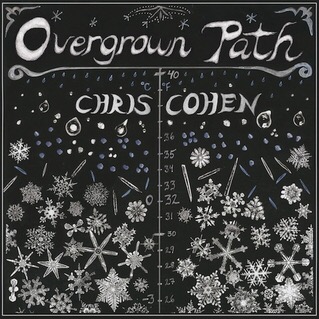
101. CHRIS COHEN – OVERGROWN PATH (2012) Guest Contributor: Gerry Love (Teenage Fanclub)

Recently TNPC celebrated the career of Scotland’s finest with a twin take on two Teenage Fanclub classics (TNPC #96). For that feature, Gerry Love kindly agreed to share his thoughts on A Catholic Education and Songs From Northern Britain. We invited him to select a favourite album of his own and to say a few words about it…


If I was going to make use of hyperbole, I might say that Overgrown Path is my Odessey & Oracle of the 21st century, but I’m not going to say that, I’m just going to say that it’s a brilliant record full of brilliant songs, and if you don’t know it you should spend some time with it. A modern DIY masterpiece, perfect in its construction, with beautiful melodic twists and turns and unpredictable, evolving, almost architectural arrangements, played and recorded entirely by its creator, Chris Cohen, it is one of the truly great records of the last decade.

If I was to describe it in terms of known landmarks I would say it’s somewhere in the direction of Broadcast, Mayo Thompson, Chet Baker, High Llamas, Raymond Scott, Alex Chilton, Stereolab, but Overgrown Path undoubtedly inhabits its own magical environment and is very much in the present tense. The song that pulled me in was ‘Monad’. No great story behind the discovery: out of curiosity I click play on the video one afternoon on youtube in late 2012 and as the suspended eerie intro holds and then switches and transforms into the ascending guitar line, I find myself already drawn in, optimistically engaged – I had heard great things about this guy – and as the cool melancholic vocal picks up the guitar melody and the song begins to unfold, ascending and descending, amongst those loose drums, smart bass lines, sharp guitars and warm keyboards, all perfectly weighted and measured, it was clear to me that I was listening to something truly special.

‘Monad’ is the type of song that appeals as much to your intellect as it does your emotions with its fluent complex patterns and deep chord progressions masked by the beautiful simplicity of the melody. I must have played it thirty times in a row. The following day I took a train into town and bought the album and it has been a regular soundtrack in my life ever since. Over nine songs, Overgrown Path presents a unique soft personal psychedelia, a highly evolved collection of cascading melodies, asymmetrical time signatures and grainy cinematic ever-changing arrangements. As the work of one musician, Overgrown Path’s artistic strength undoubtedly lies in its closeness to the original ideas, its undiluted, fully realised, creatively pure conception. Its musical strength lies in its blend of killer melodies and highly sophisticated atmospheric arrangements. Check out : ‘Monad’, ‘Caller No 9’, ‘Rollercoaster Ride’, ‘Optimist High’. (Gerry Love)

100. Various – THE SOUNDTRACK TO OUR LIVES…

For TNPC 100, we’ve delved deep inside our record collections, warts ‘n’ all, for the tunes that changed the way we thought about music; the sounds that helped to shape our lifelong musical obsession. We celebrate the tracks that messed with our heads, remembering the songs that let us know we were not alone and those that made us feel we could take on the world.

Better believe it, our lives were saved by rock’n’roll…

Paul

ALSO SPRACH ZARATHUSTRA – RICHARD STRAUSS (1896)

Sometimes I wonder how I came to be such an obsessive music fan as many of my earliest memories are of being terrified by what I heard – most of all this, the first piece of music to have a real hammer-blow impact on me. Even in Deodato’s laid-back, funky version, the wah-wah – a new sound to me – was like a cat yowling into the night, and those rising opening notes, darting like a bogeyman, remained as imposing as Strauss meant them to be. It only multiplied when I heard it as used in 2001 – the tympani simulating the voice of God like no music before or since. Even now, it feels disturbing, recurring through the maddest, oddest, most plain disconcerting U certificate film ever made – and Kubrick didn’t even intend to use it at first.

PEPPER BOX – PEPPERS (1973)

A birthday present I proudly took to the school Christmas party, with my name pencilled on the label – and a scintillating, feverish instrumental from France, an unmistakable product of its time and simultaneously 20 years ahead of it. The spring-heeled clavinet and squealing primitive synth belong in the time of The Goodies and power cuts – but then come the handclaps of a funky flamenco and a barely-audible but making-all-the difference scat vocal, and in a blind test you could easily have it down as Air or Daft Punk, as well as fitting right into the belle epoque of Jean-Michel Jarre, Space and even Magma.

DEATH ON TWO LEGS – QUEEN (1975)
My time as a rock and metal fan was brief and brought to a swift, sudden end by punk but before then, I found it close to impossible to see beyond the cape-sweeping of Queen, particularly on this marauding opener of A Night At The Opera, with Freddie denouncing an anonymous critic every bit as louchely as you’d expect. Their decline, fast, sharp and irreversible, began very soon afterwards.

SOMETHING BETTER CHANGE – STRANGLERS (1977)
The first punk record ever to make it into our house. It’s always been overshadowed by Peaches, No More Heroes and Golden Brown but it was a top 10 hit as well. I can’t say it put a swagger in my pre-teen step but it felt like it did – and the trick was replicated on the breathless b-side, Straighten Out.

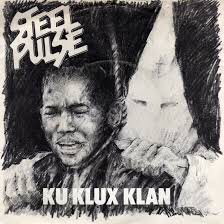
KU KLUX KLAN – STEEL PULSE (1978)


A true eye-opener. My introduction to reggae, to dub – and to the knowledge of racism’s evils. How can it be that this is as topical as ever?

COLD CITY – SPIZZ OIL (1979)
I could have chosen dozens of songs to represent my realisation that music didn’t begin and end with the charts but this stands out for creating an apocalyptic vision with nothing more play-in-an-hour guitar, creaky sound effects and cave-dweller percussion. They’re usually remembered as a novelty act for Where’s Captain Kirk? and their practice of changing their name every year (Spizz Oil/Spizz Energi/Athletico Spizz ’80/Spizzles). They were far better than that.

TRANSMISSION – JOY DIVISION (1979)


Around two months before their abrupt end in dreadful circumstances, I got properly into Joy Division through Unknown Pleasures and this electrifying, white-knuckle single. Punk was now over – the future was underway.

ABSOLUTELY SWEET MARIE – BOB DYLAN (1966)
My record library not only helped me keep pace with the precipiate present; it was also invaluable in my endeavour to sort out the past. I finally took Blonde On Blonde out, some eight months after choosing an audiobook of I, Claudius instead, and it soundtracked a bright spring rather than a gloomy, drenched summer. Its majesty was immediately apparent; this is the song that hit first and hardest.

REVOLUTIONARY SPIRIT – WILD SWANS (1982)
I saw them supporting Echo and the Bunnymen at Glasgow Apollo in 1981; liked them. They issued this single two months later; I thought it sounded good and mentally filed it away. Just over a year after that, I was unable to dislodge a particular melody from my mind. It turned out to be Revolutionary Spirit – I declared it my favourite song of all time and have continued to do so ever since. All the power, drama, magic, mystery and beauty you could seek in music is here, with the velocity and dynamic of a fleet of planes taking off. Just hear it for yourself; I’d only diminish it by trying to describe it further.

TERRAPIN – SYD BARRETT (1970)


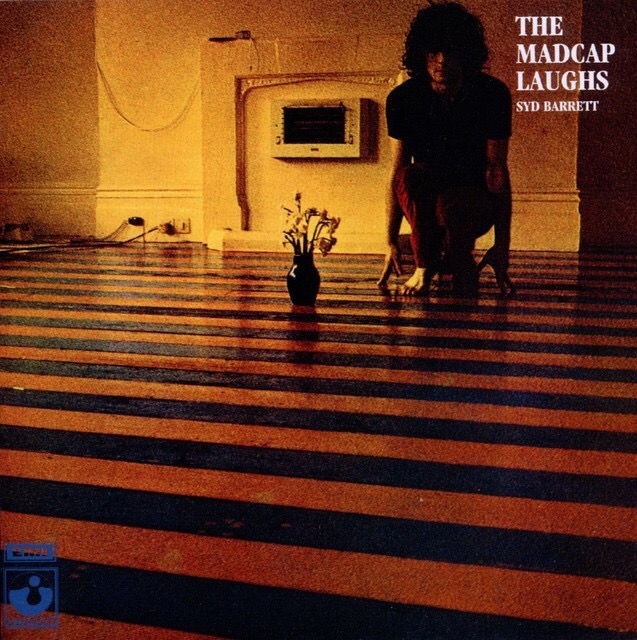
The library triumphs again. The Madcap Laughs is not entirely a comfortable listen, and it’s questionable whether some moments on it should have been included at all, but at its finest, it’s a man attempting to make sense of the world in the only way he can and offering to share that world with us with wit and generosity. While Men at Work and Bonnie Tyler were scrabbling across the airwaves, this was all I wanted to hear.

PAPUA NEW GUINEA – FUTURE SOUND OF LONDON (1992)
I’ve always been a dabbling dilettante when it comes to dance but I know what makes sense to me when I hear it. This impossibly beautiful and richly crafted tune rose above the nosebleed anthems like Excalibur thrust out of a swamp.

FAT CHANCE – MOTHERS (2016)
In my most recent review, of Pylon’s Gyrate, I neglected to mention that their influence has found its way to the present, not least in this band from, appropriately enough, Athens. Tense, compelling, glowering yet tender – and gloriously devoid of millennial whoop (PG).

Terry

The Teddy Bears – To Know Him Is To Love Him (single)

In amongst my parents record collection was this single. I think it was where I discovered that music could be more than the words and notes committed to tape. There is something else captured on this that is utterly transporting. As David Briggs would say – It’s got the spook.

Ramones – Rockaway Beach (It’s Alive)
The first noise that drowned out all the crap around me. Because the opening lyrics define rock’n’roll to me. When the Ramones albums were only available on import It’s Alive gave you twice as many songs for only £1.00 more and that was important in those days.

Velvet Underground – Heroin (Live 1969)
I bought the Velvets’ albums in a weird order. Luckily I had a fellow TNPC’er to help guide me through. I’m glad I heard this LP early though. I think hearing Lou rap about football made them seem so much more accessible and easier to identify with. The sleeve notes are among my favourite (along with Husker Du’s Warehouse Songs and Stories). Pull up a cushion.

Jesus & Mary Chain – Somethings Wrong (Psychocandy)

From hearing their 1st Peel session in late 1984 to seeing them in early 1986 the Mary Chain owned me. For a long time I thought this was the greatest song ever recorded.

Nick Cave & The Bad Seeds – Sad Waters (Your Funeral My Trial)

I bought this for someone and in the end couldn’t bear to give it away. Released as a double vinyl, it was so good it was a week before I played the second record. Still the highpoint of an incredible body of work.

Nick Drake – Time Has Told Me (Five Leaves Left)

A fellow TNPC writer loaned me the Heaven In A Wild Flower compilation c. 1988. I discovered that if I set my record player to 7” it would drop perfectly on this track. I would then play this on repeat for several hours at a time, and allow its meditational healing power to wash over me. Nick Drake has been a near constant companion ever since.

Van Morrison – Astral Weeks (Astral Weeks)
In the late 1980’s, Melody Maker in the UK issued a magazine called Pop! The Glory Years containing some of the finest music writing I’ve ever read. The piece on Van Morrison opens “Think about all the people you ever knew. Some of them are dead now, others have been lost in the slow unwinding of the years, gone mad, burned themselves out; others are out there, busy with their lives, happy with what thaey have become. It will have been a long time since you last saw these people you know and maybe loved, but listening to Astral Weeks will bring them back into your life.” That is about as close as anyone has ever got to summing up this masterpiece for me.

13th Floor Elevators – Slip Inside This House (Easter Everywhere)

An avid collector of Nuggets, Pebbles, etc. psych garage compilation, no amount of garage rock could prepare me for this. Sometimes I feel I’m on the verge of grasping its elusive meaning before just giving into the trance cooked up by Roky and Stacy.

Bobby Bland – I’m Not Ashamed (Two Steps From The Blues)
The re-release of Greil Marcus’ Mystery Train provided a treasure map to a world I barely knew existed. Soul music rarely gets deeper than this.

Galaxie 500 – Don’t Let Our Youth Go To Waste (Today)
The first track I heard by them (thanks John Peel). Turning an acapella Jonathan Richman track that barely lasts two minutes into a psychedelic epic is some kind of genius.

Debra Keese – Travelling (Build The Ark)
Digging deeper into the world of reggae in the mid to late 1990’s opened up whole new sonic vistas to me. Along with a series of incredible re-releases on the Blood and Fire label (Keith Hudson, The Congos, Yabby U, Horace Andy etc.) a local record shop (Fopp) had 3 Lee Perry triple vinyl box sets for £5.00 each. The Upsetter, Open The Gate and best of all Build the Ark. This is a song that never fails to take me into the mystic.

Six Organs Of Admittance – Eighth Cognition/All You’ve Left (School Of The Flower)
Aiming for Alice Coltrane but ending up somewhere else is no failure. A perfect gateway both to the earlier and later work of Ben Chasny, and also a multitude of other artists. (TT)

https://youtu.be/mtO8SoFpPPg

Johnnie

HERB ALPERT & THE TIJUANA BRASS – THIS GUY’S IN LOVE WITH YOU (1968)

I was brought up on a diet of Debussy, Stevie Wonder and bossa nova, stuff my mam listened to, so I had an ear for melody. And Burt is really the king of melody. Herb can’t sing on the other hand, but hey…

https://youtu.be/GWjbUAYcxII

SWEET – LOVE IS LIKE OXYGEN (1978)
I mind hearing this on the radio, and feigning illness from school the next day in the hope that I might hear it on the radio once again. Lying on the couch, my mam hoovering the living room, and me, fingers on the ‘record’ button – having to tell her to stop when it finally came on. I can’t quite understand what it was that appealed. That multi-tracked vocal probably sounded like the future to me, even though Sweet by then were obviously a relic from the past.

JAPAN – GENTLEMEN TAKE POLAROIDS (1980)


The first band I thought of as ‘mine’. I took this home from the library and played it all summer (’81 I think). It was the perfect antidote to all that NWOBHM guff that all my school mates were listening to. They used to stand playing air guitar in a line and shaking their hair to their Saxon records, while I just stood aside entirely bemused. I remember being really upset finding out Japan had split, just as I had discovered them.

THE VELVET UNDERGROUND – SUNDAY MORNING (1967)


Adam Ant selected this on some radio show in 1985. When I heard it I lost interest in going to the football. I started perfecting my forlorn indie kid look and buying the NME. Yes, I blame the Velvets. I immediately bought the banana album, which kind of shocked me by its abrasiveness, but there was no way back.

PERE UBU – NON-ALIGNMENT PACT (1978)
Well, it’s the most thrilling introduction to a song ever isn’t it? Then it’s a Martian singing outside some radioactive power plant, backed by the loudest garage band in town.

TIM BUCKLEY – LOVE FROM ROOM 109 AT THE ISLANDER (1969)
Well, who doesn’t like ocean sounds, a bit of improvisational jazz and Dionysus crooning over the top?

PUBLIC ENEMY – REBEL WITHOUT A PAUSE (1987)


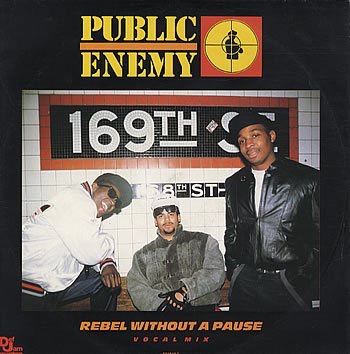
I resisted hip hop for a while, but this was the turning point. Insanely radical, sharp intellects, precision programming and ‘that’ noise, whatever the hell it was. They made better records but this was the bomb.

AR KANE – BABY MILK SNATCHER (1988)
I missed all that C86 stuff because I was too busy buying all the cool LPs from the NMEs ’85 Top 100 list (as well as from the original Perfect Collection book) to notice what was going on, so I only really got to grips with new sounds around ’87 – no bad thing: the next few years produced an abundance of astonishing music on both sides of the Atlantic. Here’s a great track from a band that seems to have slipped from collective memory. This is the EP version.

LEONARD COHEN – FAMOUS BLUE RAINCOAT (1971)
I was asked the other day, if I preferred Dylan or Cohen. Not an easy question, but lyrically, Lenny was untouchable. The melody got me first, and the words still shake me to the core. A relationship song but not about ‘that’ relationship. Is he singing to his friend/’brother’ or to himself? A song for grown ups, as anti-pop as its possible to be.

FLAMINGOS – I ONLY HAVE EYES FOR YOU (1959)
I think I heard this in 1992 or thereabouts. I think it’s the greatest production job I’ve ever heard. Take a bow George Goldner!

DJ PIERRE – MUZIK IS LIFE (Life Long Mix) (1992)
This alongside Derrick May’s remix of ‘Sueno Latino’ was the soundtrack to the early ’90s for me. You can say what you like but Chicago and Detroit were where it was at. A patient, building, hypnotic, disorientating, ecstatic noise.

JULIA HOLTER – MAXIM’S I (2013)

Loud City Song is proof that popular music is alive and well. There are still fearless pioneers out there, amongst them Kendrick Lamar, Daniel Rossen and Julia Holter, who writes like a mad poet and sings like a schizophrenic ghost. (JJ)