21. ECHO & AND THE BUNNYMEN – HEAVEN UP HERE (1981)

Everybody has one band who, above all others, are Theirs. Echo and the Bunnymen were Mine.
 It’s hard to explain why they should have snagged on to me more than any other – there were plenty of others, before and after, who came close and with many of them I had the same sense of discovery, both in the sense of finding them for myself and in being taken to places unknown. It helped that the silly name and their distinct difference from, on the one hand, boorish metal and on the other, flagging rock ‘n’ roll revivalists meant they were great for winding up the people who favoured those styles.  They also eschewed many of rock’s fatigued conventions at a time when its last rites were being read, from simple gestures like foregoing the drum riser to have the band in a line on stage, to their khaki stage gear and camouflage set, to event gigs like the mystery tour to a botanic gardens (captured in the short film Shine So Hard) and the celebrated Crystal Day, where Liverpool as a whole became the venue and the gig was just one element of a show which also took in Chinese theatre, a bike ride and a visit to the band’s favourite cafe which was required for tickets to be valid. It may be that these were largely the ideas of their manager, future KLF pop provocateur Bill Drummond, but instead of being overcompensatory gimmicks, they were inspired and complementary to the extraordinary music the band were making.
And most of all, that music and lyrics had a swagger, inexhaustible reserves of cool that I  could never hope to claim for my own but could at least revel in the reflection of, and at the same time a real – to borrow a phrase from contemporary heroes Dexys – knowledge of beauty – which meant it had heart as well as heft. In short, listening to the Bunnymen made me feel 100 feet tall.
Roughly 94 feet taller than Ian McCulloch, the garrulous, big-coated first Bunnyman among equals, who at this stage had as much to say in song as in interview and sang it in a voice which could leap from sardonic drawl to anguished peal and back again faster than you could say “King Kenny.” (his Liverpool fandom even went a long way towards rekindling my own interest in football, which had expired utterly through a combination of Scotland’s 1978 World Cup calamity in Argentina, a realisation that I myself couldn’t play the game for toffee and a sense that, compared with music, it was just plain uncool. Joe Strummer or Terry McDermott?)
Alongside him was Will Sergeant, a guitarist of ideas as much as action, influenced by Eno and Tom Verlaine in equal measure, who could bring textures by the score to a song while rocking like an entire ecosystem of beasts. Further along, the brilliantly athletic rhythm section of bassist Les Pattinson and the – it’ll always be painful to write the word – late Pete de Freitas on drums, elastic, double-jointed, able to switch direction at half a second’s notice and enabling the band to turn the conventions of rock songwriting, as they would put it themselves, inside out, back to front, upside down.
Two particular songs on Heaven Up Here conduct this surgery on the song with a Nobel level of skill and precision. Opener Show of Strength shifts gears, leaps ever higher and steps as surefootedly as a tightrope walker asking for the rope to be hoisted a few more feet, then it disappears like a spy whose mission is accomplished, leaving Mac alone to file the final report: “Hey, I came in right on cue/One is me and one is you.”
Similarly, Over The Wall fades in on a simulation of the sound of the seas that Mac would return to time and again for inspiration, a gently pulsing rhythm box and a three-note riff embodying Sergeant’s economical yet panoramic style. Pattinson goes one better with a rotating four-note bassline as far evolved from root-note jockey playing as the Grand Canyon is from a pothole, while De Freitas knows exactly when to hold back, when to detonate and when to let loose the steeplechases where Mac riffs on Runaway by Del Shannon (who, Mac claimed, was mooted as producer for first album Crocodiles) and pleads, twisting another cliche “come on and hold me tight…to my logical limit.” A year earlier, he’d chosen this for his all-time top 10 in Smash Hits but what would usually be unpardonable hubris actually seemed quite reasonable.
Elsewhere, they offer their own perspective on the parched funk of Talking Heads and Gang of Four – both strong undercurrents in early Bunnymen – on It Was A Pleasure and No Dark Things. The title song takes the triple-jump rhythm of Bowie’s Star and accelerates it to prove that rock that’s foresaken the roll can be its own kind of dance music, while All I Want is equally celebratory amid call-and response guitars and drums tossed on – to quote their Liverpool contemporaries the Wild Swans – a harsh and foaming sea.
Melancholy arrives on The Disease, probably their oddest ever song, a simple, see-sawing riff embellished by backwards vocals, injections of feedback and ominous rumbles. Like Heaven Up Here itself, it also sees Mac contrasting heaven with hell – a device he’s used in at least half a dozen other songs since.
The mood darkens further on All My Colours (aka Zimbo) where Mac ponders desolation and decline to the accompaniment of then-voguish tribal drums but to far more defeated and less triumphant ends than the ones that Adam and the Ants were, coincidentally, pursuing to massive success. This version of the song actually works less well than many live versions, as the vast snare crack which heralds the chorus is needlessly muted – I’d recommend instead the version from the 1982 WOMAD festival with the Drummers of Burundi (“we’re Echo and the Burundimen” quips Mac) which appeared on the 12″ of The Cutter.
It’s often observed that, despite three top 10 hits, the Bunnymen ultimately never achieved the stadium status of U2 and Simple Minds. Just as significantly, neither have they secured the place in The Canon that Joy Division/New Order and the Smiths now routinely occupy. Since reforming in the late 1990s, they continue to produce alluring records and remain an enticing live act but, while I wouldn’t go as far as to say they’re tarnishing their legacy, the songs are now largely linear (the very thing Mac claimed to dislike in early masterpiece Villiers’ Terrace), join-the-dots affairs, glaringly missing the vigour of the original rhythm section, while Mac has long since retreated from his early vivid lyricism (eg “a shaking hand would transmit all fidelity”) to an all too familiar litany of sunandrainandmoonand stars. In view of Oasis and Coldplay’s acknowledged debt to the Bunnymen, he might be held indirectly responsible for the trite, unimaginative lyric writing that’s so pervasive today.
But then I remember what the Bunnymen have meant to me for so many years and, even if they are peripheral in official rock history, it makes me feel even more vindicated. I’m more than happy to share them with anyone but you must understand – they’re Mine. (PG).
16. COCKNEY REBEL – PSYCHOMODO (1974)

cockney rebel

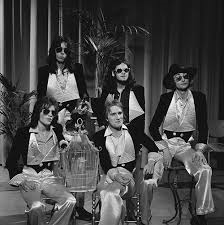
Curiosity can sometimes take years to be satisfied. Cockney Rebel were, along with Sparks, the first band I was a fan of, as Make Me Smile (Come Up and See Me) became one of the more unexpected number ones of its time, still some years away from its fate as a staple of the unimaginative pub DJ’s record box, along with 500 Miles, Sweet Caroline, Delilah, Daydream Believer and the monarch of them all, Brown Eyed Girl.
Around this time, its parent album, The Best Years Of Our Lives, arrived in our house. Alongside the star of the show, it ranged from the goofy to the melancholy to, on Back To The Farm, the genuinely unsettling. Aged six, I understood little of this but liked it a lot.
Another arrival was, in hindsight, truly life-changing for me. The NME Book of Rock was not so much a window as an elaborately constructed archway to a world I was far too young for but fascinated by nevertheless. Although baffled by the omission of Mud, I was intrigued by names that would make more sense, and have sounds put to them, later – Pentangle, Third Ear Band, the United States of America and scores of others.
But Cockney Rebel’s entry really confused me. Why were they saying their new album was called The Way We Used To Be when it was called The Best Years Of Our Lives? Even worse, the people playing with Steve Harley on that album had solid, sensible names – George Ford, Duncan Mackay – but this book was telling me the group was full of funny names like Jean-Paul Crocker and Milton Reame-James. Why was I being lied to?
Later, amid punk and post-punk, Cockney Rebel were pushed to the back of my mind, a spell punctuated briefly by a splenetic rant from Harley during an NME (them again) interview with Danny Baker about Joy Division, after he had chanced to see their legendary performance on the BBC’s Something Else. It showed him to be grievously out of touch but, for me at least, his time would come again.
In a fit of youthful nostalgia, at 14 I found myself revisiting The Best Years… and its follow-up, Timeless Flight. This included the grandiose but gripping single Black Or White, which might have eclipsed Make Me Smile had it not been issued two weeks after Bohemian Rhapsody; clearly, there was room for only one overblown orchestral six-minute single released on EMI and the superior one lost out. It also had Understand, an aimless seven-minute groan which taught me the true meaning of boredom – but some months later, Bishopbriggs Library added a casette of Psychomodo to its riches and it’s a record where boredom is as remote as minimalism or restraint.
The aforementioned NME book averred that Cockney Rebel took numerous vogueish styles and moulded them into “one seemingly original mode” and sure enough, it’s hard to pin them down, which is where Psychomodo’s splendour lies. It’s not quite glam, though there’s a flirtation on the R & P (rhythm and pop – a genre is born) of the title track and the sarcastic charivari of their second top 10 hit, Mr Soft. Nor is it prog – they came nerve-janglingly close on Sebastian and Death Trip on their debut album, The Human Menagerie, but Harley was far too close at this stage to the Bowie/Roxy end of the spectrum to be devoured by mellotrons; as such, the symphonic tendencies of Cavaliers are moderated by intemperate language and waterfront harmonica, while the delicately orchestrated Bed In The Corner is more Forever Changes than Topographic Oceans. And it’s definitely not metal, though Sling It!’s commotion puts you right in the midst of the shipwreck it describes.
Dylan and Mott were other frequently suggested touchstones but Psychomodo is encapsulated by its uncategorisable side-closers. Tumbling Down is wistful, moist-eyed and slightly daft as Harley mourns “Oh dear, look what they’ve done to the blues” in a song which owes precisely nothing to Chicago or the Mississippi Delta but a good deal more to Mozart’s Vienna. It’s fitting that it was chosen as a climactic song for Venus In Furs, the band in the film Velvet Goldmine, whose set list is cannibalised from the songs of Cockney Rebel and their contemporaries.
At the end of side one came Ritz, a real lost classic, unlike the lost classics which are lost for an excellent reason. The simple, cyclical acoustic pattern suggests Astral Weeks but never apes Van Morrison directly, with strings hovering like the vultures mentioned in Tumbling Down and brass which strolls coquettishly one minute and has a contract out on Jericho’s walls the next. Above it, Harley’s distorted voice, too mannered for many, shows dexterity with some of his most erudite lyrics (“Couch my disease in chintz-covered kisses/Glazed calico cloth my costume this is”). In one of those irresistible coincidences, this and Psychomodo both namecheck Desdemona – and I was doing Othello at school at the same time I discovered the album.
Three-fifths of the band quit soon after – those funny names and bassist Paul Jeffreys, who would be killed at Lockerbie, prompting Harley, touchingly, to dedicate Sebastian to him on tour the following year. The sensibly named, highly proficient new Cockney Rebel made more fine music and provided Harley with his pension (as he calls Make Me Smile) but would never be as effervescent or kaliedoscopic as on those first two albums or the lovable stand-alone hit Judy Teen. Those were magic – the best years of their lives (PG).

15. COCTEAU TWINS – TREASURE (1984) / (A) COCTEAU TWINS – BLUE BELL KNOLL (1988)

TREASURE

There can hardly be a word in the English language more precisely defined, yet more persistently misused, than unique. It’s really not complicated – it simply means something is one of a kind, nothing more, nothing less. Yet more often than not, it’s used when the word that’s really required is distinctive or unusual. It’s rarely that something truly is unique and this means that the word shouldn’t be bandied about like it belongs in a chat about the weather – we should treasure things that genuinely are unique and, however frequently and hamfistedly they’ve been imitated, I contend that the Cocteaus were, and remain, among them.

You can detect the fingerprints of Siouxsie and the Banshees and, to a lesser extent, Joy Division on their first album, Garlands, but by the time of its follow-up, Head Over Heels, they’d grown to a point where it was hard to divine any obvious influences at all. Robin Guthrie was arguably reinventing the guitar even more thoroughly than Kevin Shields would half a decade later, creating labyrynthine textures from what very soon ceased to sound like guitars. Meanwhile, Liz Fraser sang like she had no choice and, as is well known, literally invented a new language as she strove to express the inexpressible. Even their drum machine was more versatile and dextrous than many of its peers – human or mechanical – and wasn’t there simply because it drank less and took up less room.

Treasure came at the end of a year which had seen the vast Pearly Dewdrops’ Drops – where Guthrie’s guitars are transformed into bagpipes playing a pibroch worthy of Culloden – give them a top 40 hit. Guthrie later furiously denounced the album but I’ve always heard it as the most fully-realised and downright beautiful thing they’d done up to that point, despite a tracklist composed entirely of quaint names that could double for a Hampstead school register.

Beatrix has a music-box sound that’s always put me in mind of cloisters, while Otterley plumbs depths of mystery that you’d need Sonar to penetrate and the almost Californian tinge to Pandora is an unexpected yet completely fitting counterpoint to Fraser’s voice tiptoeing up a spiral staircase.

At the risk of heresy, better versions of some songs were done elsewhere – opener Ivo, which had all the conditions for another hit, on an EP given away by the NME, Lorelei on Whistle Test and Beatrix, under the unrepentantly Scottish working title Wheesht, on a Peel session. But none of this dilutes the majesty of Treasure – they’re complementary to it and a reminder that a band who play a song the same way every time will be a very bored band and it will show.

I was 16 when Treasure came out, restless to move on from school and see more of the world. This didn’t necessarily mean far-off lands and was as much about people as place, people I knew nothing of who could be in towns just a few miles away – the Cocteaus’ native Grangemouth, for example. Their music was one of the foremost soundtracks to these times and that’s at least my perception of it – like your perception of it and like the music itself, it’s unique (PG)

(A) BLUE BELL KNOLL

Conventional wisdom identifies two distinct camps of Cocteaus fans. There are those who reckon Treasure their finest moment, and those who prefer Heaven or Las Vegas. Sandwiched between these two undoubted creative peaks are a couple of oft overlooked gems – which for a minority third camp, might well represent the summit of their achievements.

Victorialand is in some ways a transitional album – while it retains some of Treasure’s icy nerve (as on the closer The Thinner The Air) the listener is no longer made to feel like a worm stuck in a glacier. However, Victorialand, the Cocteau’s aural perestroika, was merely paving the way for the majesty of Blue Bell Knoll.

Blue Bell Knoll contains everything you need in a Cocteaus album. And you do need at least one. The song titles have reached new supra-semantic heights: Spooning Good Singing Gum; A Kissed Out Red Floatboat; Ella Megalast Burls Forever. The music itself is dense, playful, exultant. There is a vibrancy about it that sounds a million miles away from their dour gothic beginnings.

The album has a glowing heart. The outer sleeve with its blurry image of cold grey fingertips opens to reveal the same picture burning gently within. And that’s no accident. The one frosty moment – The Itchy Glowbo Blow – transforms itself in a gloriously chiming finale. Everywhere else, the ice has melted. On Phoebe Still A Baby, with its beautiful marimba accompaniment and Cico Buff, Liz is at her ecstatic best – while she recalls recording sessions for BBK as being particularly exhausting, the fruits of her efforts are plain for us to hear. On the magnificent single, Carolyn’s Fingers, and the aforementioned A Kissed Out Red Floatboat in particular, things come together in spectacular style. The latter features a remarkable keyboard part that strangely conjures images of a fluttering locomotive on its way to another solar system.

For some, Robin Guthrie is really more of a producer than a great guitarist. But here even the sumptuous trademark reverb cannot disguise his masterful playing. For me, this is Liz is at her absolute peak and words simply cannot do her performances justice. Indeed when it comes down to it, what do words matter? So if the opportunity to use the familiar adjectives (celestial, ethereal etc) seems wasted, it is only because Blue Bell Knoll transcends these cliches to feel like a meeting with God Himself. (JJ)

10. THE BAND OF HOLY JOY – MORE TALES FROM THE CITY (1987)

Now that we’re long past the 20th century, the vast changes – by no means all deserve to be called progress – it wrought can easily be taken for granted; if you stop to think about them, they defy belief, particularly considering the transformations witnessed by those who lived through them.
The post-war second half alone brought change beyond recognition but the paradox at the heart of More Tales From the City is that, while it sounds like it belongs in the pre-rock ‘n’ roll ’50s, it’s one of the most vivid and eloquent accounts of the fractured, fractious times in which it was made – declared by BoHJ frontman Johnny Brown, with some justification, as “the maddest time ever”; a time when the maddest policies ever somehow earned yet another public endorsement; a time when eminently preventable disasters showed up systematic failings with terrifying frequency; a time of wilfully misunderstood disease, of censorship suddenly and arbitrarily ratcheted up, of savagery in light entertainment as death and bereavement came to sit alongside the usual banality.
Amid all this, BoHJ’s brass and organ-heavy, rhumba-laden sound evoked a Shine On Harvey Moon demi-monde of national service, illicit encounters at the milkshake parlour and seaside towns already showing signs of wear. Morrissey was at this time preparing to touch on these themes but BoHJ delved even further and deeper with a vision that was universal more than it was regional or personal and the squabbling couples, stolen babies and forsaken misfits inhabiting their songs reflected, like those of the Smiths, timeless concerns.
The name of Bertolt Brecht followed BoHJ around like a benign fog but their sound was a complex, heavily loaded broth. Half of the songs on More Tales From the City are wholly or partly in waltz time but this never becomes wearing – why should it any more than an unvarying 4/4 tempo? – while a dancehall organ rhythm box is an equally frequent visitor. The piano that heralds opening track Who Snatched the Baby? brings a classical shade into the parlour, while Don’t Stick Knives In Babbies’ Heads takes a macabre folk standard and uses it to report soberly the facts of the grim case while reserving most of its judgement for the prurient fascination the crime attracts – a theme expanded on the lyric sheet, where the brief verses are compressed and inflated into a single, breathless Niagara of gossip.

Elsewhere among the snapshots of thwarted yet unavoidably resilient lives, Cities ponders “five minutes’ joy, a lifetime of shame” to exquisite mandolin and despairing strings and The Tide of Life ends its dissection of regret and resentment after six minutes but could conceivably carry on for millennia along with the waves it mimics.
The two most ‘modern’ sounding songs are among the best. Mad Dot puts bass in the foreground for the first and last time and, despite the striped t-shirts and anoraks favoured by the band, is the one song that could have galvanised an indie disco – if only there’d been one that had the nous to play it. Closing track (of course) Goodnight, God Bless, Goodbye, meanwhile, is genuinely heartbreaking, Johnny’s rueful memories – “in a way I’m glad what we had we swore was forever” – cushioned by rotating drums, subdued keyboards and a rare-going-on-unique instance of whistling being not only forgivable but essential.
They supported James. Carter USM insisted on quoting them as an influence despite using them to completely misguided ends. Robert Plant is a fan and would have been anyway even if they didn’t have practically the same name as his pre-Zeppelin band. For all this, BoHJ have been persistently forgotten and overlooked but they’ve returned- now sadly without founder member Karel van Bergen, who died in 2013 – and still have plenty to offer. More Tales From the City, though, remains the place to start, as potent and pointed as the day it came about – “I refuse to believe that those days are gone, that there was a time that was once upon”. (PG)

9. THE CLIENTELE – SUBURBAN LIGHT (2000)

In the beginning was the word. And the word was…Felt. Alasdair Maclean saw the word, scribbled on his school chum James Hornsey’s pencil case. The friendship was sealed and The Clientele was born. Or so the legend goes. The band formed in London in 1991, while the boys were still at school. It would be almost a decade before their first fragile songs emerged to a politely indifferent world.

These songs, a compilation of early recordings including singles and B Sides were for the most part recorded on an eight-track portastudio above Innes Phillips’ flat in 1996. Phillips, guitarist and one of the founder members, would leave and go on to form his own band The Relict, before these songs eventually saw the light of day in 2000. As for the collection of songs assembled here on Suburban Light…well you have to trust me on this one…it is arguably one of the most perfect albums from any English band in the last twenty five years. Yes, it is that good.

Comparisons with Felt are obvious (‘We Could Walk Together’s guitar line for example), NZ’s The Chills perhaps less so (listen to the ghostly guitar on ‘An Hour Before The Light’, uncannily reminiscent of The Chills’ classic ‘Pink Frost’), but it is most often claimed the band are musically indebted to The Velvet Underground. Certainly ‘Reflections After Jane’ owes a nod to ‘Candy Says’ or ‘I’ll Be Your Mirror’ but I wonder if the comparison is apt. Indeed, perhaps it’s a little lazy. In reality the two bands inhabit entirely different worlds. The Clientele’s reverb-drenched songs of wistful suburban ennui the perfect counterpoint to the urban brutality and debonaire perversions of the Velvets. The lyrical contrast is even more spectacular: compare The Velvets’ catalogue of junkies, transvestites and freaks who send themselves by long-distance post in cardboard boxes; to the Clientele’s preference for documenting rainy Sunday afternoons in the park, or walking through the crowds with “Miss Jones” (of whom nothing is revealed, but whom I imagine to be a rather pretty but stuffy English Literature student). Perhaps a more intuitive comparison than the Velvets could be made with Galaxie 500 (performing a cover of ‘Waterloo Sunset’). Whatever comparison one makes, the band would never sound quite like this again. The songs on their first album proper, The Violet Hour did not quite match up (with a few mis-steps along the way). Edges would be softened, the production become more sophisticated. The later albums with the exception of Strange Geometry (which is their other indisputably classic record) somehow strangely failed to recapture the thematic harmony of this first release. It is particularly unusual for a compilation to achieve such a singular vision, such a feeling of unity, but it’s there.


Despite greater, though still very limited success on the other side of the Atlantic, The Clientele remain as quintessentially English as an episode of Camberwick Green. Had they been children of a different era they would no doubt have been invited to compose the soundtrack for Bronco Bullfrog, Here We Go Round The Mulberry Bush or some other cult late 1960s Brit youth film. The occasional backwards guitar loop alongside MacLean’s penchant for colourful cravats places the band at least spiritually and aesthetically in that era. So, right place, wrong time perhaps? Well, not exactly…there is nothing contrived about the Clientele’s Englishness. Neither gimmick nor motif, rather it emanates organically from their music like the dispersion of light through a prism.

“If we’re on Delancey Street at night,
In the after train ride quiet,
Barking dogs by Highgate Pond,
Something’s here but something’s gone’ McLean sings on ‘Joseph Cornell’ – it is a typically evocative mood piece and the album is littered with such examples:
‘The taxi lights were in your eyes
So warm against St. Mary’s spires
The carnival was over in the rain
And arm in arm through Vincent Street.
The evening hanging like a dream
I touched your face and saw the night again.” (‘Saturday’)

These lost and unrepeatable moments of nostalgia and yearning, moments so vivid and personal are detailed with such precision for time and place, yet somehow paradoxically become universally tangible and almost unbearably poignant for the listener, who immersed in their atmosphere, casts his own shadow upon those spaces and places. I saw The Clientele play to a sparse audience at The Woodside Social in Glasgow in 2005. Perhaps not an ‘I was there’ moment but imprinted on my memory nonetheless. A few members of Belle & Sebastian, one or two from Glasgow folkies Lucky Luke and a few shy-looking snappily dressed mods. Almost their perfect audience. I remember walking out in the cold air afterward, the hazy drunken glare of the street lights providing the backdrop to the band hurriedly throwing their gear into the back of the van. And walking away into the night. Clearly one of those time and place moments – the spell had worked.

Post-millennium there exists very little consensus of opinion on the greatest albums of our age. It would be more straightforward to ask George Galloway to publicly extol the virtues of US foreign policy than expect acquiescence from others in this regard. Perhaps in a progressively individualistic culture which is post-everything, with few recognisable musical genres or subcultures, we have reached that point where consensus is virtually impossible. So we claim precedence for our individual favourites. And they become all the more precious for it. Suburban Light is one of those to treasure. The Clientele are the great lost English band of the new millennium, as genteel yet vital as Nick Drake, as elusive and undervalued as The Television Personalities, and musically, comfortably the equal of Felt. Their early songs, reflective and melancholic possess an enduring appeal. They will haunt you. Let them into your life. (JJ)

7. ROBERT WYATT – ROCK BOTTOM (1974)

ROBERT WYATT – ROCK BOTTOM (1974)

If  Rock Bottom were issued today, it would probably receive the flippant response that it was the only occasion in history when a couple performing their infantile private jokes has elicited anything other that irritated nausea. This would gravely short-change, not to mention insult,  both Robert Wyatt and his wife, Alfreda (Alfie) Benge; firstly because, as is well-documented, she had just supported him through the ordeal of paralysis from the waist down after falling from a window the previous year (with characteristic restraint,  Wyatt has since suggested the accident had a liberating effect on music he’d already largely written) but also because the record is genuinely – to use another debased adjective- awesome. The pet names and in-jokes that permeate the Alifib/Alifie medley are affectionate but also more than slightly unsettling, suggesting almost a regression to a childlike state, particularly as Gary Windo’s tenor sax scurries in like a venomous snake seeking prey. There’s another pair of twins in Little Red Riding/Robin Hood Hit The Road- the former in particular almost defies description, as Wyatt pleads “Oh stop it, stop it” and the whole song begins to run backwards like an engulfing mudslide and the matchless Ivor Cutler peers out of the sludge to taunt with talk of “lunchtea” and joining  a hedgehog in bursting tyres, and it all culminates in an endless fade of what sounds like an entire nation sounding a fanfare. In fact, it’s the trumpets of one man, Mongezi Feza, who would die of pneumonia the following year. Then there’s Sea Song, possibly the most aptly named song ever, its restful drift the sound of moorings slipped and shoreline receding further and further until things get choppy with a piano solo which matches Aladdin Sane for sweet discordance and Wyatt calls out wordlessly, not waving…
If Robert Wyatt is, as he once memorably described himself, a “gawping tourist of jazz”, Rock Bottom takes him- and the listener- to the jazz pyramids, Florence and Niagara Falls. Start packing now. (PG)

6. GRANT HART – INTOLERANCE (1989)

Grant Hart - Intolerance (1989)

grantGRANT HART – INTOLERANCE (1989)

Dropped by Warners, Grant Hart found himself back on SST, the label that had released Husker Du’s three best records. Stripped of Bob Mould’s fizzing guitar and his own skittering drums, Harts first release after the acrimonious split of Husker Du is a hypnotic meditation on regret and loss, full of mystery and magic, and littered with characters struggling to make sense of their chaotic lives, and which may include himself and his former band mates.

The opener All Of My Senses offers few clues as to what will follow, coming on like a lo-fi New Order. Warm keyboards and hand claps replace the harsh drones and groans that open the record. According to Michael Azzerad’s book Our Band Could Be Your Life, Hart was using methadone in an effort to conquer his heroin addiction when Husker Du split, although he was sober by the time Intolerance was recorded. Whether or not the song is auto-biographical, its hard to hear Hart singing “I’m using, I’m using” while the gospel backing singers sing “Pulling a plough but I don’t know how” without the feeling that he’s referring to his own struggles with addiction.

The guitars are back for Now That You Know Me. It wouldn’t have been out of place on Warehouse Songs And Stories (it was performed by Husker Du live), but a wailing harmonica gives it an almost Dylanish feel (they are both from Minnesota!).

Fanfare In D Major builds tension in the verses with rolling drums and sawing strings before exploding with one of Grants greatest pop choruses.

Drug references are most explicit on the junkie gospel sea shanty of The Main which creaks and sways like great big clipper ship (I avoided policemen when I went to cop, De Quincey, smack in the middle, the hell that I went through when I stuck it into etc). Grant seems to be saying the experience is universal – “Reeperbahn, Christiana, Pigalle all the same” (these being notorious drug dealing areas in Hamburg, Copenhagen and Paris).

Side two opens with Twenty Five Forty One, nostalgia for a shared apartment after a broken relationship. From the sound of it he’d rather be back where “we had to leave the stove on all night so the mice wouldn’t freeze” than where he is now. Given that the title is taken from the address of Husker Du’s rehearsal house where all the members had lived at some point, you wonder if he’s also missing his former band.

The inconsequential instrumental Roller Rink leads into the soulful You’re The Victim, the only song I can think of that combines jaunty whistling with what sounds like a dentists drill! Another one that has you wondering if it’s directed at a former band mate ”Every thing you do to hurt me makes you the victim”.

On Anything Hart sings of “climbing mountains in my sleep”. She Can See The Angels Coming could almost be a sequel to The Main. Organ drones and cymbals swell, giving the song an oceanic sense of lives pulled this way and that.  Reprise returns us full circle for a minute or so of the banging and clanking drones that open All Of My Senses.

Intolerance, on which Hart reputedly plays all the instruments himself is a warm, personal, confessional record, which despite its subject matter in the end is cathartic and uplifting . A triumph. (TT)

THE NEW PERFECT COLLECTION Follow @terrytochel @tnpcollection @PgallagheretgGg

The "New" Perfect Collection

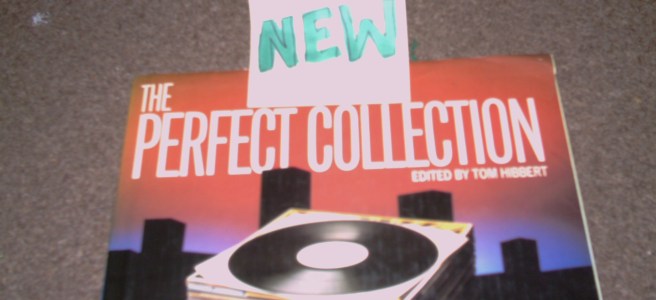
The Perfect Collection was published in 1982. Subtitled “The Rock Albums everybody should have and why”, editor Tom Hibbert and his contributors selected 200+ albums, which would give you, if you bought them all, a “broad, balanced, lively, collection of all thats best in rock music”.

When this book appeared in our local library it consumed and obsessed us. It wasn’t perfect. It didn’t inspire us to track down all of the records like some other lists of the “greatest records ever made” (I’ve still not heard some of them). It included Vanilla Fudge’s The Beat Goes On which it claims is probably the worst album ever made. It included Pat Boone, Cliff Richard and Gary Glitter and omitted Howlin’ Wolf, Link Wray, T Rex and Can.

Where the book got it right was the inclusion of some records which I have never seen included in any other best of lists. It turned us on to records like The Standells’ Try It, The Seeds’ Raw & Alive and The Flaming Groovies’ Teenage Head which remain firm favourites thirty plus years after first reading about them. It included Gene Clark’s No Other and Big Star’s Radio City which were not acknowledged as classics for another decade or two.

While it included many of the big hitters and acknowledged classics, what was clear was that the rest of these albums were the real personal favourites of the contributors, the ones that you would fight for.

What we intend to do is write about the 200 or so albums that we would include in our perfect collection. While it would be tempting to only include records recorded since the books publication, it may include what we would consider glaring omissions from the original book. Like the book, if an artist has two albums of equal artistic merit, an alternative  choice will be denoted with an ‘a’. Various artist compilation were not included in the book, and will not be included here (sorry Nuggets et al) We have tried to avoid the bigger names and shine a light on those names that don’t usually figure in best of lists.

Dedicated to

Tom Hibbert, Andy Schwartz, Brian Hogg, Bill Knight, Chris Charlesworth, C. P. Lee, Chris Welch, Fran Kershner, Giovanni Dadomo, Harry, Shapiro, Ian Birch, John Tobler, Kerry King, Michael Heatley, Mike McDowell, Martin Plimmer, Mark Williams, Nigel Cross, Neville Wiggins, Peter Clark, Patrick Humphries, Paddy Poltock, Paul Whitcombe, Stephen Lee, Sally Payne.