59. EMPIRES AND DANCE – SIMPLE MINDS (1980)

EMPIRES AND DANCE – SIMPLE MINDS (1980)
Life on the road. Life in a band. By the mid-1970s these had become among the most prevalent tropes in rock music and the ones which demonstrated how remote and detached those making the music had become from their audience. Following the well-worn advice “write about what you know,” many were unable to see beyond the satin and denim-lined cocoon they now inhabited, often a world away from where they had started; understandably, many had no wish to go back there but those places were still inhabited by the majority who hadn’t got the break and whose daily lot remained heavy industry, characterless – literally and metaphorically – offices, or no employment at all.
The bands radiated indifference. All that they knew of, or cared about, was our majesty the road (for the first and last time ever, thank you Ted Nugent), its myriad temptations and The Business. And so we got ELP writing a song about their engineer; we got Grand Funk Railroad promising/threatening Good Singin’ Good Playin’ in an unsurpassably awful album title; and, in an unsurpassably awful title and cover, we got Mud  and their limo in the centre of an LS Lowry pastiche, cruising smugly past the suffocating factory gates and the downtrodden matchstalk masses pouring from them, in the service of an album entitled It’s Better Than Working!!!! (first exclamation mark theirs, the rest mine).
And this travel had no discernible impact on the bands or their music. Venue, hotel, venue, hotel, and possibly a couple of other unsavoury locations, in interchangeable towns, countries  continents. Not so in the case of Simple Minds. Emerging from Glasgow at a time when many of its citizens’ attainable horizons still stretched little beyond London, and from the far from prosperous area of Toryglen touring was, however banal it might sound, a real opportunity for Simple Minds – a chance for escape, not cruisin’ down the highway with the wind in yo’ hair but looking, observing, exploring other cultures which were unknown and, unless you actually went there, unknowable.
After two hesitant but ambitious albums which underperformed commercially, the crossroads they were reaching was not one Robert Johnson ever had in mind but was one which had everything to do with the mean, miserable music business they were magnificently failing to sing about. So touring Europe informed practically all of their third album, Empires And Dance, not from the point of view of a jaded, complacent rock ‘n’ roll band but detached observers of a continent where the divisions imposed 35 years earlier would start to dissolve before the 1980s were out but which, for now, were as rigid and impregnable as they had ever been.
It opens thrillingly with I Travel, where the first-person pronoun seems to mean not self-absorption but simply “I travel and wouldn’t have seen and learned what I have otherwise.” The obvious influences of Bowie, Kraftwerk and Joy Division are corralled into an unopposeable dance beat of the kind Giorgo Moroder set running alongside Donna Summer and Sparks. By this stage, the majority of the people who mattered most knew disco did not suck and Simple Minds produced, with respect to the Average White Band, the greatest dance song to have come out of Scotland at this point – and, bar the Sensational Alex Harvey Band’s cover of Jacques Brel’s Next,  one of the first tartan toe-tappers to look east rather than west for inspiration.
Along with Celebrate, which followed it as a single, I Travel saw them probing the dance path that New Order would take a year later. In fact, Simple Minds’ role as navvies for the dance of the late ’80s and the ’90s is often underestimated – this despite the later adoption of their vast 1981 instrumental Theme For Great Cities as a Balearic anthem and the sampling of New Gold Dream on Usura’s Open Your Mind (which was also blatantly – though no one’s ever seemed to notice – pilfered by the Charlatans for The Only One I Know).
Today I Died Again (we’d already had The Man Who Dies Every Day from Ultravox and Every Day I Die from Tubeway Army – pattern?) has a clear echo of My Tulpa by avowed influence  Magazine but, in place of the panic Paul Morley correctly identified as permeating Magazine’s Real Life album, there’s a weight of melancholy and the deeply evocative line “The clothes he wears date back to the war,” which acknowledges that, while Simple Minds were part of a generation looking unblinkingly, if not always enthusiastically, to the future, many of those who lived through one or both of the world wars had hardly seen their circumstances change – not while others had never had it so good, not while others were swinging, not ever.

Panic is in abundance – along with tension and foreboding – on the staggering This Fear Of Gods, which I believe still stands as Simple Minds’ greatest song. The rhythm is supple, the pace brisk but this is about the empires, not the dance. I always picture it as the soundtrack to a long drive in the dead of night to an undisclosed location which may never be reached – the discordant sax, a sinister three-note figure  recurring like a hovering shadow and Jim Kerr’s increasingly anxious and breathless exhortation “faster,faster” all conspire in a hymn to horror.
Over on side two (without meaning to sound flippant, the walls on albums also came down at the end of the ’80s) Capital City’s perpetual Kraftwerk-engineered motion arises as much from Radioactivity’s glide down the dial as from the more obvious source of Trans-Europe Express, Constantinople Line progresses in fits and starts in a way you’d hope the Orient Express never does, while its incantation of “These stations we love them/Newspaper, encounter, confusion” evokes the disorientation of cross border-travel and again positions Simple Minds not as a band on tour but a band of tourists. Room, strange in its brevity (two and a half minutes), stranger still in its puttering rhythm box, its low-key web of colliding melodies and its unsettling lyric (“The razor’s song…I only live here, a fragile man”) brings it all to a splendidly perplexing conclusion.
You may have noticed that I’ve made no mention of what later became of Simple Minds – the sharp descent into hollow, clodhopping stadium catnip which reaped enormous commercial rewards but was utterly bereft of the guile and legerdemain which had previously made them so enticing. No one has ever fallen so far, so fast but I don’t believe it’s strictly relevant here – it’s true that once you’re exposed to something like Alive And Kicking or the ghastly Let There Be Love, they can’t be unheard but at the time of Empires And Dance, they no more existed than  Little Fockers did at the time of Taxi Driver.
It’s tempting but fairly futile to speculate on where Simple Minds might have gone if they’d continued on their initial trajectory but for some indication, I refer you to Talk Talk’s Spirit Of Eden. It’s entirely different in its construction to Simple Minds at their prelapsarian peak, owing to leader Mark Hollis’ visceral aversion to synthesisers, but is identical in its scope, ambition and texture. Empires And Dance, meanwhile, was a moment where the future was simultaneously confronted and embraced – never fled from or shunned (PG).

58. MICHAEL JON FINK – I HEAR IT IN THE RAIN (2001) – Guest Contributor: Alasdair MacLean (The Clientele)

I sometimes dream I’ve been given a chance to make a feature film. It’s a free-form adaptation of the children’s book ‘The Dark is Rising’ by Susan Cooper, nothing like the horrible Hollywood treatment it got in 2007. Maybe the film will run for days – maybe it will adapt only one image or element in the story and be over in minutes, but the opening credits always show a bus in South London, early winter, grinding to a halt at a terminus. The shadows between the bus and the wall, the movement of birds on the trees, briefly form the outline of a face, something gliding, fugitive, almost unnoticed, through the world. The whole point of representing ‘the dark’ –the supernatural, shapeshifting force described in the book- would be to depict it as a part of other, everyday things. Something briefly glimpsed in the corner of the eye in a shopping mall, rather than an obvious phantasm.

Michael Jon Fink’s ‘I Hear it in the Rain’ is always the soundtrack to this film. The ninth track, ‘Living to be Hunted by the Moon’ would play as the camera panned to a wall of trees at the edge of a field, fog slowly gathering and moving outwards over nineteen long minutes to besiege a house. ‘Echo’, the fourth: the movement of undulating river water as lost objects slip away under the waves. I still see these scenes when I listen to the record. Maybe they come from the record itself.

‘I Hear it in the Rain’ is a collection of spare and beautiful instrumental pieces recorded between 1986 and 1997 by classically trained musicians in California. Instruments used are celesta, piano, glass guitar (whatever this actually is, it does sound like a guitar made of glass), clarinet, samples, electric bass and percussion. It was released on the Cold Blue Music label in 2001.

Around the time it came out I was bored of the same old guitar bands and trying out other things I’d meant to get round to hearing one day: one CD each of Japanese noise, musique concrete, skronky jazz, dub, Detroit techno. Rough Trade Shop stuff. Officially, ‘I Hear it in the Rain’ falls into the ‘post-minimalist’ category. No, me neither. Amazon bafflingly lists it as ‘orchestral jazz.’ ‘Ambient’ doesn’t work – it’s too tightly wound, focussed and ominous. It perhaps shares some of the otherworldly mood of Alice Coltrane’s ecstatic, spiritual jazz, but is way less swaggering and full of itself. The titles of the tracks probably describe it best – it really is like music you would hear inside the rain: pieces called Passing, Mode, Fragment, Echo, and Epitaph.

I first saw it mentioned in a roundup of new releases on http://www.tangents.co.uk, described as:

“patinas of notes, near and far, heard and half-heard. It’s an astonishing, entrancing album, careful and considered, yet never too precious or conceited”.

I ordered the CD after reading that sentence.

When it arrived it had that odd, magical attribute of feeling like something I’d always been looking for, but hadn’t known I was.

As teenagers, we used to listen very closely to ‘The Pictorial Jackson Review’ by Felt. My friends and I admired the elegance and feeling for space and composition on that record; the way that side A contained pop songs and side B only spacey, mysterious instrumentals. The fact that the two types of music could coincide naturally on the same record was incredibly inspiring to us. They were different but united by the same austere elegance. I could suddenly see a link between my classical guitar training and the pop music I loved. ‘I Hear it in the Rain’ brought me back to that lightbulb moment; abstract music within my grasp again.

Years later, a friend asked me to make a soundtrack for an art installation he was putting together. I recorded the trees around Epping Forest and then the sound of a harp’s strings being vibrated by the wind, and combined them, edited them into waves of sound which ebbed and flowed for twenty minutes with the rhythm of air moving through the woods. It was an attempt to get on the same spectrum as ‘I Hear it in the Rain’. Unhurried, and at the same time bringing in something disturbing – some indefinable extra voice which came from outside, something from the corner of the eye (or ear). A new kind of music, at least for me.
And one which I have still not worked out how to combine with pop songs. I haven’t listened to ‘the Pictorial Jackson Review’ in years, it’s done its job for me and I’ve moved on. A lot of game-changing, transformative records eventually get worn out in that way. But I still listen to ‘I Hear it in the Rain’ and it still opens up new possibilities in sound. (Alasdair MacLean)

Click here for a link to our feature on The Clientele’s magnificent Suburban Light compilation:

9. THE CLIENTELE – SUBURBAN LIGHT (2000)

57. SUICIDE – A WAY OF LIFE (1988)

The One That Went AWOL

When Suicide’s long overdue third album finally appeared, one could have been forgiven for thinking that nothing much had changed since 1980. Elsewhere, time had seemed to catapult itself forward relentlessly from 1977 to the end of the 1980s, a decade which oversaw a restlessly transient musical landscape, whose fluctuating cultural shifts were not incomparable to the seismic ones experienced during the swinging 1960s and the schizophrenic 1970s. In music, it had begun with a superabundance of post-punk inventiveness, but had given way to the shallow superficial sheen of the new romantics – their vacuous synth pop all artifice, little substance. As the decade neared its close, the thriving independent music scenes in the UK and the US, had gloried in the ebullient resurrection of guitar-based music. The decade that had begun with Closer and Remain In Light had survived its asinine brush with meaninglessness, and was ending its journey on a high with a similarly inspirational torrent of creativity, bringing us the likes of Daydream Nation, Spirit Of Eden and Isn’t Anything. By the time ‘A Way Of Life’ appeared in late 1988, somehow, despite the absence of guitars (they rarely used them) and having remained virtually silent during this period, Suicide’s cachet had remained pretty high, perhaps in part because they were one of the few acts who successfully managed to transcend this shift in styles, their two chord punk primitivism and pioneering electro sound appeasing both the indie/alternative fraternity and those brought up on a diet of Depeche Mode, The Human League and Soft Cell.

‘A Way Of Life’ arrived eight years after ‘Alan Vega / Martin Rev / Suicide’ and while it featured the original line-up – there were only ever two members – it somehow felt like a ‘reunion’ album or even a brand new incarnation. An eight year musical hiatus was comparatively rare then. However, Suicide had never really ‘split up’, despite Vega and Rev pursuing their own impressive solo ventures (check out ‘Saturn Strip’ and ‘Clouds Of Glory’) in the meantime. Alongside the new noisemeisters of guitar, a new generation of artists had built upon Suicide’s groundbreaking originality to create a sub-genre of music, sometimes called ’electronic body music’/ ‘industrial’ / ‘New Beat’, for the most part a hideous amalgam of goth fashion and automated electronic noise. For me, those bands, in addition to omitting to embellish their music with the occasional melody, also missed the point attitudinally. Suicide stood apart from them, having more in common with proto-punk icons The Stooges and The Velvet Underground (two, three chords tops), and with Krautrock pioneers Kraftwerk and Neu! (minimalist electronic pulse), than with those later groups such as Front 242 and Skinny Puppy, who utilised their machinery like a soulless bulldozer. By contrast to their pulverising racket, Suicide were impossible romantics, with a penchant for 1950s doo-wop and rockabilly. Often, the songs they wrote were love songs. Or at least, love songs buried under an aesthetic of art trash brutalism.

The band had developed a cult following from the mid-1970s through the early 1980s. Inspired by the street trash image of their NYC ancestors Lou Reed and The New York Dolls, the band trawled through junk stores to acquire some electronic flotsam and jetsam (including a battered old farfisa organ), donned some leather jackets and cultivated an impossibly cool NYC street image, alongside a completely uncompromising musical style. Their debut album ‘Suicide’ – the one with the blood smeared sleeve and subtle Communist iconography – seemed out of step with the ’77 zeitgeist, and yet reputedly it had been Suicide who had first coined the term ‘punk’. Certainly their concert posters from the early 1970s were often emblazoned with an invitation to a ‘Punk Mass’. Having said that, the punk masses almost to a man, abhorred them. People attacked them in the street and threw bottles at them on stage. Once, while supporting The Clash, Vega famously even had to dodge a tomahawk! I often wonder if this incident took place during a rendition of ‘Frankie Teardrop’ a deranged ten minute purgatorial endurance test, telling the story of an impoverished factory worker who resorts to suicide, which is punctuated with Vega’s hysterical screams. Perhaps that audience was more afraid of him, than he them?

Their second album, confusingly also entitled ‘Suicide’, had a slightly more polished sound but was equally brilliant, a fluid and dazzling display of glam electro-minimalism. We know and acknowledge these albums as classics, but their third album is often ignored, and unfairly so. Musically it bears a closer resemblance to the second album, than the second does the first. But then Suicide were not a band to surprise their audience by dropping a reggae number into their set (like Patti Smith) or to indulge in a bit of genre-hopping by going acoustic or adding some orchestral accompaniment. Rather the surprises lay in their capacity to continually distil their sound to its very essence. As the ultimate purists, they bore all the hallmarks of musical sclerosis, adhering to a template from which they stubbornly refused to deviate. Indeed, Suicide songs generally follow one of four archetypes: the gorgeously ethereal atmospheric drone (eg. ‘Cheree’), the uptempo robotically pulsing drone (see ‘Ghost Rider’) the menacing hypnotic amorphous drone (try ‘Harlem’) and the jaunty electrobilly beat (eg. ‘Johnny’). In other words, a lot of drone. Vega’s nervy croon, deliriously erotic at times, sounds like Elvis had he been abandoned, petrified, in a haunted house. Rev’s drum machine punches out patterns which perform a function similar to Tommy Hall’s jug in the Elevators, while as one man band he creates a range of extraordinarily dissonant keyboard sounds.

‘A Way Of Life’ was recorded in one session on one day in December 1987. Apparently, billed producer Ric Ocasek arrived immediately after the recording session finished, stunned to find the album had already been completed. Nevertheless, he retains production credits on an album which features some of Sucide’s most memorable songs, not least the opener ‘Wild In Blue’ where Vega’s echo-laden gnarling vocals over an eerily locked robotic funk groove, inculcate an air of menace. On ‘Rain Of Ruin’ one of their most danceable rhythms is buried underneath a buzz of mechanistic beats, which sounds like a relentlessly rushing great electronic river – like Metal Machine Music played by Ralf and Florian. The Lou Reed fixation is taken to the outer limits on ‘Love So Lovely’, the last half of which has a rhythmic intensity of phrasing that recalls the maniacal finale to The Velvets’ ‘Murder Mystery’. Then there is the gorgeous ballad ‘Surrender’, where Elvis meets Angelo Badalamenti at the High School Prom, 1958. ‘Jukebox Baby 96’ is archetype #4 (see above), the obligatory flirtation with rockabilly, while ‘Dominic Christ’ funky and frightening at the same time, presents the band at their despairing best, bristling with dark energy.

These songs – the ones that went AWOL – are worthy successors to those on Suicide’s first two universally hailed masterpieces and deserve greater recognition. There is a temptation to write the band off as a creative force after 1980, but they have continued to make new music since ‘A Way Of Life’, and even if subsequently they have not recaptured that original vitality, their legacy is secure with an impressive list of disciples including The Jesus & Mary Chain, Spacemen 3 and Primal Scream, not to mention many notable creators of electronic music from 1978 onwards. While our sense of time and place can indeed conspire to deceive us, listening to the music of Suicide means we can stand outside of that; it is original, unique, groundbreaking, and ultimately, ageless. (JJ)

56. FELA KUTI – ZOMBIE (1977)

Whether portrayed as a fearless champion of the oppressed or as an unrepentant misogynistic control freak, Africa’s most maverick musician, Fela Kuti was, at 5’7″, perhaps a few inches too tall to be ascribed a Napoleonic complex, but possessed an ego of comparable stature to ‘Le Petit Caporal’. A true cultural revolutionary, the people’s ‘Black President’ spoke out against corruption in his native Nigeria, berated the system of apartheid in South Africa, enthusiastically espoused the use of marijuana (his classic ‘Expensive Shit’ album documents one of his frequent drug busts) and consulted his trusted spiritual guide (or ‘magician’) Professor Hindu, before making important decisions about his career. His turbulent life story, and in particular, the explosive chapter surrounding the release of his 1977 album ‘Zombie’, is unlike any other in the history of popular music. It is one which may sound fallacious, fantastical even, and which renders other celebrated tales of rock’n’roll rebellion and self-destruction virtually anaemic.

Kuti enrolled at Trinity College of Music in London in 1958, having initially come to England to study medicine. He was then musically active in Ghana from the mid-1960s onwards, but smitten with Black Panther politics, returned from a visit to LA in 1970, renamed his band Africa ’70 and built his own self-contained commune in a compound in Lagos, Nigeria, his native homeland. In Fela’s eyes it was an independent sovereign entity, which he christened the Kalakuta Republic (after the Black Hole Kolkata dungeon). The commune contained it’s own free health care clinic and vitally, his own home made recording studio. It was from there he launched a series of sonic attacks upon the iniquitous Nigerian regime, of which the most scathing was undoubtedly ‘Zombie’. In it, he mercilessly ridiculed the way the army’s soldiers blindly followed the orders of their superiors, upholding a crooked military junta, one over-dependent on massive oil revenues, which somehow never managed to filter their way through to ordinary Nigerians. [‘Zombie no go go, unless you tell am to go/Zombie no go stop, unless you tell am to stop/Zombie no go turn, unless you tell am to turn/Zombie no go think, unless you tell am to think’] Typically written in trademark pidgin English (he was fluent himself), Kuti was determined to ensure ordinary people could more easily grasp the political message of his records. On this occasion, he would face the severest of consequences. He had been on the hit list for some time, had been imprisoned, beaten and tortured before, but for the authorities, fearful of his growing popularity and influence, this was a step too far. Following the album’s release, over one thousand soldiers were sent to destroy Kalakuta, virtually razing it to the ground, and in the process, Kuti’s mother was thrown from a first floor window. She was to die later from injuries sustained during the military operation. With characteristic defiance, Kuti delivered her coffin to the door of the army barracks following her funeral. It was an action at once bizarre, yet somehow, given his capacity for brazenly outlandish gestures, not untypical of him. Indeed, Peter Culshaw has noted Fela’s ‘unerring ability to piss on his own parade’. For example, in the 1970s, he turned down the opportunity to record with Paul McCartney, fearing the ex-Beatle intended to ‘steal’ his music. In the early 1980s Motown courted him, offering a million dollar advance to a lucrative record contract, but after consulting with Professor Hindu, he turned them down. His reputation suffered too with his high profile polygamous wedding of 1978, when he wed twenty seven brides in a private ceremony. It alienated more Westernised sensibilities and won him few friends in his homeland far less internationally, but he always defended his decision with dogged conviction, and he had nothing but disdain for Western mores in any case.

By then he had invented an entirely new musical genre, Afrobeat, a dynamic fusion of jazz, funk and indigenous African music. His output was prolific. In 1977 alone he released eight LPs. If these generally amounted to two extended grooves, lasting around 25 minutes in total, then nevertheless that is still over three hours of recorded music, or two double albums worth in a year, and that’s an impressive return even by Sun Ra’s standards. Kuti released around 60 albums in total. On ‘Zombie’, the combination of acerbic political protest with an irresistibly contagious funk groove is scintillating. The James Brown influence is unmistakable; Fela gave JB and his band a royal welcome when they visited Nigeria in 1970, but later claimed that it was Brown who stole his music. In truth, the influence worked both ways. Here a series of directives from Fela (‘Attention! Quick March! Slow march! Left turn!…’) is each punctuated with the backing singers repeatedly atonal response: ‘Zombie!‘ The twin sax from Fela and Lekan Anomashaun unleashes a brass line which installs it’s ebullient patterns into one’s consciousness even as the nervy guitar itches it’s restless relentless rhythm. The flip ‘Mister Follow Follow’, while thematically the mirror of the title track [‘Some dey follow follow, dem close dem eye/Some dey follow follow, dem close dem mouth/Some dey follow follow, dem close dem ear…’] musically at least finds Fela & company in more reflective mood. The breezy sax playing and restrained tempo are still funky but the heightened state of agitation is missing. Nevertheless, it remains a splendid earful.

Despite the tragic aftermath of ‘Zombie’, Fela was at the height of his popularity. His next aim was to run for Nigerian President but his candidature was rejected, despite the collapse of the first military junta in 1979. His presidential ambitions resulted in the formation of a political party, named Movement of The People, a conscious nod to the influence of Bob Marley. Their political outlooks were somewhat synonymous, a vague Pan-African Socialism, and in many ways Fela is to African music as Bob Marley is to Jamaican music. Their lives paralleled one another in many ways, their influence incalculable, their deaths tragically premature. When time called for Fela, he remained true to the additional name he had taken, Anikulapo (‘one who carries death in his pocket’), refusing medical intervention as if he were holding the crucial card in a game of poker. The game was up, but his musical legacy is safe and secure, And ‘Zombie’ is the surest place to begin exploring. (JJ)

55. DO THE COLLAPSE – GUIDED BY VOICES (1999)

DO THE COLLAPSE – GUIDED BY VOICES (1999)
As a comparatively unloved record in the discography of a comparatively unregarded band, Do The Collapse is in something of a double bind. For a band who had earned renown for unvarnished, elliptical, sawn-off songs, being produced by RicOcasekoftheCars, pedlar of incorrigibly MTV fodder, seemed imponderable and impardonable to some, like Lester Bangs agreeing to do a column for the Saturday Evening Post, particularly following the departure of deputy chief songwriter Tobin Sprout.
The sheer prolificacy of GBV and their penchant for brevity  meant they were not immediately packageable but their irresistible way with a melody offered a chink of light to the mainstream – but it doesn’t take much for sellout to be entered on the charge sheet. Furthermore, selling out can be highly relative – Can were accused of it after they joined Virgin, even though they were still capable of breaches of the peace like Unfinished and Animal Waves. Some considered The Fall to have become a pop band in the years when Brix was chief song officer but a world in which Lay Of The Land and US ’80s/90s are pop songs is one which does qualify as wonderful and frightening. And hadn’t Ocasek, two decades earlier, applied a gloss to Suicide’s second album which made it superficially more accessible than their peerless debut but, on closer inspection, retained most of its panic, tension and threat intact?
It’s apt to mention the Fall when discussing GBV, as the simplistic equation I’ve been known to offer for them is “music by Paul Westerberg, lyrics by Mark E Smith.” Robert Pollard’s lyrics and titles devour and defile language in a similar manner to Mark E Smith’s, although it’s his rueful delivery that nudges him in the direction of Westerberg – in fact, the trajectory to Do The Collapse’s measured disarray from, say, the tunefully ragged 1994 EP Clown Prince Of The Menthol Trailer, runs parallel to the path the Replacements staggered along from Sorry Ma, Forgot To Take Out The Trash to All Shook Down.
I purchased Do The Collapse on a whim a few weeks after its 1999 release, reasoning that, while I’d always been impressed and intrigued by GBV, apart from Clown Prince I owned nothing by them and a new album would be a sensible place to start. The years seem to have hardened the cognoscenti consensus that Bee Thousand (which enjoys the accolade of being the subject of a volume in the Thirty Three and A Third book series) or Alien Lanes are the GBV albums against which all others are measured. I’m open to persuasion on this but they were – and remain – less familiar than I’d prefer them to be and I was able to approach Do The Collapse on its own terms.

About two and a half (more of this in a moment) of the songs could have been ripe for MTV mutilation and were within the grasp of Virgin (now Absolute) Radio’s scaly fingers and shrivelled, shrunken playlist but, mercifully, they escaped and I knew this was a far richer, more lasting and more rewarding proposition than flavourless, dehydrated contemporaries (not peers) like Fountains of Wayne or Semisonic.
The two whole songs, though, did reach, perhaps unwitting, wide audiences by other means. Opener Teenage FBI, robotically limbed and with rare lyrical directness, found its way on to the Buffy The Vampire Slayer album (though not, as I understand, the programme itself). The thrust and melody resonate with the driven-in line “Someone tell me why,” though behind the youthful doubt of the phrase, part of me also hears the teacher that Pollard remained for years after forming GBV demanding an explanation for undelivered homework – a brilliantly baffling duality.
The other most radio-ready song, Hold On Hope, would be easy to characterise as a just-add-water Everybody Hurts, a calculatedly poignant work designed to overlay emotionally manipulative montages in reality shows and dramas alike. Except that, firstly, even after two decades of grievous misuse, Everybody Hurts survives as a genuinely moving, throat-swelling song; secondly, the same description applies to Hold On Hope, and thirdly, the hospital series it soundtracked was not the blustering Gray’s Anatomy but a rare moment of pathos in the endearingly silly Scrubs.

The 50:50 split comes in Liquid Indian, where the verses don’t seem too bothered what you think of them, with glowering riffs hoisting lines like “Soft clay orifice quivering like new structures and formations” before the invasion of a chorus which could have stadiums from Shea to Shawfield levitating through nothing more than repetition of a title which seems to celebrate an ink used as a drink – surely the most radical transformation since Lucozade morphed from a pick-me-up for sickly children into an elixir for the modern superathlete. The David verse battles back but the Goliath chorus rises again – it all ends in a draw but there’s no time to go to penalties as there’s too much happening elsewhere…
For instance: Zoo Pie helps itself to the coda of the Clash’s Garageland and has Pollard hollering through a bullhorn in a particularly belligerent moment; Mushroom Art sees him confessing vulnerably “Living without you is difficult” before the odd old instincts kick in and he elaborates: “Cloud faced oldman winking/You see, he tests me.” Its already measured riff is slowed further still on In Stitches, where he promises “Human amusement at hourly rates,” in tandem with a menacing backing vocal which has its flock of wrath turned away by a delicate tremolo. Dragons Awake!, with acoustic guitar, strings and Lennonesque vocal reverb, is less psychedelic than its title promises but is still as close to that status as GBV get, while Things I Will Keep lists, veers and swerves like Prime Husker Du.
And it all came out on Creation, in its very last days. The label may not actually have been brought to the brink of financial bankruptcy by the procrastination of Kevin Shields but creative bankruptcy was definitely wrought by general post-Morning Glory hubris – the recruitment of veterans GBV and Ivor Cutler were just about its only inspired moves at this time.
GBV themselves collapsed afterwards and did so again after a recent reactivation but the songs have never stopped pouring out of Robert Pollard and this prolificacy is almost a recommendation in itself. It’s well- known that actor Paddy Considine is an enthusiastic champion of theirs, perhaps less so that, when Daniel Radcliffe was once  invited to disclose the contents of his MP3, a couple of stray GBV tunes were revealed to lurk within. Since then, he’s gone on to play Allan Ginsberg, one of the great American poets of the 20th century – a category I’d contest Robert Pollard has a powerful case for belonging in (PG).

54. THE BEACH BOYS – SUNFLOWER (1970)

Lairs of Harmony

The customary Liner Notes of the 1960s and early 1970s album demonstrated little variation. Usually they were insipid, vain attempts by unfeasibly witless record companies to promote their artists (Check out the US ‘Meet The Beatles’ issue: ‘You’ve read about them in Time, Newsweek, The New York Times. Here’s the big beat sound of the fantastic phenomenal foursome. A year ago the Beatles were known only to patrons of Liverpool pubs. Today there isn’t a Britisher who doesn’t know their names…’) Occasionally some aspired to be more meaningful or poetic, although sometimes pretentiously so. For The Beach Boys ‘Sunflower’ album however, a novel approach. Neither witty nor poetic, they serve a quite different purpose. Forgive me for reprinting them in their entirety:
‘This album was recorded at the studios of Brother Records and utilizes the most advanced recording techniques in the industry today. All original recording was done on a special 3M 16-track tape recorder, supplied by Wally Heider Recording Inc., of Hollywood, using 2-in wide tape. Microphones used include: Neumann U67, U87, KM-85, RCA DX77, DX44, EV 666, and RE-15. A custom-built 30 position mixing console, manufactured by Quad-Eight Corporation, provided extreme flexibility and special effects for this album. Tape to disk transfer was done at Artisan Sound Recorders, Hollywood, using the latest Model Neumann computer controlled mastering lathe, equipped with a Neumann SX-68 helium-cooled, dynamic feedback cutterhead. The songs on this record were recorded in true stereophonic sound; they are not 16 monophonic signals placed somewhere between the right and left speakers blended together with echo, but rather total stereo capturing the ambiance of the room and the sound in perspective as heard naturally by the ear. Although more difficult to perfect, this type of recording is far more satisfying to hear, as will be demonstrated upon playing this album.’

And there we have it. No sanctimonious homage, no empty promise that the record will change your life – instead we have a convoluted itemisation of the sound engineering and recording equipment which will make this ‘a more satisfying’ listening experience. Of course in one sense, these are liner notes to be avoided altogether, but if you, like me, have over time, nurtured a tremendous fondness for this album, you just may find yourself returning to them to contemplate what it is precisely about the music on ‘Sunflower’ that makes it sound so incredibly fresh 45 years on? Perhaps the SX-68 helium-cooled, dynamic feedback cutterhead? Or surely the addition of the KM-85? (Those old KM-84s were useless, everyone knows that) The latest model Neumann computer controlled mastering lathe possibly provided the crucial ingredient. Those Germans are very efficient you know. Your eyes may be drawn to that EV-666 – which certainly sounds suspicious. Could those nice Christian boys have struck a deal with Satan? After all, isn’t he supposed to have all the best tunes? On the other hand, these liner notes could be the best – or at least the most honest – ever written. For ‘Sunflower’ does exactly what it says on the tin.

I have played ‘Sunflower’ with greater frequency than almost any other album I can think of, since I first purchased it second-hand on vinyl from a small, oft-forgotten Glasgow record shop called Rebel Records in the late spring of 1988. I distinctly remember the occasion as I handed over my £1.99 to Stuart Murdoch, later of Belle and Sebastian fame, who was serving at the till that day. The shop, located right at the very top of Renfield Street, was often deserted and didn’t stay in business long. Presumably, he would have had more than adequate time to nurture his budding songwriting skills while spending endless hours gazing around his deserted environs listening to his favourite tunes. Time would be kind to young Stuart, while in 1988 The Beach Boys were not as fashionable as they were to become in the early to mid-1990s, perhaps due to the monster Brianless (nope, no spelling mistake) comeback US chart-topper ‘Kokomo’ from 3 years earlier.

I hadn’t heard of the ‘Sunflower’ album before I spotted it in Rebel Records. I treasured ‘Pet Sounds’ of course and had the ’20 Golden Greats’ compilation – the blue one with the surfer on the cover. I figured that was all anyone needed of The Beach Boys. As I perused the sleeve, interiorly debating the wisdom of a potential purchase, the only date visible that I could see was 1980, although the puzzling back cover portraits (Mike with his Maharishi toga ‘teaching the children’, Al – minus only the obligatory lederhosen – decked out for a Munich beer fest; Bruce in a wedding chauffeur costume) suggested an earlier incarnation of the group. It may have been prudent to exercise caution for, if truth be told, when The Beach Boys recorded ‘Sunflower’, they had more or less been written off as an antiquated relic from a distant past. It turned out the album in my hand was a later reissue – and was in fact from 1970, in some ways a forgotten period of The Beach Boys story. The reason ‘Sunflower’ doesn’t feature very often in The Beach Boys story is not simply because it wasn’t a big seller (it reached only #151 on the Billboard Album Charts) but because it dates from a time when Brian was no longer undisputed director of operations and for many people, Brian Wilson is The Beach Boys. If any of that post-‘Smile’ stuff was worth listening to, it may have led one to the dangerously heterodox conclusion that there was more to the BBs than Mr. Brian Wilson. But while it would be more than a little foolish to question Brian’s pre-eminent position in The Beach Boys, that is a pill too difficult to swallow for some, for whom any acknowledgement of a positive musical contribution from Mike Love is a concession akin to climbing into bed with Beelzebub. I’m by no means the defence counsel for Mike Love, but that pantomime villain stuff is just plain silly.

Like it or not, ‘Sunflower’ is undoubtedly the best whole group album the band recorded. From around ‘The Beach Boys Today’ through to the ‘Smile’ debacle, the other Beach Boys were really worker bees, buzzing around their consecrated and dominant queen. Brian had been touched by genius – he had outmanoeuvred The Beatles, and out-Spector’d Phil, but his walls of sound were about to come tumbling down. Subsequent post-meltdown albums (‘Smiley Smile’, ‘Friends’, ‘Wild Honey’ ’20/20’) were decent if unspectacular, but there is a sense that the slide in the Beach Boys popularity in the late 1960s was less attributable to any significant artistic decline than with changing fashions. A mere three years after being the only other band to be voted NME Readers’ Vocal Group of the Year (1966) during the imperious reign of the Fab Four, they found themselves suddenly unhip, passe, their angelic harmonies incongruous with a world of blues heavy guitar heroes and rampant hippiemania. But it is to their credit that they remained aloof from changing trends and watched as those around them burned themselves out like comets as the furious rapacious progress of pop fashion devoured many a bright new thing and spat them out, yesterday’s heroes.

From the mid-1970s onwards, The Beach Boys did not exactly cover themselves in glory, producing material almost unspeakably corny and banal (don’t go near the Light Album – the vomit-inducing title is enough) but the period between 1970-1973 is truly a golden one for the band; a new label (Reprise/Brother), a marked growth in the songwriting of the other group members, particularly Dennis, and three exceptionally good albums: ‘Sunflower’, ‘Surf’s Up’ and ‘Holland’ (‘So Tough’ credited to Carl & The Passions, doesn’t quite reach the same peaks) – the former two the best back-to-back classic pairing of their career (‘Smile’ wasn’t released, remember?) The secret? Well, the liner notes give us a clue. And then there are those harmonies… If Bruce Johnston’s melodramatic ballads are too saccharine for some tastes, it is important to remember that The Beach Boys career is laced with such moments – even ‘Wouldn’t It Be Nice’ (at least lyrically) is prime Camembert, but that doesn’t inhibit our affection for ‘Pet Sounds’ – in fact, it’s all part of its innocent charm. Brian and psychedelics, despite some intriguing results, was ultimately, an ill-judged marriage. And the lyrics – despite Van Dyke Parks best efforts – were always secondary to the music. It’s the harmonies that lure you in. So, in keeping with the spirit of the album’s Liner Notes, allow me to illustrate some of its harmonic brilliance with a few technical notes of my own.

Hear the boys soar on the opener ‘Slip On Through’ at 0:50 – a rushing flood of airborne voices almost as if, like an unstoppable force of nature, they had burst through the studio doors, a human tsunami. Or consider for example, the incredibly complex construction that is ‘This Whole World’; it has a career’s worth of hooks packed into its sub-two minute duration – it is difficult not to succumb to those layers of litany between 1:18-1:31, and the mesmerising ‘Thiiis Whoooole Woooorld’ group harmony at 1:41. For an even more impressive exposition, give ear to the remarkable ‘All I Wanna Do’, where the densely echoed production between 1:25-1:45 almost beggars belief. The song has been afforded the dubious credit of being a virtual blueprint for the Chillwave genre, but really deserves a greater accolade. I would rate it one of the greatest pure pop songs ever written. Remember too, that it was co-authored with Brian by Mike, who sings lead beautifully. Whatever you think of Mike Love, he deserves great credit for this little gem.

Vocal duties are shared out evenly on the gorgeous ‘Add Some Music To Your Day’, a perfectly structured beaut, showing tremendous love and care (check out the little vocal flourish between 0:31-0:37), but the great harmonising and string accompaniment through 1:14-1:31 makes it a showstopper and Carl’s flawless solo gives way to heavenly hums at 2:15. Carl shines too on the luscious ‘Our Sweet Love’ and takes the lead on Dennis’ driving frenzied ‘It’s About Time’ which closes Side One, showing that the boys could rock with the best of them… Meanwhile, Dennis himself, with newfound confidence, takes centre stage with the raunchy R&B of ‘Got To Know The Woman’, while on the wistful ‘Forever’ he creates one of the band’s most tender and perfectly realised love songs – hear the harmonies build irresistibly from 1:05-1:16. If Bruce’s gorgeous ‘Deirdre’ is really top tier MOR, it has a melting Bacharach chord change at 1:01, while his ‘Tears In The Morning’ with cloves of Gallic accordion, features an exquisite coda on grand piano which sounds like it’s being recorded in the room upstairs. Even on Al’s slighter ‘At My Window’ the harmonies at the end are breathtaking. The finale, ‘Cool Cool Water’, salvaged from the ‘Smile’ sessions is both a breeze across one’s forehead and somehow playfully buoyant, providing the perfect vehicle for showcasing the mastery of chief sound engineer, Stephen Desper, who conjures miracles from the mixing desk throughout the record.

I once read an interview with John Cale, where he was asked if he would rather have been a Beach Boy than a Velvet Undergrounder. With delicate Welsh diplomacy, he sidestepped the question, but confessed to owning a complete set of Beach Boys albums upon which he struggled to heap a sufficient complement of praise. In particular, for Cale, like many others, ‘those harmonies were unbelievable’ and he recalled listening to the albums endlessly when he relocated temporarily to California in the mid-1970s. Well, if those harmonies are given a greater exhibition on any BBs album other than ‘Sunflower’ then I for one have not heard it. And I’m pretty certain I’ve heard the lot. In Jim Miller’s original Rolling Stone review, he praised the album’s flawless production, noting it possessed ‘a warmth, a floating quality to the stereo that far surpasses the mixing on, say, Abbey Road.‘ He was right, and wise to overlook the lyrical deficiencies in favour of a total surrender to the music. If the Beach Boys did not have a lot to say – aside from cars and girls and surfing – they had a whole lot of love to give in their music, and they let it shine as brightly on ‘Sunflower’ as anywhere else. When Carl belts out the sublime cry ‘music is in my soul’ on ‘Add Some Music To Your Day’ I suspect few will remain unconvinced by his impassioned declaration. (JJ)

53. TELSTAR PONIES – IN THE SPACE OF A FEW MINUTES

Sometimes I think the nineties was the worst decade for music to date. The twin behemoths of grunge and brit-pop may dominate any retrospective reviews of the decade but left very few albums that stand the test of time (to these ears) twenty plus years on. There were of course many other interesting things going on, the rise of electronica and dance culture and the global take over of hip-hop even as these genres blanded out and became the mainstream. Looking back now it is the bands that remained underground and retained credibility in the face of the music industries last hurrahs that I continue to return to and which only seem to improve as time passes. Before the internet removed record labels influence and wiped out the music weeklies.

1995 was the year of the jolly ‘oliday that was britpop. While some see the mid nineties as the time when independent music finally went overground to dominate the mainstream, in truth most of what made the charts was at best a watered down version of the music of the past ten years with particular emphasis on the type of bands who wanted to relive the sixties. As bands began to see the charts and major label deals as a viable option, edges were knocked off and sounds blanded out.

In Scotland however the best of the bands that emerged in the middle of the decade made it with their rough edges intact. While Bis, The Delgados and Belle and Sebastian refined melodic indie pop into new shapes bands like Mogwai and best of all the Telstar Ponies took inspiration from across the pond in the previous ten years of American alternative rock. Ignoring the barely disguised sub-metal that was most of the bands that exploited Nirvana’s success, these bands took inspiration from Sonic Youth, a little of the dream pop of Galaxie 500 and Mazzy Star, and the disturbed sounds of Slint and Codeine, and forged their own sound

While Britpop dominated the music press, it’s easy to see why the experimental post rock of Telstar Ponies might not sit well next to Wake Up Boo, Country House et al. But while contemporaries Mogwai (who they shared more than just a drummer with) continued to bigger and bigger stages, the Telstar Ponies folded after the release of the flawed second album Voices From The New Music. In The Space Of A Few Minutes, however is a downbeat, edgy and intense masterpiece. It’s a restless music that can’t seem to settle, it’s the sound of those too hot city summer nights when you can’t sleep, the windows open to street sounds, the sound of frayed tempers and lovers quarrels, its walking home under orange streetlights anticipating confrontation. It is also tender, frightening and ultimately hopeful.

The songs are split between Brendan O’Hare and David Keenan (five each) and Rachel Devine (three), but there is little to separate them. The songs on this album sit together as a perfect whole. The opener The Moon Is Not A Puzzle, is a tense duet between David and Rachel building and building as she repeats “If you stay then I will go”. The vocals are mixed low so you find yourself leaning in, trying to catch what is going on (a couple of songs – Two’s Insane and Maya the vocals are almost indecipherable). Lügengeschichte (tall tale) is a helter skelter descent with heavy nods to from Neu! 2’s Super to, well, Neu! 2’s Fur Immer with great lyrics (I have no thoughts of self control) and ends with some crazy phasing. The single Not Even Starcrossed (taking its title from a line in a Codeine song)is a doomed romance of a song (wishing on a star, never should be wrong, when you got nothing)building to a beautifully elegiac chorus of “I’m in love with you”. Maya always reminded me of the atmosphere of Tom Verlaine’s Words From The Front.

Right in the middle of the album is a magical re-working of Patty Waters “Moon, Don’t Come Up Tonight” re-imagined as a gorgeous torch song. Sung by Keenan, importantly he doesn’t change the gender of the songs subject (these things matter sometimes). It was hearing the records of Telstar Ponies that led me to investigate Patty Waters, Shizuka, Albert Ayler.

Monster is all anguished pounding before erupting at the chorus. Best of all is “Side Netting” which just aches, heaving under a narcotic drift of guitars like The Only Ones Inbetweens. The menacing Her Name (“Me and her won’t sleep tonight”)  and Innerhalb Weniger Minuten as Rachel Devine intones a mystery tale over a brooding soundtrack . It all ends on a hopeful note with I Still Believe in Christmas Trees.

The Ponies managed one more album. The following years Tales From The New Music may even reach greater heights than the debut, but lacks the consistency of sound of their debut. After that there was the odd single released, but nothing else. Some members released further music under various guises, some of it great, all of it interesting, but not reaching the heights of what was achieved here.

As for the 1990’s, it is only when you start adding up the bands that released classic in that decade (Luna, Low, Teenage Fanclub, Mercury Rev, Bardo Pond, Pastels, Spectrum, Dead Moon, Primordial Undermind etc) that you realise it wasn’t all bad. And In The Space Of A Few Minutes is one of the best. (TT)

52. A BELL IS A CUP – UNTIL IT IS STRUCK – WIRE (1988)

A BELL IS A CUP – UNTIL IT IS STRUCK – WIRE (1988)
Firstly, a health warning – listening to A Bell Is A Cup… has been known to make one of my TNPC colleagues feel unwell. I can relate to this – hearing (Shambeko! Say) Wah!’s Remember can still, more than 30 years after the event, resurrect the waltzer-induced nausea I felt the day I bought it, coming straight from the Kelvin Hall carnival. However, Wire’s fifth studio album – and the second following their 1985 reformation – is a record I’m fortunate enough to be able to listen to without the need for Anadin or a damp cloth on the fevered brow.
Not sure if the same can be said of Wire themselves. Their decision to reunite has since become pretty much expected eventually of all bands that part company ( including some that should absolutely never have added their unnecessary footnotes – this means you Beatles, Velvets, Pistols). At the time, it was highly unusual; rarer still was their flat refusal to play any of the music that had made them such a thrilling and infinitely challenging proposition in their first incarnation of the late ’70s.
They’ve since relented to some degree and their live sets are now speckled with returns to these years but this can’t be taken for granted – a plea for Outdoor Miner (or Outside Miner, as the hapless heckler named it), the closest they’ve ever had to a hit, was studiously ignored when they played King Tut’s in Glasgow in 2013.
But this wasn’t wilful perversity – while many would characterise it as such, it was simply Wire doing what came naturally to them. Genuinely uncompromising, they had little or no interest in going back over the same ground once it had been seen and done, leaving the past to be dealt with by the Ex-Lion Tamers, who would now be lost in the thickets of the dubiously-named tribute band industry but in the mid-’80s had only the Bootleg Beatles for company as they supported the no-rear-view Wire. How quickly a high-concept idea can become mainstream…
And anyway, Wire had unfinished business, having come to an inconclusive halt in 1980, and by 1985 , their prodding and goading of the commonplace was needed more than ever. While it extended possibilities and created a new language – and Wire were more responsible for this than most – punk ultimately “destrrrrooooooyed” nothing, at best knocking some things temporarily unconscious. It would be fatuous, simplistic and, in fact, wholly inaccurate to describe it as any kind of cavalry charge but there was much rejoicing at their return and the manner of their returning. Their name was being heard in unlikely but intriguing places, cited as an influence by REM and the Minutemen. It seemed odd that this most British, European and bluesless of bands found such favour in America but these bands were part of a thoughtful and open new breed who were as intent on slaying predatory old rock beasts as Wire were themselves.
But Wire had to adapt to new surroundings to an extent. Wilson Neate’s comprehensive band history, Read And Burn, tells of a fraught and fractious process in recording their “second debut,”  The Ideal Copy, in Berlin, with old tensions reignited, particularly between Colin Newman’s penchant for pop hooks and the proclivity of Graham Lewis and, especially, Bruce Gilbert for more challenging, abstract sounds. Certainly, the results were uneven – Madman’s Honey (which Neate scorns with pitiless adjectives like “egregious,” “sickly,” “polite”) is, to my ears, a mesmerising work which resembles little else in popular music; conversely, Ambitious is lyrically intriguing (it donates the album’s title and its avalanche of acronyms – “CIA, DNA, KGB-” cements the notion of the band resembling a crack research group or a deep-cover spy cell. Musically, though, it’s something of a mess, Lewis’ roar of “Are  you hot? Are you hot? I FEEL AMBITIOUS!” veering uncomfortably close to another Anglophiles’ favourite, Basil Fawlty and the whole thing feels dated in a way no Wire music ever should be.
A Bell Is A Cup… arrived the following year as a far more rounded and cohesive statement, with a consistency of tone which creates  not  monotony but instead a sense of Aristotelian unity of time, place and action. In turn, it’s their most monochrome album since their 1977 debut, Pink Flag; by 1979’s 154, they were deploying texture and colour at Matisse level but A Bell Is A Cup… seems sketched in pencil. In keeping with this, Q’s review opined that it appeared to be “based on maths,” which, like the horse’s head sculpture on the cover, brings us back to ancient Greece, a time  and place where maths was not a trial for school pupils but a branch of philosophy, bound up with extensive thinking on the human condition – something Wire have always been pretty good at.
Take Kidney Bingos which, in the practice of the times, appeared as a single a few months earlier. It’s the final panel of a triptych, begun a decade earlier with Fragile and continued with Outdoor Miner, of unfeasibly melodic yet lyrically labyrinthine songs. Words, phrases are tossed out, making by turns no sense and perfect sense (“Dressed pints, demon shrinks, bread drunk, dead drinks”) intoned by Newman in the angelic voice which came to the fore on Chairs Missing and gradually superseded his “other” droll, simulated Cockney tones which are more or less entirely absent on A Bell Is A Cup.The verse, the solos, so sublimely tuneful, and: chorus! “Money spines, paper lung/Kidney bingos, organ fun.” The code is cracked and revealed as a macabre Twilight Zone fantasy (only just) of vital organ jackpots and severe medical economics, as the melody reaches an exquisite peak. At the end of 1988, I declared it my single of the year, in the face of competition ftom The Mercy Seat, You Made Me Realise and Gigantic. Depending on the mood of the day, I  can still find myself standing by that decision.

Second single Silk Skin Paws kicks off the album and is sterner, more unblinking but still entrances. Like Kidney Bingos, it has a surefooted gait driven by the ultra-minimal but vastly inventive drumming of Robert Gray, aka Gotobed (his pared-down kit of snare, hi-hat and bass drum attracted considerable attention at the time; he would eventually be usurped altogether by programming before returning post-millennium). It’s steely and gossamer in equal measure, sighs as much as it hisses and has the elegant precision of a sculpture. It did not chart. But it was a very pleasant, albeit unexpected, surprise, to hear it given an outing at King Tut’s earlier this year.
Worthy of particular attention are the two closing tracks. Follow The Locust is one of Wire’s  most purely exhilirating moments, hurtling on a bullhorn-force bass synth riff as Newman delivers a quizzical account of travel that resembles perpetual motion and continues their exemplary record for songs about insects. Its barreling momentum hints at some of the more uncompromising moments of their, by then, labelmates Depeche Mode and is a harbinger of One Of Our Girls Has Gone Missing, the gloriously evocative gem Gilbert created the following year with Wire associate and sometime video director Angela “AC Marias” Conway.
Closer A Public Place stands out for its stillness and air of desperate calm fending off unbearable tension. The actions switches, verse by verse, from a vignette witnessed late at night in King’s Cross railway station to the absurd but all too present menace of “privet hedge pissers” and “village boy wide men” and the strange but compelling image of “broken promises/drifted into the shape of footprints.” Meanwhile, the lead guitar soothes, the rhythm guitar snarls and a synth drone hovers like a sentry. It’s rhythmless, apart from the clatter Gotobed goads out of found percussion, similar to what’s heard on Pink Flag’s Strange (covered by REM a few months earlier) but this is no nostalgic, and certainly not an ironic, wink tipped to the past – it’s Wire finding the late ’80s every bit as “not quite right” as the late ’70s and delivering a sombre but eloquent verdict as only they can.
Nostalgia, you say? Wire’s reconvening would have been utterly pointless if that’s what it was about but this is how some would have had it; the reputation of their ’70s output is secure, close to inviolate, but their second incarnation has many detractors. I can’t help feeling that many of these misgivings relate more to a general  disdain for the trappings of the ’80s, which were manifested in some of the more misguided production choices on The Ideal  Copy and in Lewis brandishing a headstock- free bass and the hairstyle that no one actually called a mullet until around 1994 (“footballer’s haircut” seemed to be the preferred term at the time).
True, by ths time of their second cessation around 1992, they were at risk of becoming the dry laboratory exercise they’re seen as by some who fail to detect the drama, mystery and magic at their core. But what makes A Bell Is A Cup… such a strong candidate for reappraisal is how fresh, undated and, in fact, contemporary it sounds. It’s also makes one of the strongest cases for Wire being a vast, yet almost completely unacknowledged, influence on Radiohead. I’ve never known Radiohead themselves, or even any critics, to trace their lineage back to Wire but, in the shared values of manipulating traditional rock forms to unconventional ends, applying advanced technology to those newly mutated forms and making shrewd political observations couched in oblique terms, as well as unlikely popularity in America, I find the comparison glaringly obvious and the influence incalculable.
It was only at the time of A Bell Is A Cup… that I properly discovered Wire. I’d been aware of them first time around, catching desultory hearings of Practice Makes Perfect and On Returning on John Peel, but the only song of theirs I was truly intimate with was I Am The Fly. But the repeated citations and the quality of A Bell Is A Cup… meant that this was one of those rare occasions, as with the Velvet Underground and REM a few years earlier, when my eagerness to delve into a back catalogue came with a sure and well-founded conviction that I wouldn’t be disappointed.
Now in their third incarnation, they’re still adding to it – even without Gilbert and with the remaining original members all over 60, they’re capable of being as abrasive and compelling as ever. Just keep some of that Anadin handy (PG).

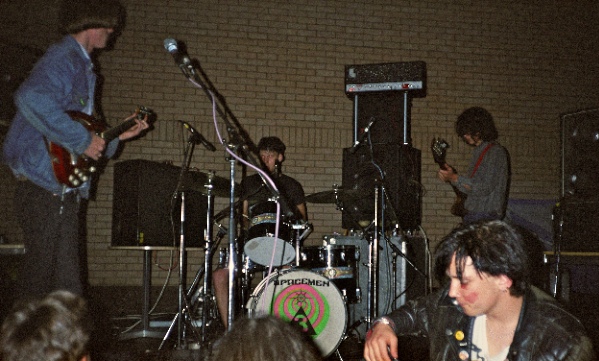
51. SPACEMEN 3 – RECURRING (1991)

Spacemen_3Divided Souls: Spacemen 3 and The Redemptive Power Of Music

Robert Christgau’s review consisted of three words: “Stooges for airports.” But then again, he awarded one of his coveted A+ ratings to Brian Eno’s Another Green World, which might lead one to presume that Christgau is, in fact, rather fond of music for airports. Of course, I’ve missed the point if all his analogy does, is lead me to contemplate the wonderfully absurd possibility of Raw Power echoing around air terminal departure lounges. But then I’d say Christgau was well off the mark with his dismissive assessment of Spacemen 3’s damaged swan-song Recurring,which I would contend is one of the greatest (and unjustly overlooked) albums of the 1990s.

It took me a long time to feel convinced by Spacemen 3. Dragged along by a few friends, I witnessed a fairly unspectacular set at Fury Murrys in Glasgow in 1989. I was genuinely underwhelmed, but then my expectations had not been high – I didn’t care greatly for the po-faced posturing of their early albums, which often sounded more than a little contrived. I sensed a shallow affectation beneath that ’66 Velvets’ veneer: that, as if by simply wearing the clothes, they would become the man. All the same, this was clearly a band whose heart was in the right place. Their musical touchstones, The Stooges, The Velvet Underground, Suicide, latterly laced with a dose of gospel and krautrock, demonstrated a fairly discerning palate.

By the time Recurring, sporting a hideous ‘Зmarties’ technicolour sleeve, hit the record stores in February 1991, Pete Kember and Jason Pierce hadn’t spoken face to face in six months. Some misinterpret Recurring as a hastily compiled contractual obligation album. In actual fact, it was supposed to be the first of a lucrative five album deal with Dedicated records. But in reality, even a new record contract could not disguise the fact that Spacemen 3 as an entity, was already dead. Bruised and battling egos alongside increasing drug addiction, had conspired to create an insurmountable rift between Pierce and Kember, just as they had finally realised some degree of commercial success. Their penultimate album had finally given them a breakthrough of sorts. Critics and (the indie) public alike adored it. Playing With Fire,  embodied a soulful (spiritual if you prefer), as well as a stylistic shift in their sound: a sonic leap at least partially attributable to a key change of personnel – the recruitment of Will Carruthers and Jon Mattock (who would go on to join Pierce in Spiritualized once the disintegration was complete). They replaced Stuart Roswell and Pete Bain who had left to form The Darkside. The results were instant. And while I wouldn’t get into a boxing ring with someone who would claim for it the title of their finest moment, neither could I in all sincerity agree with them. Playing With Fire contains some extraordinarily beautiful songs, alongside the last vestiges of those big power-chord Stooges riffs which characterised some of their earlier work (hear ‘Suicide’ and ‘Revolution’), and a protracted exploration of Kember’s latest guitar pet – the Vox Starstream, on the ten minute ‘How Does it Feel.’

While the Vox Starstream’s repeater function added a vital new psychedelic dimension to their sound, ‘How Does It Feel’ sounded laboured and unjustifiably lengthy – like they were mucking about with a new toy. By contrast, consider the opening track on Recurring, which, while even lengthier in duration, gives the instrument a genuinely worthy exposition. Big City (Everybody I Know Can Be Found Here)’ is Kember’s twin tribute to Kraftwerk and 1960s garage punks The Electric Prunes: a musical homage to the former, the lyrics brazenly stolen from the latter. But it’s metronomic pulse glides lighter than air and the trademark two chord Farfisa organ which creeps into its flesh, is so hypnotic that those eleven minutes feel like four. It could be Kember’s finest moment. Indeed, his half of the album – he and Pierce, by now completely beyond personal reconciliation, recorded their songs separately and were each afforded one side of the album – could be his finest hour. Spacefans often invest considerable energy debating the relative merits of Kember and Pierce’s individual contributions, but I do not aim to ignite the debate here. Indeed, I veer back and forth with my own preference. Depends on one’s mood I’d say.

Kember’s ‘I Love You’ nicks a neanderthal Troggs riff, Can’s fizzing pulse from ‘Father Cannot Yell’ and a shuffling Diddley-esque rhythm, while ‘Just To See You Smile’ (subtitled ‘Honey Pt.2’) prolongs the glistening soulful balladry of PWF, this time borrowing heavily as the band often did, from the ghostly waltz-time inflections of Lou Reed’s ‘Street Hassle’. (Pierce does likewise on the blissfully gorgeous Sometimes)

There is little poetic or profound in a Spacemen 3 lyric: rather one is left to wonder if – in these seemingly simple love songs – the object of affection is a girl or a favoured pharmaceutical. Or even the music itself. Take Pierce’s majestic Hypnotised for example: “Her sweet touch it dances through my blood/Sets my heart on fire/It’s lit up all around my soul/Takes me higher and higher/It’s got everything and so much more/Never known a love like it before/Jesus, sweeter than the life you lived/Lord, hypnotize my soul.” The title of their posthumous compilation of early demos, made explicit the band’s raison d’être: Taking Drugs To Make Music To Take Drugs To,  and one is never clear if there was a concerted effort to evangelise about the use of chemicals, or whether when writing, the band were simply chronicling their collective narcotic meltdown. In any case those Ray-Bans failed to conceal their own very real problems, which by the time of Recurring were spiralling out of control.

Pierce’s ‘Feel So Sad’ (later spiritualized with an additional ten minutes) acts as a prelude to the shimmering organ-ic rush of the aforementioned Hypnotised, where the rattling percussion (like a bluebottle stuck in a matchbox) gives way to a layered gospel-inspired wave of a chorus, embellished with Memphis-style sax. After Pierce’s half is over it is a challenge to rejoin the real world; one’s head has been ransacked by the densest suite of ambient space blues ever committed to vinyl – a listless drift which segues nebulously to the albums conclusion. In many ways it is authentically, the first Spiritualized record.

Recurring is a document of disunity that polarises opinion. It was fuelled by drugs, a bitter enmity between its chief protagonists and yes, even more drugs. It sounds tarnished and sullied and yet somehow pure as snow; a slow motion surrender, a wasted eulogy, a sprawling soporific haze. And if it is a sybaritic and decadent confessional, yet it floats like a cloud of mercy and redemption, stretching out through the darkness to find broken souls to mend and heal. In the end, finally, it is Spacemen 3’s perfect prescription. (JJ)

50. LIVE – BURNING SPEAR (1977)

LIVE – BURNING SPEAR (1977)
I’ve never been to a reggae gig. They’re comparatively rare in Scotland and, despite the odd historic flirtation with the genre, Elvis Costello can hardly be said to count, so I have to content myself with some of the most incendiary live albums of any kind: The Wailers from the Lyceum in 1975 (over-familiarity notwithstanding); Misty In Roots at the Counter Eurovision, and this one.
For all the majesty of the studio-bound dub sorcery that was being cast by Lee Perry, Joe Gibbs and the rest by the mid-’70s, reggae’s essence remained in its performance and you can hear the roof being torn off on these albums, and see as well as hear the alfresco splintering in the numerous Reggae Sunsplash films produced over the years.
With this scalding performance by Burning Spear, captured at the   Rainbow in Finsbury Park, north London (a venue steeped in late ’70s music lore) Island chief Chris Blackwell  might have had justifiable reason to believe that Marley’s crossover success would be replicated. A similarly scintillating London performance, a similarly red, green and yellow (gold was tricky to reproduce) ‘live’ logo , a similarly exultant onstage pose struck on the cover by Winston Rodney. Not so commercially but musically…
Marcus Garvey strides off from the starting blocks on one of the mightiest riffs in all reggae which reminds you that Rodney (he is Spear and Spear is him) is a master of the deep-striking pop hook – see Tradition on Marcus Garvey (the album) and Columbus on Hail HIM for further evidence. It mainly comes courtesy of Aswad, then, along with Misty, Matumbi and Steel Pulse, in the vanguard of the first wave of British reggae and a full decade away from their number one with  featherweight soft metal cover Don’t Turn Around.
But the song carries real weight – the titular Garvey, a political and trade union activist of the early 20th century, is revered as one of Rastafarianism’s most important prophets, not only for his fostering of a truly international black consciousness, and of the admittedly contentious ‘back to Africa’ movement, but also for his declaration that the crowning of a black king in Africa would herald the “day of deliverance” – widely held to be a prophecy of Haile Selassie’s emergence as Emperor of Ethiopia.
But imprisonment, deportation and an obscure, impoverished death in London in 1940 followed for Garvey. By the 1970s, his reputation in Jamaica was secure but on Old Marcus Garvey, it’s those years of oblivion that Rodney seems to be lamenting, as he repeats “no one remember Old Marcus Garvey” while countering it with a roll call of other heroes of Jamaican history. And he really is lamenting – as the sombre rhythms roll, he genuinely sounds like he’s bursting into tears over this  negligence – I wasn’t there and there doesn’t seem to be any footage but it sounds pretty real to me and he doesn’t stop weeping even as the music ends. This level of intensity, you feel, is what the NME’s Chris Salewicz was getting at when, in a quote boldly pulled out for the album’s advery, he pronounced it “the most awe-inspiring show I’ve seen in a long, long time.”

There’s more unorthodox vocalising on Man In The Hills. To a lissom, intoxicating rhythm, Rodney extols the Rastafarian practice of communal living in the Blue Mountains above Kingston (a theme he would soon revisit on the superb Social Living) and brings the nature of rural Jamaica to the sprawl of north London with an exuberant blast of birdsong.
Such is the supercharged cauldron of this music that even the lyrically grim Slavery Days gives rise to a call-and-response, that’s invigorating where these things are so often corny. “Do you remember the days of slavery? Do you? Do you?” Demands Rodney. Each time the answer comes back “yeah!” Thankfully,  the answer is really no but, as with the Holocaust, remembering here means not allowing to be forgotten. Now, of course, we know slavery has never gone away, though the notion of “modern slavery” is a grotesque paradox. Modern signifies progress, refinement, enhancement; slavery is, by definition, primitive, barely evolved. Remember.
But this is the mark of protest music at its most potent, music and message hitting feet, hips, head and heart simultaneously and with equal force. If the question “do you feel irie?” at the start of Lion elicits a negative response, better check for a pulse (PG).