On an airless afternoon during the height of a clammy Glasgow summer, I first heard her voice. A sluggish drawl, as though vainly battling sleep. In 1999, everyone in Missing Records was listening to Cat Power’s ‘Moon Pix’. I left Missing that summer and forgot all about Chan Marshall and that voice, returning faithfully to my tired LP collection with its familiar sleeves, smells and sounds – like putting on a pair of tattered, but very comfortable old slippers. Only gradually did I rediscover my zest for newer sounds. Four years later, a recommendation from an old colleague during a brief rendezvous in Glasgow’s finest music emporium, Monorail, led me to a (re)discovery. And to one of the very best albums of the new millennium thus far.
In 2003, Chan Marshall was in trouble. One can sense a sombre desolation and sadness on her 5th LP ‘You Are Free’. In her interviews at the time, Chan spoke of her exhaustion with touring and travelling, the conspicuous lack of routine/stability in her life, the meddlesome politics of record companies and the irksome complexities of the nature of studio recording. In the haphazardness of her day to day existence, she perceived the need for a kind of liberation of the soul. They were not the best of times. Live performances were edgy, dysfunctional, often chaotic. She was drinking more, perhaps abusing other drugs. Her latest relationship was nearing its end. A mournful atmosphere pervades the recording, a sense of physical and spiritual dislocation. Some say an artist in emotional turmoil is primed to produce their most soulful art, and in this case, that maxim sings true.
The fourteen songs on ‘You Are Free’ were culled from around forty or so, which Chan had written during a frenetic year of travelling and touring, and were selected carefully for the album with the assistance of engineer Adam Kasper. The songs, at once deceptively simple, uncoil to reveal great depth. Anything superfluous is eschewed. There is no grand gesture, no unnecessary embellishment, no affectation. There is barely a chorus to be heard, and the tempo rarely changes, yet the subtle minimalism of the arrangements provides real depth to the songs.
The opener, ‘I Don’t Blame You’, conversely the last song written for the album, is one of four brilliant piano-led tracks, and contains a reservoir of empathy for the song’s subject. Marshall only very reluctantly revealed the protagonist to be Kurt Cobain, but in truth, that was merely confirming what everyone had long suspected. [‘Last time I saw you/You were on stage/Your hair was wild/Your eyes were bright/And you were in a rage/You were swinging your guitar around/Cuz they wanted to hear that sound/But you didn’t want to play/And I don’t blame you’] Here, the song’s strength lies in its avoidance of any stylistic homage. Rather, Chan’s voice, all raggedy velvet, sounds wise with lifetimes, and over a stark block piano riff she conveys the familiar story with great subtlety in a fitting tribute which reveals a deeper sentiment at the heart of one of the album’s key themes.
The lyrics to ‘Free’ and the album’s title itself could be construed as a rallying call to the listener: [‘Don’t be in love with the autograph/Just be in love when you scream that song’]. The message could be ‘break those fetters’; ‘be who you want to be’, but one suspects it is there to serve as a reminder to the author that she alone holds the power to regain control of her own life?
Amongst the other piano led tracks is ‘Names’, a despairingly tragic account of the abused lives of five of Chan’s childhood acquaintances, and the mysterious closer ‘Evolution’, featuring guest vocal by Eddie Vedder, where a hauntingly cryptic reverie drifts out gorgeously to the album’s close.
At times, there is an Antipodean countryish feel to the album, mirroring the muddied rootsiness of The Triffids circa’ In the Pines’ / ‘Born Sandy Devotional’ or the crawling black death of ‘From Her To Eternity’ era Nick Cave. This is hardly surprising; the aforementioned ‘Moon Pix’ had been recorded in Melbourne with The Dirty Three, and on this outing, Warren Ellis (Bad Seeds) is among the guest musicians. Ellis has a starring role on one of the album’s real highlights ‘Good Woman’, where he manages to conjure an authentically Appalachian violin sound, making this, despite its traditional C&W lyrical content (they could have been written for Tammy Wynette) less Nashville and more Kentucky fried. The childlike backing vocals (credited to ‘Maggie & Emma’) add an eerie quality and the whole arrangement works sublimely.
Elsewhere, over a basic acoustic strum David Campbell’s exquisite string arrangement on ‘Werewolf’ including superb cello accompaniment, lends it a gravitas befitting something from Nico’s’ Chelsea Girl’ or ‘The Clarke Sisters’ by The Go Betweens, and acts as a musical bridge between the sparser solo songs and the more conventional band outings. Starker still is the desperately bleak ‘Baby Doll’, which may be an intimate portrayal of a self-destructive friend, or a confessional autobiographical snapshot? [‘Baby/Black, black, black is all you see/Don’t you want to be free?/Baby/Red, red fire is what you breathe/Don’t you want to be clean/Honey, the shape you’re in /Is worth every dime you spent/Baby Doll/Turn out the lights/Set yourself on fire/Say good night’] Whatever the case, those little noises scraping along in the background certainly add to the discomfort. And on ‘Keep On Running’, Marshall’s take on ‘John Lee Hooker’s Crawling Black Spider’ there is even less room to breathe freely.
‘Shaking Paper’s little rippling rivulets of feedback groan along queasily, while ‘Speak For Me’ and the single, ‘He War’, are the most conventional rock tracks (drums courtesy Dave Grohl) – both appear to concern Chan’s unravelling relationship. On ‘He War’ she laments [‘I never meant to be the needle that broke your back/You were here, you were here, and you were here/Don’t Look Back’] with an impassioned vocal performance which is palpably soulful and technically dexterous, alongside an infectiously catchy ‘Hey hey hey’ chorus. Marshall was reportedly unhappy with the version recorded for the album, claiming it lacked the raw-ness of the original ‘live band’ recordings.
What it does not lack is soul, and that can be said for everything else on ‘You Are Free’. If I feel uncomfortable labelling American country music ‘white soul music’ (the worst country is often something else altogether) I do so merely to illustrate a point – which is that soul / soulfulness is not confined to any particular musical genre. Chan was already a soul artist long before ‘The Greatest’, most amply illustrated here on ‘You Are Free’. On ‘The Greatest’, she embarked on a soul project that was at times more style than substance. While it is a good album, there was really no need, for Chan’s soul credentials were already well established. ‘You Are Free’ was truly a soul album, it’s rawness and honesty straight from the heart, and conclusive proof that at times, less can certainly mean a whole lot more. (JJ)
How Indie Kids in Glasgow embraced the Future Sound of Detroit
There are no musical boundaries in TNPC. If our goal was to set out a ‘lively well-balanced collection of all that’s best in rock music’, then we aim both to ensure genuine inclusivity and to redefine the word ‘rock’ a little – or at least strip it of it’s antiquated associations. [Hair, guitars, Kerrang!] For if you are a regular visitor to TNPC you will surely know that’s not what we mean. I have misgivings about replacing ‘rock’ with the word ‘popular’ too. An equally unsatisfactory adjective. Nevertheless, whatever label or title may be most appropriate, for many there is often a musical line they decline to cross. But I make no apology for the inclusion of the following two EPs, created during one of the most fertile periods in Detroit’s illustrious musical history; an era when there was an almost inexhaustible stream of high quality records produced in the basements, bedrooms and garages of the Motor City.
We are not here to chart the historical development or the evolution of popular music, but in this regard, context is everything, both for performer and listener. As a socio-cultural phenomenon, techno grew out of frequently disenfranchised black communities who found – as they did with hip-hop – an affordable way to produce music whose exhuberance and lift was often at odds with the rhyhmic mechanistic facelessness of their urban habitats – in this case the bruised industrial heartland of Detroit, where the glory days of the automobile industry were fading fast, the city in steep economic decline. Like the proliferation of R&B performers Detroit produced in the mid-1960s, many captured fleetingly on rare Northern Soul 45s, the city was at it again twenty years later.
The earliest Detroit pioneers, often referred to as The Belleville Three, Derrick May (Rhythim Is Rhythim), Juan Atkins (Model 500) and Kevin Saunderson (Inner City) developed a new, instantly recognisable sound which both reflected the metronomic pulse of Detroit’s huge car plants and forged a twitchy new futurism. It emerged as a visionary underground music, an accidental collision between two distinct cultures (Detroit and Dussledorf); as the saying goes like ‘George Clinton and Kraftwerk, trapped in an elevator with only a sequencer for company.’
The early records sold well locally, and it was not long before there was an explosion in the growth of techno music. Fused with European influences and Chicago-based house music, it become the global ‘dance music’ phenomenon, which peaked in popularity between 1988 and 1994. By that time, the second wave of Detroit producers was in full flow.
Times were changing and techno’s audience expanding. As a youthful indie kid, I was initially very sceptical of it all, but like many young music lovers in the wasteland of the early 1990s, I had become disillusioned with the indie scene. If ‘Seattle had eaten the world’ then the response from across the Atlantic was deafening in its silence. By the time Britpop had taken it’s dubious hold, I like thousands of others, had willingly succumbed to the thrilling excitement of the new house, techno and electronic music, which by this time had spread successfully across the Atlantic into Europe and the UK’s club scene.
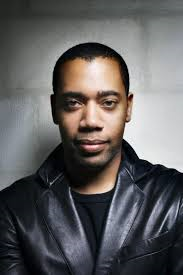
Of course, in the UK, club culture was bound up inextricably with the drug culture. And the drugs were changing too. Paradoxically, most of Detroit’s techno producers eschewed drug use. Indeed, the message was often to escape the dope culture of the ghetto. Instead in Detroit, by 1991, it seemed the objective was to venture fearlessly into the future with the most innovative sounds imaginable. Label and artist names (sometimes interchangeable) began to reflect this preoccupation: Red Planet; Transmat, +8, Metroplex. Amongst the most outstanding of this second wave of producers, were Carl Craig and the musical collective known as Underground Resistance.
UR adopted the role of urban guerrillas, wearing militaristic garb, (masks / facial scarves) and presented as a kind of techno version of Public Enemy. There were coded political messages but little information about their releases. Led by Jeff Mills and ‘Mad’ Mike Banks but featuring dozens of other contributors, their music was truly ‘out there’, wilfully uncompromising, and despite the rejection of any commercialisation of their sound, they developed a huge following amongst poorer African-Americans whom they aimed to inspire to escape the cycle of poverty. In Europe, UR became a byword for quality and cool. In the early 1990s some of the records were very hard to acquire and fans competed against one another to complete the set. They are highly respected by other electronic artists, upon whom their influence has been incalculable. Since 2000, even Kraftwerk use their remixes during live shows.
By contrast, Carl Craig was relatively more successful and sought a wider commercial audience for his music, touring and DJing regularly throughout Europe. Nevertheless, his music, recorded under various pseudonyms (Psyche, 69, Innerzone Orchestra, PaperClip People amongst others) was at least as artistic and innovative as that of UR.
I could have selected dozens of other EPs which could have been equally worthy entries, but despite their differing ethics, both UR’s ‘World To World’ EP and Craig’s ‘Applied Rhythmic Technology 3’ (credited to BFC / Psyche) are brilliant examples of the second wave Detroit sound.
There are similarities too. Craig’s brilliant ‘Chicken Noodle Soup’ (attributed to BFC) is a spiritual companion to UR’s ‘Greater Than Yourself’. Both share a shuffling motoric beat, distorted dialogue and gorgeously simple but euphoric spaced out futurist synth lines. ‘Chicken Noodle Soup’ benefits too from a muffled but inspired hypnotic jazz scat vocal.
Psyche’s lengthy and much celebrated ‘Neurotic Behaviour’ (from ART 3) typifies the quintessentially classic Detroitian acid analog sound. Here the Kraut-Rock influence is transparent: in particular it contains the fingerprints of Cluster and Manuel Gottsching.
‘Amazon’ and ‘Jupiter Jazz’ from World 2 World are both superb. The bird sounds on the former sound like they come from a symphony by Rautavaara, but the portentous descending chord sequence has one anticipating Armageddon – it seems almost a relief when the cluttering beats arrive to arrest the descent into darkness. ‘Jupiter Jazz’ by contrast, reminds us that this is music made to dance to, even if we’re doing so on other planets. The staccato piano riff is super-funky, ably abetted by brilliant hi-hats and bass heavy pounding beats. Meanwhile, a bizarre interstellar freeform solo is played out on the synth. If Sun Ra had been born 50 years later, he would surely have been making music like this.
BFC’s ‘Sleep’ (aptly titled) is a kind of electronic opiate; beautiful, but the kind of track suited to the 5am comedown. Meanwhile, UR’s ‘Cosmic Traveller’ is an astonishingly heady brew of spacious futuristic rhythms, musique concrete and purist acid techno. Like much of the music on both of these EPs, it is emotionally draining but also works at a subconscious level, inducing an otherworldly euphoria. In other words, it takes you to those places…
Back in the day, everyone seemed to have purchased a pair of decks. Some went further, buying synths and sequencers (I was never very attuned to the technicalities of the equipment; all those numbers – 303s, 808s, 212s etc) and it is hard not to compare this phenomenon to the punk DIY ethic from 1977-1980. Some techno enthusiasts forsook their musical roots altogether, while others returned to their punk and indie records as the creative progression in electronic music slowed down and the scene became stagnant and flabby. The cult of the international DJ superstar may have been off-putting. The explosion of sub-genres (trance, hardcore, gabba!) seemed to undermine the quality somewhat. Or perhaps, simply the drugs didn’t work anymore? Many found their way back home to the music they had first loved. As a consequence, a lot of the very best music from the genre has been forgotten, disowned even, although dance music itself, survived, much to the consternation of the snipers who claimed it was ‘a flash in the pan’. The great techno and house LPs? Well, there aren’t many – only perhaps Aphex Twin, Boards of Canada and one or two others have made genuinely enduring long players. Hip hop had greater success with the album format. As a consequence, because most dance/electronic music was based around the 12″ EP format, the best music is often unfairly overlooked when Greatest Albums lists are written. But to dismiss the genre entirely in TNPC would be foolish and unjust. There is ample room in the New Perfect Collection to celebrate all genres of music. Neither should we forget a time when those 13th Floor Elevators LPs and Orange Juice 45s were pushed aside for a while, and in Glasgow’s West End (as in towns and cities throughout the UK) a different sound was heard pumping from those tenement flats, at those post-Art School Disco parties. The future sound of Detroit. (JJ)
(Imaginary liner notes inspired by original Columbia/CBS promo poster)
Pythons hissin’ outta 207 East 30th – solar jam fragment interrupted – jungle pulse – strangulated brass – bass spurts venom into lava ‘n’ quicksand ‘n’ swamp – locks into a funk groove – darting guitars, staccato – keys Herb-aceous and Corea-n add shade – summer’s chokin’ – shirts ‘n’ pants stickin’ – shop fronts danglin’ – Black Satin, cruel overlord – street corners stare – dead eyes mean jackpot daddies – toxic bloodstreams – a new slavery – hustlers’ gleeful handclaps, whistles –
Trane’s gone ‘n’ Ayler too – Sly’s cracked – gauntlet opens – Miles, like Buddha, blinks – older muscles flex – social flux – fight is fadin’ – Black Power in retreat – Malcolm ‘n’ Martin – clean forgotten – Sister Ange’s liberation – dope ‘n’ suffocation – hammed up Blaxploitation – feverish desperation – no leaders leadin’ – loaded sidewalks pimpin’ – Nineteen Seventy Two – blue flu, absentee – urban anarchy – Riot Goin’ On – temperature risin’ – government conspirin’ – Hanoi ablaze – trouble on the street – won’t be long ‘fore Nix is beat… Think you’ve heard it all? Meet me ‘On The Corner.’ (JJ)
BARAFUNDLE – GORKY’S ZYGOTIC MYNCI (1997)
There was a vast upsurge in Welsh identity in the music of the ’90s. A nation with a completely distinct language, culture and identity had been subsumed for centuries into its larger neighbour, enveloped by legislative and statistical purposes, and, while plenty could be said about the Labour government that took over in 1997, one of its lasting legacies was to restore some of that identity to Wales and Scotland, delivered by referendum within months of it gaining power.
The inevitability of this succession, and the accompanying national mood, appeared to be mirrored by what I guess we must call Britpop, which cast up music of highly varying degrees of quality, originality and durability. A subset of it was arguably the most active and diverse music scene Wales has ever had, with an array of bands for whom being Welsh was never incidental and often central (full disclosure: I’ve spent exactly one day in Wales -one day more than I’ve spent in America. Does this make me more qualified to comment on Wales than on America? ).
It began with Manic Street Preachers who, once they had got their tiresome posturing out of their systems and admitted that they were actually into much of the music they initially professed to despise, proved to be as earnest as they were eloquent and fervent Welsh patriots. Catatonia, despite an opportunistic appropriation of buzzwords that brought them some bludgeoningly ubiquitous hits, encapsulated the mood with the title song of their 1998 album International Velvet, a Cymric call to arms in the verses helpfully condensed into the English chorus “Every day, when I wake up, I thank the Lord I’m Welsh,” sung by Cerys Matthews in an accident broader than the Menai Bridge. Even Stereophonics, before lumpen rock impulses and life-on-the-road commonplaces overwhelmed them, offered sharply-drawn vignettes that were universal but unmistakably informed by the Wales they had witnessed.
The Welsh language was particularly crucial to two bands -Super Furry Animals, for whom an album entirely in Welsh (2000’s Mwng) was, after a string of hits, a logical step for a band not renowned for those things and liberated from the expectations of the recently-folded Creation – and Gorky’s Zygotic Mynci.
Of all these bands, Gorky’s have always been the only one I’ve truly cherished. There’s always been something downright lovable about them; partly a warmth that was sometimes wilfully mistaken for tweeness (“whimsical arse” was one petulant verdict), partly their deployment of well-worn influences (Beach Boys, Syd Barrett, Robert Wyatt) in an inventive and dextrous manner (their irreverent cover of Wyatt’s O Caroline notwithstanding), and perhaps most importantly, a willingness to come off at unforseen tangents and try to confound the listener – often succeeding effortlessly.
This makes them heirs to probably the greatest Welsh band of them all, Young Marble Giants (whose story will be told here before long) and tells of an ability to tap into the spirit of Welsh tradition found at the annual Eisteddfod music and literature festival – fittingly, as drummer Euros Rowlands’ late father, Dafydd, was a writer who was elevated to the post of the festival’s archdruid. Welsh folk has all the mystery and strangeness of its counterparts in other UK nations at their best but seems to lack the over-jollity and sentimentality they have at their worst. This gave Gorky’s a distinctive edge and enabled them to dodge the grave prog allegations served on anyone who strays too close to a harmonium or an un-jazz brass instrument.
For instance: St David himself could have joined the cloister chants that open Pen Gwag Glas (Empty Blue Head) but it wrongfoots with four or five tempo changes, from mellow saunter to Fall-do-glam stomp and back again. There’s a similar vocal tension in the rapid ascent and plummet of the harmonies on Better Rooms, while the gentler cadences of Sometimes The Father Is The Son are an unlikely echo of the Hollies’ Bus Stop, but to far more sombre ends. Then the very late 20th-century pop glide of Starmoonsun is abruptly interrupted by a trio of shawms, a reed instrument that immediately evokes Plantaganet courts, doublets and hoses. They hint at the Renaissance grandeur of Dead Can Dance but an endearing – though never flippant – playfulness is seldom far from the surface.
And back to those instruments: that harmonium dominates opener, and second single, Diamond Dew, where more tempo shifts – Gorky’s truly revelled in them – are chivvied by a Jew’s harp and hasten along an ambiguous tale of warm domesticity alongside something seemingly more sinister – does “the uncovering of the bodies as the giant sun soars up” merely mean people peeling off to enjoy some rays? Or has a grim discovery been made beneath the soil?
There’s more double meaning on Heywood Lane, the most straightforwardly comely song on the album. The purposeful stride of acoustic guitar and piano is offset by some giddy violin by Megan Childs, while her brother Euros relates a visit to relatives (the eponymous lane is in Tenby, Pembrokeshire, not too far from Gorky’s hometown of Carmarthen, and appears to be full of hotels and guest houses). In the first and second chorus, we’re told “the faces are all the same” – reassurance at familiarity or the same familiarity breeding what it usually breeds? Third and final chorus – “the faces they’re not the same:” genuine sorrow at losing what you’ve held dear or a realisation that you didn’t appreciate what you had until it’s gone? The question remains unresolved as a stomp brings matters to a close.
Yet more time travel comes on Miniature Kingdoms, which starts with a horn blast belonging firmly in the type of Roman epic that was churned out at the rate of roughly one a month in the ’50s, which usually starred Victor Mature or Steve Reeves and which invariably had Atilla pronounced to rhyme with “battler.” It recurs to punctuate a song which elsewhere floats on a delicate bed of tre,olo guitar, horns in the more familiar guise of a Philly-style breeze and, out of nowhere, Euros vamping like Bryan Ferry circa 1972 as a chant urges him “go back today!” to end his exile. Enough ideas for five songs in the space of four minutes – meanwhile, the music press were in a flap over Heavy Stereo and the Llama Farmers. They were also overlooking Dark Night, which imperceptibly shifts from sweet to unsettling and, magnificently, has four members credited with playing ‘gas tank.’
Gorky’s would rarely sound as overtly Welsh again. There were two Welsh language song’-s on their next album, Gorky 5, but none on 1999’s Spanish Dance Troupe. Meanwhile the medieval element of their sound was gradually eroded and an unexpected country flavour took its place (cue gags about swapping the middle ages for middle age). These records were, if anything, even lovelier than Barafundle but it was there that they were at their most mischievous, uninhibited and brazenly inventive. Hear it and you’ll be telling it “Dw i’n dy garu di” – go on, look it up (PG).
The ‘other’ Van Morrison album you should own is not Moondance but Veedon Fleece. I say this not because Moondance is a weak album – it is in fact, hugely impressive – but rather because Veedon Fleece outshines it in every department, being the only other occasion in the entirety of Van’s recording career where he sailed close to the magisterial heights of Astral Weeks. Its continual exclusion from Classic Albums lists is akin to inaugurating a Jazz and Blues Hall of Fame and omitting to include Miles Davis and John Lee Hooker, and is at once a great injustice. Classic album it certainly is. So might there be a way to convince a mass of Moondancers to switch allegiance and become fully fledged Fleecers?
Inspired by a trip to the Emerald Isle he made in October 1973, Morrison composed this set of songs, where a Blakeian romanticism inhabits the spirits of ancient Irish Saints and mystics, traversing old streets and monastery ruins, everywhere leaving echoes of its ghostly presence. It is truly one of its kind. But it is more likely to hinder my case if I begin by drawing attention to two songs which, situated incongruously in this most organically Celtic of albums, are US-flavoured fugitives, defectors from another time another place, that clearly do not belong here: ‘Bulbs’ and ‘Cul De Sac’. The former of the culprits, featuring John Tropea’s countrified guitar and a jarring accelerating tempo, is particularly disconsonant; the latter, a rigid, plodding rewrite of ‘Many Rivers To Cross’ adds little save a frown on this listener’s brow. Of themselves, they are not bad songs any more than Moondance is a weak album, but feel completely at odds with the remainder of the record.
So instead, let me wax lyrical over the remainder, all of which is worthy of the highest commendation. The beautifully judged opener ‘Fair Play’, features stately piano over a gilt-edged acoustic strum – this time by Ralph Walsh who plays sensitively throughout. And that voice! It is sometimes easy to forget that Van possesses one of music’s most towering voices – by turns lion’s growl, fragile falsetto or at times an almost gut-wrenching open-throated bellowing of blues’n’soul. Here, his performance is both restrained and gorgeously melodious: (“Tell me of Poe/Oscar Wilde and Thoreau/Let your midnight and your daytime/Turn into love of life/It’s a very fine line/But you’ve got the mind child/To carry on/When it’s just about to be/Carried on.”)
If Astral Weeks was the sound of ‘a man in pain’ (gratuitous link to Lester Bangs’ unsurpassed review – https://personal.cis.strath.ac.uk/murray.wood/astral.html.), then on Veedon Fleecewe hear a new man, a man who is in love and in love with life (his new fiancée Carol Guida accompanied him on the Irish vacation where he wrote most of the songs). Van has always insisted that to write enduring music one has to feel happy, and there is a sense of that inner fulfilment permeating the record’s atmosphere.
‘Linden Arden Stole The Highlights’ is punctuated by a series of repetitive rising piano lines – no chorus – with strings bursting in at 1:42, lifting the music to new heights. Purportedly about an Irish ex-pat living in San Francisco – autobiographical? – with an ominous closing line hinting at a darker underbelly, “now he’s lonely living with a gun“, the onomatopoeic piano tinkle imitating breaking glass is courtesy Lou Reed’s ‘Berlin’, released the year before. If the guitar on ‘Who Was That Masked Man’ is intricate and understated, Van’s vulnerable delivery is a thing of beauty, so much so that one can forgive the more dubious choice of metaphor, “…or wish on a toilet roll” (whoever imagined they would hear that line in a song? A rival to Arthur Lee’s “Oh the snot has caked against my pants“).
Meanwhile, ‘Streets of Arklow’ introduces atmospheric flute – once again building on a repeated rhythm – this time slightly lengthier, with a dramatic orchestral sweep. Like many of the songs, it’s joyous stream of consciousness poetic impulse contains no chorus, no hook, but draws you in helplessly to its alluring depths. Morrison recalls reading books on Gestalt therapy at the time of the recording and there’s no mistaking the depth of emotion in the music. At the end of Side One, the epic ‘You Don’t Pull No Punches But You Don’t Push The River’ soars at the crest of a group of songs sometimes considered a ‘suite’ (though not spliced together fragments as on Side Two of Abbey Road), but which are rather linked thematically through an evolutionary passage of music of such ravishingly mysterious beauty it sounds like it’s heading inexorably towards some divinely eschatological revelation – which could be the mythical Veedon Fleece of the album title… “We’re goin’ out in the country to get down to the real soul/I mean the real soul, people/…We’re gettin’ out to the west coast/Shining our light into the days of bloomin’ wonder/Goin’ as much with the river as not/…Blake and the Eternals oh standin’ with the Sisters of Mercy/Looking for the Veedon Fleece“.
The closing trio of songs represents a high watermark in Van’s career. The masterful ‘Come Here My Love’ is one of Van’s most enduring love songs. The antithesis of the rent-a-party floor filler that is ‘Brown Eyed Girl’, it is a song where he sounds entranced by spouse, nature, poetry and life itself. “Come here my love/And I will lift my spirits high for you/Id like to fly away and spend a day or two/Just contemplating the fields and leaves and talking about nothing/Just layin down in shades of effervescent, effervescent odors/And shades of time and tide/And flowing through/Become enraptured by the sights and sounds in intrigue of natures beauty/Come along with me/And take it all in/Come here my love“. It was covered by This Mortal Coil in 1986, but their version stripped it of its transcendent beauty (very unlike them) with Van’s very much the superior take.
Van’s capacity to make the simplest arrangement and verse sound utterly profound is illustrated most clearly on ‘Comfort You’ – any analysis of the song’s structure and content would be notable only for its brevity. By contrast the song seethes into one’s consciousness to be recalled time and time again. Contrast too, the way the spirit moves in the closer ‘Country Fair’, liberated from the technical virtuosity of ‘Cul De Sac’ where the highly accomplished playing is cold and static. Here the sparse sound creates spaces for free form flute, double bass (the songs work better without bass guitar) and washed out ghostly choir, recalling the voices in Tim Buckley’s ‘Morning Glory’. It could fit comfortably on to Astral Weeks and I can pay it no higher compliment.
Listening to the album on CD could be a potentially dissatisfying experience, there being no pause between the album’s centrepiece, the nine minute ‘You Don’t Pull No Punches But You Don’t Pull The River’ (how about that for a dressed-up poetic title for a song where someone is receiving a pretty harsh dressing down?) which closes Side One, and ‘Bulbs’ which on vinyl would open Side Two. At least, lifting the needle could afford the listener a momentary pause and an opportunity to avoid such an abrupt rupture in the album’s flow. But get your mitts on whichever format is accessible to you and hear the blues howler, the jazzman, the mystic folksinger, the poet and Celtic Soul Brother make one of the best albums ever recorded. By anyone. (JJ)
Sandinista! is a profoundly flawed record, one which, even if its 36-song, two-hour plus content were trimmed by a fifth, would still be carrying considerable excess baggage.
So what’s it doing in The New Perfect Collection? For all its flaws, which will also be explored here, the open-minded, restlessly curious spirit in which it was made, an unexpectedly high strike rate against the odds, and its persistence in standing up to 35 years of out-of-hand dismissal secure it a place in this pantheon of the passed-over.
Few bands have polarised opinion as sharply as the Clash. On one side, they were subjected to rigorous expectations from those who wished nothing more from them than a fistful of rewrites of White Riot each year and a few handily digested slogans (something they were exceptionally adept at; in their first year alone, they came up with at least a dozen). These were, of course, disregarded with wilful brio, while those detractors, who by now saw them as little different to those they were thought to have come to obliterate, hunkered down for the new decade with the entrenched likes of the Cockney Rejects and the Anti-Nowhere League.
On the other, they’re right up there with the Stones, the Velvets and Bowie in having been subjected to screeds of unctuous, over-reverential hagiography. While their detractors will trot out the same, admittedly valid, charges time and time again to condemn them (they signed for CBS and called themselves socialists! They sang I’m So Bored With The USA and then spent half the year over there! Daddy was a diplomat, not a bankrobber!) their champions often show little more imagination (they Famously refused to play Top Of The Pops! London Calling was Famously voted album of the ’80s by Rolling Stone – even though it came out in the ’70s , y’daft Yanks!). Then there’s the ongoing reductive radio campaign to condense their entire career to three or four songs – I Fought The Law, London Calling, Should I Stay Or Should I Go and, at a push, Rock The Casbah. But what everybody seems to agree on is that Sandinista! is nobody’s idea of a masterpiece and there are those who wish that, like the even-more, and this time justly, reviled Cut The Crap, it would just go away lest it tarnish the legacy.
For a start, a triple album? Just after London Calling Smash Hits printed a picture of the band which, if memory serves, had them dressed up as morris dancers and the caption declared that their next album would be a triple enitled Yeovil Calling..What?! Hang on, it was just a joke! But a year later, there it was, housed like its predecessor (and, not coincidentally, labelmate Bruce Springsteen’s just released double The River) in a single sleeve to keep costs down and once again for a capped price – £6 this time rather than £5 but when you’re getting an extra disc…
And then there was what was on those three discs (or reels, if you got the boxed cassette version). The aforementioned conservative (upper and lower case, occasionally both) naysayers were joined by those who heard only a directionless mess, chief among them the NME’s Nick Kent, who labelled the genre jumble “a ridiculously self-indulgent communique.” In more recent years, as the – for grievous want of a better term – world music market has grown, and some of its most earnest advocates have become more precious, Sandinista! has increasingly stood accused of dilettantism or, even worse, cultural colonialism, however benign, as the Clash dip their toes in the sounds of Brooklyn, Havana and Kingston, sing of ghettoes and dictatorships then scurry back to the shadow of the Westway with more cash than the authentic practitioners of all this music could ever dream of.
Again, some valid points. Except – firstly , of course, they’d been exploring other styles for years, ever since their interpretation (they couldn’t have faithfully reproduced it even if they wanted to at this stage) of Junior Murvin’s Police And Thieves on their first album. Also, why not try on other clobber? Why should expanding their sound be limited to a couple of other pre-approved sources? It’s not as if they cast the net absurdly wide and attempted to take on opera or North African folk; theirs was the same approach that Primal Scream took a decade later on Screamadelica and the Beatles a decade earlier on the White Album but, while those albums were tuned into, and responding to, specific times, moods, spirits and cultures, Sandinista! (which was released days after John Lennon’s murder) fitted nowhere at all despite being by a band who still commanded more attention than almost any other.
Most importantly, it’s a record made by music fans. The Clash were a punk band but, individually, they were not punks. What they did in 1976-7 was unlike anything that had been done before but the myth that it all descended fully formed from the sky and landed in Oxford Street has long since been quashed. They were people with pasts, hinterlands – Joe Strummer’s prior existence as Woody Mellor the squat-dweller is now well-known; far less remarked upon is Topper Headon’s contribution – superficially, he was often seen as a standard punk dustbin clatterer, like Rat Scabies without the corny stick-juggling, and, well, he wasn’t even with them from the start, but he actually had roots in jazz and was accomplished on several instruments. Not something you shouted about down the Roxy but by the time of Sandinista! the Clash were answerable to no one and there was no punk worthy of the name left to answer to anyway, so Topper was in a position to nudge them in all manner of new directions.
I have a strong aversion to genre identification games but if you must, there are about 14 on Sandinista! and, at its best, it’s an exemplary kaleidoscope of educated pastiche. Far-sighted, even, on the two rap workouts, The Magnificent Seven and Lightning Strikes, which are relatively conventional band performances, rather than deploying scratch or beatbox, and this, paradoxically, means they’ve aged better than some of the more authentic early rap, which at the time was the sound of the future but now faces the, fairly unjust, fate of being considered as quaint as nursery rhymes.
At the opposite pole, The Sound Of The Sinners is a complete one-off in the Clash’s repertoire, such a perfect exercise in gospel that they didn’t need to repeat it. Its evangelical fervour is undercut more than slightly by the voice of a tweedy, Derek Nimmo-esque vicar (rumoured to be actor Tim Curry, though I prefer to think it was recorded straight from a televised Sunday service) bidding “cheerio” to a departing congregation, presumably to contrast the ardent, celebratory nature of gospel with the staid, Conservative-Party-at-prayer perception of churches they might find closer to home.
Rockabilly gets a runout on The Leader, a masterly, 100-second distillation of the Profumo affair which, again, shows that this type of music was closer to Strummer’s heart than punk ever was and that, on form, he was a lyricist with few equals (“Vodka fumes and the feel of a vulture”); also on Midnight Log, a macabre, blues harp-scarred tale of being in the pay of the devil who, we’re told, “ain’t been seen for years/’Cept every 20 minutes, he zooms between my ears.” I always hear the feedback buzz at the end as the latest of those unwelcome visits.
As always, there’s plenty of reggae but in some unfamiliar guises. Junco Partner, a song shrouded in mystery at the time (to the point of Unknown receiving the songwriting credit) but which turned out to be an early ’50s blues tune; the 12-bar melody always suggested as much but its peripatetic violin was rarely heard in either reggae or blues.
It’s there again in The Equaliser, a dub-heavy, anti-slavery (with or without wages) diatribe which is followed by The Call-Up, uptempo and skanking but deeply melancholy as it contemplates the then very likely prospect of a return to the conscription which had killed so many throughout the 20th century (to remove all ambiguity, NO DRAFT was emblazoned on the label when it appeared as a single), while even deeper reggae is explored on If Music Could Talk and its dub version, Living In Fame, with a toast by the late Mikey Dread, who sternly counsels the young pretenders to live up to their names (“If you say you are Selecter, you’ll have to have a good selection”). Bizarrely, he was at it again years later, when he was by chance captured in a fly-on-the-wall airport documentary lambasting his chosen airline (“Life is not easy with easyJet!!”) . The same tune is re-reprised on the closing Shepherd’s Delight, a poignant finale that turns sinister the second the music stops, to be replaced by what’s always sounded to me like a rocket launch (red sky…). It’s like a bite from a seal. Perversely, they also cover an Eddie Grant song, Police On My Back, and turn it into the most traditionally Clash-sounding thing on the whole album.
Of course, not everything works. About a side’s worth is wholly negligible but one of these songs has to be mentioned as, without recourse to the music, it’s actually the most significant song on the album. Washington Bullets is a Latin/salsa flavoured tune, a style of music I can never help feeling sounds corny, but lyrically, it recounts the 1979 overthrow of the oppressive Somoza regime in Nicaragua by the Sandinista (hence the title) rebels. Unlike the Special AKA’s later Nelson Mandela, it didn’t directly lead to anything but in recounting this episode and other examples of corruption and injustice (notably the odious Pinochet regime in Chile) they raised awareness in many, myself included. And there was plenty to come – Ronald Reagan was preparing to enter the White House and his administration would later pass the proceeds of arms sales to Iran on to the Contra rebels opposing the Sandinista government. I guess the music of Washington Buĺlets is appropriate to the countries it tells of but the arribas and ululations tip it into parody and undermine the power of describing “the cries of the tortured men.”
Ultimately, all the debate, posturing and pontificating you hear about music is irrelevant. All that really matters is what the artists intended when making the music and your own perceptions whenever you hear it. Sandinista! always vividly reminds me of finding my feet at secondary school, so while it evokes Ladbroke Grove, Manhattan and Santiago, it evokes even more double Latin and discovering my ineptitude at throwing the discus. Pre-internet, I didn’t even hear anyone else’s view on many of these tracks for years, such was the sheer volume of material and the bewilderment around much of it, so I was free to form my own images – Sandinista! may be popularly seen as the second biggest runt in the Clash litter but I love it for all these reasons and more (PG).
I imagine my affinity for Beefheart followed a trajectory familiar to many. It began with a bizarrely alluring earful on John Peel; leading next to the perusal of a few rock encyclopaedias and the NME and Sounds Greatest Albums lists of the time (1985); followed subsequently by the purchase of Trout Mask Replica; then swiftly by the indignant return of said item to the record store. Even as I handed my tenner over to the hippy at the HMV till, his derisive expression let me know in no uncertain terms that he fully expected me back within 24 hours. He was of course correct. My virgin ears felt like they had been defiled and my brain pillaged by this artless racket, created by people who clearly had not taken the trouble to learn how to play their instruments. I was inclined to steer clear of Beefheart for some considerable time afterwards, but as I became ever more conscious of Trout Mask’s conspicuously lofty critical approval rating, my frustration began to grow. Was I missing something? Perhaps I was the victim of some cruel hoax? I resolved to find another way to appreciate the Captain’s art, if indeed this really was ‘art’ at all?
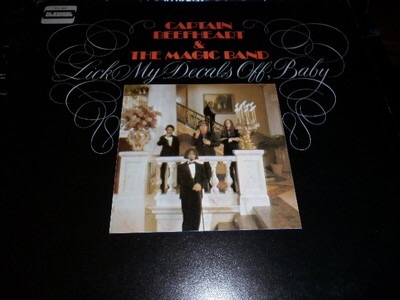
Art. Don Van Vliet always had a fascination with art, demonstrated most visibly in his own primitively idiosyncratic paintings, but extending also to his music, the prime expressions of which are the two albums he made for the Straight label in 1969 and 1970, Trout Mask Replica and Lick My Decals Off Baby. Every Beefheart aficionado has their favourite album and I am no different. In fact, not selecting Trout Mask Replica for TNPC feels in some ways tantamount to a betrayal, but it is a record which has been extensively discussed, written about and salivated over elsewhere, and whilst undoubtedly amongst my own Top 3 Albums of All-Time, I fear there is nothing much else to add to what is a well-worn story. Those who find ‘TMR’ too arduous a listen [I had to strengthen my constitution with the solid meat of the early Fall albums before I persevered and eventually succumbed] tend to plump instead for the crisper cleaner Clear Spot, the warmer more colourful Shiny Beast or more commonly, as in the estimation of the authors of The Perfect Collection, the classic 1967 debut, Safe As Milk, which memorably showcased Ry Cooder’s stunning slide guitar work. While these albums served as friendly pathways to a reappraisal of TMR, my way in to Beefheart actually came with the purchase of Lick My Decals Off Baby. Those who treasure TMR may feel that it’s slick sibling sequel gives it a run for its money as The Magic Band’s greatest moment, despite it having lived forever in the shadow of its illustrious predecessor.
Indeed, there are some who swear that Decalsactually eclipses ‘TMR’ as Beefheart’s finest hour, but be as well comparing Ulysses to Finnegan’s Wake. Nevertheless, those will point to the following: Decals – unlike TMR, which bore the imprint of Zappa – was produced by Don himself and is therefore incontestably his own creation; secondly, where TMR is a sprawling mess, Decals by comparison is both streamlined (all killer, no filler) and strangely symmetrical (both sides have overtly lascivious openers, anarchic hornfests to end, and in the centre, two baroque math-folk instrumentals, Bill Harkelrod – aka Zoot Horn Rollo – conjuring that almost medieval lute-ish sound from his guitar); thirdly there is a greater refinement of song composition and structure – where TMR sounds like a bizarre experiment, the playing on Decals sounds more controlled, sophisticated even (visually implicit in the contrasting choice of band costumes for the album sleeves); fourthly, the polished marimba of Art Tripp brings another dimension to the sound, working a similar effect to Bobby Hutcherson’s vibraphone on Eric Dolphy’s classic Out To Lunch. These for some give Decals the edge.
However, the rubbery booglarized guitar sound, which contrasts sharply with the scratch and bite of the guitars on TMR polarises opinion. Additionally, the explicitly carnal lyrical onslaught may not be to everyone’s taste: at times Don sounds almost predatory like a rhinoceros on heat (“Rather than I wanna hold your hand/I wanna swallow you whole/’n’ I wanna lick you everywhere it’s pink/’n’ everywhere you think/Whole kit ‘n’ kaboodle ‘n’ the kitchen sink…”), albeit a rhino with a darkly mischievous sense of humour (check out the even more hilarious ‘I Want To Find A Woman That’ll Hold My Big Toe ‘Til I Have To Go’) and a wild poetic gift…
Yes, the poetry. The lyrics are not all as bawdy but are staggeringly brilliant, full of free association surrealistic impulse (“Glasses look out on the pale hell bent /Moon milk run / O’ lady go home / Lord they done cookin’ done / Black lady, Black leather lady / Done had a white, white, white poor son”) and humane ecological concern (“If the dinosaur cries with blood in his eyes/’n’ eats our babies for our lies/Belches fire in our skies/Maybe I’ll die but he’ll be rumblin’ through/Your petrified forest.”)
If the words are wonderful, then the music is a match for them. The album’s most famous song – covered by The Buzzcocks/Magazine – is ‘I Love You, You Big Dummy’ (‘nobody has love/love has nobody/I love ya y’ big dummy/quit askin’ why!’), a rhythmically straightforward thrash enlivened by Don’s wild harp (it sounds like he’s blown it to pieces), which could be a demented cast-off from Strictly Personal and anticipates the unabashed blues growl of his next studio album The Spotlight Kid, while ‘Woe is Uh Me Bop’ – which ‘crinkles along mechanically like walking Tinkertoys’ (copyright Lester Bangs – I can’t beat that folks) is a virtual blueprint for the triple salvo of Tom Waits Franks Wild Years period, the most obvious comparison being ‘Clap Hands’ from Rain Dogs. The marimba here adds little strokes of light which de-intensify the urgency of the rhythm. Conversely, on ‘The Smithsonian Institute Blues (or The Big Dig)’ the sudden change of tempo, with the marimba and guitar scattering in opposite directions, unseats a vibrant footstomper, yet showcases the band at their most viscerally spontaneous and intuitive. Again there is a delightful play on words (“It sure looks funny for a new dinosaur/To be in an old Dinosaur’s shoes/Dinah Shore’s shoes/Dinosaur shoes”). There are other delights and surprises along the way, not least the interval in the closing ‘Flash Gordon’s Ape’ (great title) where the orgiastic cacophony is halted for a marimba solo.
No-one else in rock music has innovated on the same scale as Don Van Vliet. Oh, The Beatles and The Velvets could stake a claim, and were undoubtedly even more influential. But with his music, Beefheart invented an entirely new art form. I can’t pretend to be an art connoisseur, and I’ve never really understood the Jackson Pollock analogy – I’ve always imagined each splash and stroke of his work to be something of an accident. Nor – though I appreciate the visual image it conjures – can I fully agree with Andy Partridge’s contention that Beefheart’s music “sounds like a piece of the Somme, lifted up and put in an art gallery.” Another fairly unsatisfactory comparison would be that of a collection of jigsaw pieces fitted randomly together, as this presupposes a final abstract image without a recognisable pattern or design. Instead, when considering a Beefheart composition from this period, I prefer to visualise four or five light aircraft taking off together which also land simultaneously: but while airborne, the planes might fly at different altitudes; some are faster than others, each creating its own unique flight path, until at certain points, as if jerked by some centrifugal force, their zig-zag wanderings cease and they line up with Red Arrows precision. Again, they may fly off suddenly in wildly different directions before this telepathic convergence repeats itself. From one journey the planes may return to the ground at awkward angles, from the next they arrive in neat lines. This sound has been imitated by many performers of good will – aesthetes, punks and outsiders, but each has been too indebted for true greatness. Beefheart’s innovations are unique in rock history and alongside its big brother TMR, Lick My Decals Off Baby deserves to take its place as a uniquely esteemed example of American art primitivism.
[If there has been noticeable mainstream infiltration by some of today’s more left field artists, it is worth remembering that ‘Decals’ stayed eleven weeks on the UK album chart, peaking at no.20. Sitting imperiously at the summit was Andy Williams’ Greatest Hits] (JJ)
“Birth of a new line,” assert the sleevenotes of Monster Movie. Ay – you could say that. There had been little, if anything, like this before and it’s a record which simply could not have been made at the start of the decade it appeared in, or even three years earlier. Astonishment at how far ahead of its time it is increases, not recedes, with time and it still sounds utterly fresh.
Only a few others – Beatles, Velvets, Hendrix, Floyd, Beefheart – rival Can for sheer originality but they dragged things even further forward and outward than any of them. They never made any secret of their early debt to the Velvets, in particular, but just as Shakespeare influenced Joyce, another completely new language was created, complete with (very) tenses and (extremely) irregular verbs.
The band’s German majority had disparate backgrounds in rock, jazz and avant-garde classical, the last element in particular setting them apart from the British-American axis which had hitherto dominated popular music. Even so, equally distinctive was the contribution of American singer Malcolm Mooney, whose schooling was in art and who found himself in Europe to keep away from the very real prospect of the draft.
If Mooney was battllng an all too present threat, so were his colleagues, although theirs was one shaped by the immediate past. The generation gap in the UK was at least partly a product of perceived ingratitude of youth towards the parents and grandparents who had fought and won for their freedom; Germany had lost, had to deal with a horrifying legacy and, despite a vast economic regeneration and a genuine will to atone, many of those who were children in the war or were born afterwards were unconvinced. Whatever they did or thought at the time, or afterwards, West Germany was still being run by a generation directly involved in the war and many of the youth wanted only a clean break. This, and a more prosaic distaste for the prevalent schlager music (crudely, caricatured Eurovision knees-ups blended with old-style north European oompah) gave much of the impetus to the extraordinary torrent of innovation from Germany from 1968 onwards.
Can weren’t as politically radical as Amon Duul II, as consistently on the edge as Faust (though they were easily a match at their most extreme) or as sonically advanced as Kraftwerk ( but, at first, neither were Kraftwerk). What gave them the edge was a staggering versatility and a mastery of the most elusive alchemy – the ability to be experimental, groundbreaking and accessible at the same time. All of which made them an irresistible, unfathomable force of nature.
I first heard Can in 1980, as the summer of Closer, Crocodiles and Seventeen Seconds gave way to the autumn of More Specials and Remain In Light. Their name was being bandied around as post-punk precursors but I had little idea what to expect from Cannibalism, the compilation borrowed from Bishopbriggs Library which housed three of Monster Movie’s four tracks.
They shared an opening track, Father Cannot Yell, a title which to my 11-year-old mind seemed the result of a combination of prog pomposity and English as a second language (not quite grasping yet that the singer at this stage was a native English speaker). My initial response was irritation – what’s with the two-minute repetition of “uh-uh-uh-uh?” Is this him driving home the point that father indeed cannot yell? Or is he just vocalising worldlessly? The irritation soon turned to mesmerism and I came to realise the wisdom of Pete Shelley’s sleevenotes, in which he admitted to hating some Can songs at first but was forced to concede first hearings can be misleading. Now, I’m hard put to think of a mightier, more compelling or simply greater opening track – Wire’s Reuters and Robert Wyatt’s Sea Song are up there – which wrong-foots you immediately on its era, with Irmin Schmidt producing a crazed Morse code from some form of keyboard, which or may not be a primitive synth, while drummmer Jaki Liebezeit and bassist Holger Czukay dominate the song, demolishing any preconceptions you might have of what a rhythm section is and setting up a wind–tunnel barrage punctuated sparingly but scorchingly by the late Michael Karoli’s guitar tirades (solos really doesn’t cover it). Julian Cope described his first band, the appropriately Germanically-named Softgraundt, as “pure Can, all bass and drums” – presumably, Father Cannot Yell was the touchstone, as it was for. to name just a handful of others, Joy Division, Public Image Ltd, Siouxsie and the Banshees The Fall, Wire and Pere Ubu.
Mary, Mary So Contrary is the one Monster Movie song not to appear on Cannibalism and so I first heard it years after the rest. The lyric is, largely, made up of the near-eponymous nursery rhyme, a sign that even ultra-modern Can weren’t completely immune to the otherwise ubiquitous hippy whimsy. In keeping with the lyrical theme, it’s partly medieval-sounding, albeit in a manner similar to Venus In Furs, and also points a way forward, sharing some ground with Deadlock, which would be recorded a year later with Mooney’s replacement, Damo Suzuki. It’s also Mooney’s most restrained performance on the album, although these things are relative, just as Al Pacino is more restrained in Serpico than in Scarface.
One word has always encapsulated Outside My Door for me – exhilirating. It has a fuller band sound than anywhere else on the album, with unexpected colour from a harmonica and, in the coda, what is either a hammering piano or a tolling bell. Liebezeit’s scatergun drumming parallels Keith Moon at his most freeform and opens the door to Buzzcocks’ John Maher, while Karoli’s suitably buzzsaw solo is an object lesson for the same band’s Shelley and Diggle. Mooney, meanwhile, invites James Brown and Otis Redding along and succeeds in drowning them out.
The former side two is occupied in its entirety by the 20-minute Yoo Doo Right, for many the crowning glory not just of Monster Movie but of Can’s entire repertoire. It is, of course, fantastic but – here comes the heresy – it does go on just a little.When we taped it (it never did kill music) from Cannibalism, the album shared a C90 with side two of Talking Heads ’77, meaning that Yoo Doo Right ended after nine minutes (at “Gotcha, gotcha, doo wa”) and I’ve always felt that most of the highlights come before this cut-off point: the first shift of the bass from riff to melody at 0:25 (Czukay once likened his instrument’s role to the king in chess – moving little but changing everything when doing so); the single-note organ figure at 1:56; the most metalically chiming guitar you’ll ever hear at 4:16; a single, possibly accidental, cymbal crash at 6:27; a guitar turning into a raygun at 6:44 and the final collapse at 8:05, leaving nothing but Mooney exhaustedly contemplating “a drumbeat 21 hours a day” and every second of those hours being ticked off. But there still remains plenty of tension and drama in the second half, with Mooney’s very real isolation unresolved – at the end, as at the beginning, “I’m in love with my girl, she’s away/Man, you gotta move on.”
Can would take on many more influences – funk, Eastern European folk, traditional African music – and would shed many more skins to become ever more magical. If ever there’s been music that takes you places, that music belongs to Can – they stand up to repeated listens more than just about any other band and the disparate strands of their sound prompted me to seek out as much about the world as I ever learned in geography.Monster Movie was one of their first steps, and some dismiss it in favour of the admittedly brilliant Tago Mago and Ege Bamyasi, but it captures them at their most viscerally thrilling (PG).
“We are the longest-lasting, most disastrous commercial outfit to ever appear in rock ‘n’ roll. No one can come close to matching our loss to longevity ratio.” (David Thomas)
How does one measure success? Consider The Velvet Underground, Nick Drake or Big Star for example: virtually nobody bought their records during their short careers, yet collectively their music has influenced scores of musicians and set substantially more youthful pulses racing than that of say, Yes or Fleetwood Mac. By contrast, those two would not be named as musical touchstones by too many modern rock bands, despite accruing bank balances large enough to shame Rupert Murdoch.
The world wasn’t ready for Pere Ubu, so commercial success was never a viable prospect. In a musical wasteland yet to be administered its life-saving punk booster, and inhabited by flatulent megalomaniacs, tedious singer-songwriters, prog excess, glam frippery and poker-faced AOR, there was undoubtedly a gaping hole to be filled. Aspiring young musicians and fans alike might have hoped for, nay even expected, in such desperate times, a messianic gang of rebels, beats or brats to put an end to it all, to kick off those caftans and get back to basics. Only The New York Dolls had threatened to do anything of the sort, but it had been too much too soon for them. Some would have found in 10cc or Steely Dan a distasteful smugness, and craved something a bit more audacious, primitive. That would have to wait a while longer. Nevertheless, who in 1975 could have expected anything quite like this? And who was listening anyway?
It has been suggested that Pere Ubu’s music came from nowhere, but that is neither factually nor figuratively accurate, for first of all, their origins lie in the industrial heartland of Middle America – Cleveland Ohio, and secondly, they are the descendants of an illustrious if loosely connected experimental art-punk heritage which includes artists as diverse as The Velvet Underground, The Red Crayola, Captain Beefheart & The Magic Band, Silver Apples, early Roxy Music and Faust, although none of those influences may be immediately obvious.
In fact, Pere Ubu evolved out of the remnants of local proto-punk pioneers Rocket From The Tombs, who during their chaotic eighteen-month lifespan cooked up for Cleveland the unholiest of rackets and gained for themselves mythical status into the bargain. Theirs is one of the great ‘coulda shoulda’ stories of ’70s rock, and when the inevitable disintegration unfolded, the legend was assured. In the meantime two of the band went on to form The Dead Boys, while Thomas – shorn of his RFTT Crocus Behemoth alter-ego, as well as his long hair – and guitarist Peter Laughner, worked a moonlight flit, leaving with a small handful of RFTT’s best tracks to form Pere Ubu, the name according to Thomas “a joke invented to have something to give journalists when they yelp for a neat sound bite or pigeonhole.” That may indeed be true but it is also nicked from Alfred Jarry’s play ‘Ubu Roi’]
But what of the music? How to pin down a frenzied fusion of Dadaist experimentation, bizarre rhythmic dissonance, sci-fi surrealism, avant-garde adventurism, thrilling garage punk and musique concrete – all wrapped in Thomas’ desperately freakish vocal delivery, characterised by his infantile almost inhuman, yelps and absurdist lyrical humour, accompanied by guitars so loud they sound “like a nuclear explosion”, uniquely garnished by Allan Ravenstine’s radioactive synth rumblings, which sound like they come from another planet, often groaning and skittering like the fragile digestive system of a distressed extraterrestrial?
Terminal Tower (named after the structure which dominates the Cleveland skyline) brings together the band’s early Hearthan singles and B-Sides and is selected here in preference to the Datapanik In The Year Zero EP, which did much the same thing, due to the latter’s omission of ‘Final Solution’, arguably the band’s greatest achievement. [NB. The recent DITYZ box set makes amends for this]
The album includes a few later self-consciously arty out-takes, without which it could survive quite happily, but would be worth buying for the first three tracks alone. On one half of their debut single, ‘Heart of Darkness’, with its prowling bass line, Thomas’ paranoiac discontent is unveiled:
“Maybe you see further than I can see / or maybe things just look differently / Maybe I’m nothing but a shadow on the wall / Maybe love’s a tomb where you dance at night / Maybe sanctuary is an electric light / I get so tired it’s like I’m another man / and everything I see seems so underhanded / I don’t see anything that I want / and I don’t see anything that I want.”
The song’s portentous threatening atmosphere has no direct musical precedent – but is a clear blueprint for Joy Division’s despairing bass-driven sound. And without them, how different would the musical landscape of the early 1980s have looked?
‘Heart of Darkness’ was coupled with the apocalyptic ’30 Seconds Over Tokyo’ – a dissonant fusion of throbbing bass belching and Beefheartian dismemberment: synths snarl and fizz, and anarchic guitars rocket their sonic symphonies of feedback through a sequence of musical meltdowns and muffled screams, culminating in a genuinely shocking ending which sounds like someone’s dragged the record off the turntable – the stylus ripping through the vinyl with great ferocity, the volume control left in tatters.
The early version of ‘Untitled’ is pleasing enough but was given a more robust reworking as the title track to their indisputably classic debut album The Modern Dance where the Ubu experiment reached it’s fullest expression.
Meanwhile one can detect in ‘Cloud 149’ an impetus for the music of Josef K and The Fire Engines and ‘My Dark Ages (I Don’t Get Around)’, is an ironic Beach Boys pastiche, once again showcasing Thomas’ self-deprecating witticisms: (“I don’t get around / I don’t fall in love much”)
That dark humour is much in evidence on the best track of all, the band’s second single ‘Final Solution’. It is nigh on impossible to believe that this music was made in 1976, and if you have not heard it before, then I urge you to do so as soon as possible. Those who are familiar will rightfully claim it as one of the most thrilling and influential records of the 1970s. One can forgive it’s preposterous take on teenage dread (Thomas will recall that his mom really did throw him out ’till I get some pants that fit’. No joke), for it takes us on an astonishing sonic roller coaster: a throbbing crackling discordant sing-a-long classic, containing spy movie motifs, synths taking off into outer space, ghostly voices, and Tom Herman’s cataclysmic guitar: one moment the sound of a bell, the next stretching out like Hendrix did on ‘If Six Was Nine‘, before paving the way for ‘Marquee Moon’ with his angst-ridden solo to finish, Thomas screaming over the top almost unintelligibly “I don’t need a cure, I need a final solution.”
A useful analogy: imagine how audiences in 1976 might have experienced the first sitting of David Lynch’s Eraserhead, a contemporary artwork, likewise imbued with a decidedly surrealistic streak. The comparison has been made before – and not simply because of the uncanny physical resemblance between David Thomas and Jack Nance (Eraserhead‘s protagonist, Henry Spencer). In truth, like David Lynch’s cult classic, Pere Ubu were so far ahead of the game, that by the time I’d eventually caught up with them (many years later, at The Venue in Edinburgh in March 1988), they still sounded like nothing else on earth. If Bob Dylan kicked popular music ‘kicking and screaming’ into the 20th Century, Pere Ubu were in an awful hurry to take it into the next one. In many ways, the world has yet to catch up.
Thomas might have insisted that Pere Ubu wrote ‘pop songs’, the band themselves have used the term ‘avant-garage’, while the general public may have called their music plain weird . Me? I simply prefer to call it modern rock’n’roll. Now in their 40th year – give or take a few intervals, changes in personnel and personal tragedies (Laughner succumbed to acute pancreatitis in 1977) – their influence can be heard in the likes of Joy Division, Husker Du, Minutemen, Pixies, Throbbing Gristle, Butthole Surfers and more obviously, in fellow Ohioans, Devo. Ubu have outlasted all of those, so surely that accounts for some measure of success. And for the Pere Ubu devotee, a series of decisive victories. (JJ)
Special Feature: ‘THE FIXER’ – TNPC interviews DAVID THOMAS (PERE UBU) for Shindig! Magazine
The Fixer
When Pere Ubu emerged from the wreckage of Rocket From The Tombs to infect the industrial heartlands of mid-1970s Ohio with their throbbing, squealing sonic architecture, few would have seriously considered their candidature for rock longevity a viable prospect. But David Thomas had other plans. He always does. “When we started, nobody liked us in Cleveland. We accepted that this was the natural order of things – that nobody would ever like us, much less HEAR us. So when that becomes your world-view then everything is very easy.” An A&R man’s worst nightmare (they stubbornly refused to be pigeonholed), the band have sculpted their own unique trajectory with singularly relentless conviction over these past forty years. Thomas, along with the latest incarnation of Pere Ubu (he is the only remaining original member), is making the final preparations for The North American Coed Jail! Tour, where the current line up – one of the band’s strongest ever – will perform classic material from their ‘historical era’ (1975-1982). While that prospect may be a mouthwatering one to long term fans, it is not something you might expect from him. Thomas has taken great care to ensure Pere Ubu remains a constantly evolving entity, always moving forward, so for him this seems an uncharacteristically retrospective move. But then, David Thomas is hardly likely to do the predictable thing. He thinks about music in pretty much the same way as he does life and art. The great French film-maker Jean Renoir once explained the idiosyncrasies of human behaviour by noting that “in life, everyone has his reasons”. Thomas concurs: “I am not a playful guy when it comes to work – there’s always a reason. Orson Welles was asked why he made Anthony Perkins act in a certain way as Josef K. The critic said ‘Kafka meant the character to be an innocent victim of the machinery.’ Welles responded, “No, he’s guilty – guilty as hell.”‘ Given his own very individual worldview, it is perhaps unsurprising that Pere Ubu is one of the most misunderstood bands in rock music. Steadfastly oblivious to even the remotest commercial instinct, yet paradoxically, possessors of a panoramic perspective of pop’s colourful history, they have outlasted almost all of their contemporaries: a particularly impressive achievement considering they didn’t fit in then and don’t now. “The arty people dismiss us because we’re too pop and we despise talk. The pop people because we are too arty and we talk too much.” Does the lack of commercial success bother him? “We’re still here. I am Khrushchev pounding his shoe on the table at the UN, screaming ‘We will bury you’.” Sixteen albums down the line, two into their ‘Orange period’ and in robustly good health, he may have a cogent argument. As Thomas explains: “Pere Ubu is a continuum. I’ve often said we don’t do conceptual albums – we have a conceptual career. If you look at the body of my work it’s soon apparent that it is one novel-like endeavour with characters, stories and plots interweaving and reappearing over the decades.” Perhaps then, revisiting the work of another era makes logical sense.
Thomas likes to keep himself busy – for him, making music is not the assuaging of some inexorable creative impulse, but something more fundamental. The need to work. At the moment this means ‘fixing’ music. One of his most pressing recent concerns – as the output of Pere Ubu’s last two long players (‘The Lady From Shanghai’ & ‘Carnival Of Souls’) testifies – is his need to ‘fix’ dance music. “Part of that project is an effort to realign how meter and time are incorporated into music. How do you break up the mafia-like hegemony of bass and drums? But I need to stress that I do not react or counteract – I reinvent or realign as if the current world doesn’t exist and never did exist. I reimagine history. For example, what if English prog rock had been the true punk movement? What if Henry Cow had become the Sex Pistols?” Now there’s a thought…
Sometimes misconstrued as a punk band (not many punks nurture a fondness for The Allman Brothers for starters), that sense of hyper-alienation (‘data panic’) from technological society, the dissonant nonlinear song structures, not to mention Thomas’ curdled wails stretching over fizzing garage riffs – certainly at least invited the rather lazy comparison. But there was always substantially more to Pere Ubu, an expressionistic adventurousness far beyond the reach of the punk fraternity, which while leaving them at odds with the prevailing zeitgeist, kept their integrity intact. As the band prepare to revisit and perform their late 1970s repertoire, how does Thomas now feel the music they produced over that period fits in the context of the ‘punk era?’ “I stood apart from it. We were dedicated to our own path. Sometimes two different roads converge – going through a mountain pass or along a river or what have you. The difference between the two roads seems negligible at that point. Twenty miles down the line they may diverge and head off in distinctdirections.”
As 2016 will see the release of two retrospective box sets (the first, ‘Architecture Of Language’, was released in March, the second is scheduled for August) alongside the forthcoming tour, Thomas clearly has no plans to give up making music just yet. Songs like ‘Golden Surf II’ from ‘Carnival Of Souls’ contain the original vitality, the vital originality, that made the band such a thrilling proposition in the first place. One senses Thomas and Pere Ubu will be at it for some time to come yet. “I have a job that I do and I do it well. I’ll do it (a) as long as I make a living from it, and (b) as long as I do it well.” (JJ)
If history is written by – or at least about – the winners, it doesn’t mean the ones who are edited out have lost. In music, the small-scale, local but for decades unacknowledged release has been there at every stage, from muffled blues and country 78s stretching either side of the second world war to dimestore rock ‘n’ roll, from ’60s 45s that later became the stuff of Nuggets, Pebbles and Northern Soul, from post-punk DIY by The Night The Goldfish Died and Prevent Forest Fires to the countless, sometimes anonymous, dance 12″s of the ’90s and the upstart start-ups now lurking in the infinite corners of Soundcloud and Bandcamp.
Quality has varied considerably, of course, and for decades this music was seldom heard outside the town/county/state where it was made but it’s always been the sum and substance of the iceberg, underpinning more visible events, and, at its best, has been fit to take its place alongside more celebrated songs and names, with the added advantage of not having been bludgeoned by repetition.
A case in point: Shoes (distinguishable from French dance act The Shoes through their admirably principled stance on the definite article), a bunch of Hardy Boys doppelgangers who came from Zion, a dot on the Illinois map, and stayed there, opting to keep away from Chicago and any other city to progress, for the most part, at their own pace and on their own terms.
In the pre-punk/new wave ’70s, the sound Shoes were cultivating – drawing on early Beatles, The Byrds and Big Star, was far from obvious and, even allowing for some elements of glam, had few adherents and the proliferation of hyper-proficient, hysterically pompous technoflash bands – Styx, Kansas, Journey – was swallowing airtime and theatre space once reserved for music that wasn’t unintentionally ludicrous.
But Shoes did whatever it took to push their music out. Private press releases were commonplace but their first release, One In Versailles (so named as a nod to guitarist and architecture student Gary Klebe during his year abroad in France) was neither vanity project nor bizarre affectation. Despite being out of step with tastes defined more by chops than ideas, it had genuine potential to find an audience who may not have realised it was what they wanted, through strong and – on at least one song, Do I Get So Shy – complex songwriting.
They took things a stage further with Black Vinyl Shoes but resources were tight and the album’s sleevenotes make its six-month recording seem an arduous even harrowing, process, telling of “strenuous conditions” and extreme limitations” as it itemises the equipment used.
The notes assert that it’s a “unique” record – having worked in and around media for more than 20 years, it’s my firm belief that this most precisely-defined of words should never be used lightly or loosely but the finished results of Black Vinyl Shoes dispose me to give them the benefit of the doubt.
Superficially, it’s as straightforward as these things get – fifteen melodic, uncomplicated songs, mainly on the eternal theme of girl baffles boy. Some of the lyrics would be viewed differently now to the way they might have been then, (eg “Ride you in my car/Make you feel some older”) but they had a penchant for an unexpected turn of phrase (“Better toughen up your middle ground/Get it hard for senseless casualties” or “The fastest way I can find you/Is my justified means to the end”).
And while, to the casual observer, US politics of the ’70s may have been dominated by two areas – foreign policy and the office of President – it always comes back to The Economy, Stupid and on Capital Gain, Shoes have their own Taxman, a slightly gauche but acerbic sketch of a grasping businessman on the make (“Let the the buyer beware if they’re buying their wares from him/And when he’s doin’ a favour, watch out or he’ll do you in.”)
Further hidden depths and textures emerge on closer scrutiny; the unequivocally basic equipment makes the songs swim, swoop and hiss and at times Shoes’ drummer, the late Skip Meyer, sounds like he’s playing on suitcases, but while he’s actually using a full kit, there’s a noble tradition here – the Crickets’ Jerry Allison used a cardboard box on Not Fade Away and his own very knees on Everyday, so the important thing is not what’s used but how it sounds.
Other sounds range from sparing but subtle slide guitar (Running Start, Fire For Awhile), acoustic 12-string stabs (Someone Finer, Okay) and, on Fatal, the synthesised guitar sound that would later become the trademark of The Cars (and there were deliberate constraints – third album Tongue Twister would proclaim ‘no keyboards’ as defiantly as Queen’s ‘no synthesisers’). Meanwhile, breathless opener Boys Don’t Lie, which lends its title to the band’s biography by Mary E Donnelly, could fit neatly over the five-a-side scene in the opening credits of Trainspotting.
Shoes would righly look askance at the unseemly term ‘powerpop’ and here show an ability to smuggle in unexpected genres – melodically, the aforementioned Running Start is practically a country song and there’s a definite groove/swing to Not Me, which has a cowbell intro to match Honky Tonk Women or Low Rider. Then the fuzz bass and staccato rhythms of If You’d Stay echo what Bowie was doing at the time in Berlin and Devo two statelines away in Ohio. It’s also not unlike the radical Eurodisco revamp the Undertones would perform on True Confessions for their first album and Shoes did strike a match to light the Derry gang’s way. Their smilingly lugubrious demeanour and tunes of condensed milk sweetness, together with the equal division of labour (five songs each by Gary Klebe and brothers John and Jeff Murphy) also foreshadowed Teenage Fanclub – Shoes themselves have noted the similarity but, with characteristic modesty, didn’t presume to have been a direct influence.
A spell with Elektra produced three albums, including the magnificent Present Tense, but they then returned to self-sufficiency, at their own Short Order Recorder studio in Zion. For 40 years, they’ve pursued their muse as single-mindedly as the Ramones and are cherished as much by those who are aware of them; they’re there in a rich seam for anyone who cares to look (PG).
 On an airless afternoon during the height of a clammy Glasgow summer, I first heard her voice. A sluggish drawl, as though vainly battling sleep. In 1999, everyone in Missing Records was listening to Cat Power’s ‘Moon Pix’. I left Missing that summer and forgot all about Chan Marshall and that voice, returning faithfully to my tired LP collection with its familiar sleeves, smells and sounds – like putting on a pair of tattered, but very comfortable old slippers. Only gradually did I rediscover my zest for newer sounds. Four years later, a recommendation from an old colleague during a brief rendezvous in Glasgow’s finest music emporium, Monorail, led me to a (re)discovery. And to one of the very best albums of the new millennium thus far.